The Class of Connection
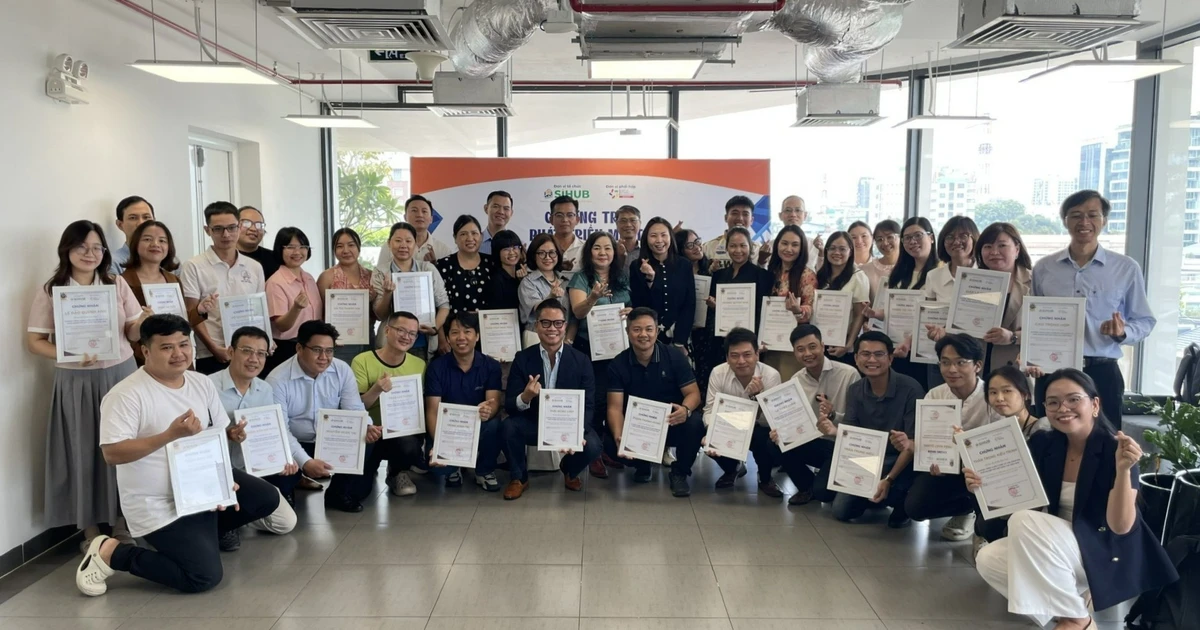
A mentoring training session, attracting nearly 50 participants including university lecturers, entrepreneurs, and business owners, was lively from the start at the Innovation and Entrepreneurship Center under the Ho Chi Minh City Department of Science and Technology (SIHUB). The atmosphere was enthusiastic as each participant initiated conversations and got to know each other, even if they had never met before.
According to MSc. Pham Duy Hieu (course instructor), when individuals get to know each other, they have already achieved 80% of the success in becoming a mentor. When mentors create a safe and deeply connected space for their mentees, they will share everything.
“Connection is a prerequisite for developing the skills of a mentor. There’s a paradox: the more familiar people are with each other, the harder it is to connect because, having already known each other so well, it’s easy to overlook things, leading to a loss of connection,” observed Master Pham Duy Hieu.
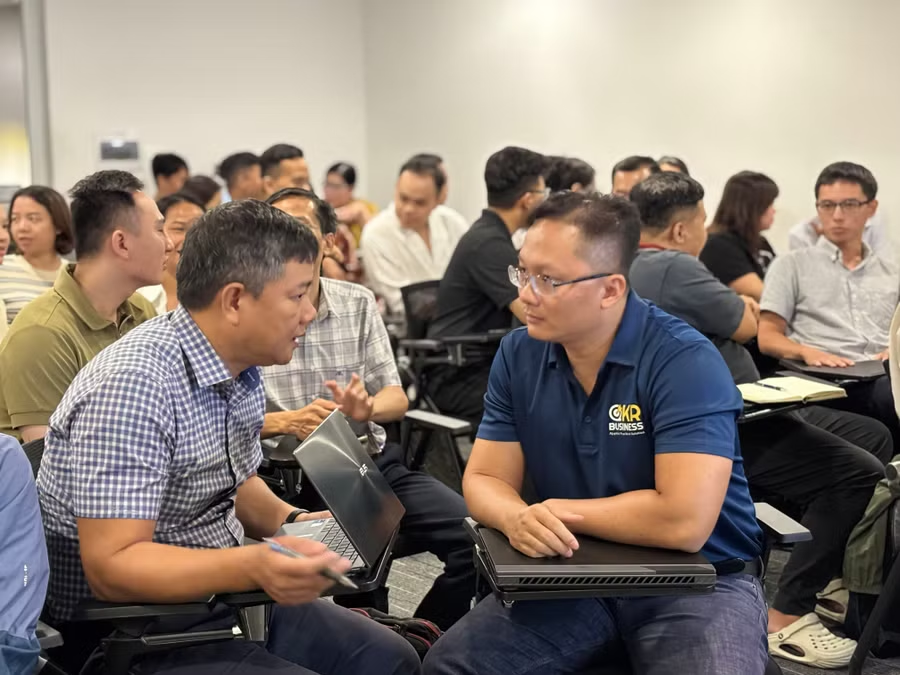
The opportunity to practice and interact throughout the session to enhance networking skills is something many participants appreciate when attending the free mentor training course organized by SIHUB.
Mr. Cao Trong Hop (Faculty of Tourism , Ho Chi Minh City University of Culture) has taught entrepreneurship to students. In addition to his teaching duties, he also acts as an advisor, supporting students in participating in entrepreneurship competitions. Having started his own business in the tourism sector about 20 years ago and experienced periods of success, Mr. Hop believes that his experience will allow him to empathize with and share his insights with future entrepreneurs.
According to Ms. Hop, the mentor training course was very useful as it provided an overview of common problems faced by mentors, such as how to approach mentees; how to “break the ice” during communication and problem-solving, etc. In addition, Ms. Hop stated that the program provided mentors with the necessary information to overcome challenges encountered while mentoring mentees.
Specifically, the program incorporates cultural elements into entrepreneurship and equips mentors with knowledge in finance, law, technology, and more. “This useful knowledge allows me to teach students and train them in real-world situations. These are tasks that help mentors improve their skills,” said Ms. Hop.
Meanwhile, Mr. Le Van Thanh Vinh (who runs an interior design business) said that the mentoring training course helped him improve his awareness and communication skills. These are lessons he can use to train his employees and foster a culture of innovation within the company. “Innovation is not just about creating a new solution, but also about developing existing ones to be better and more optimized, thereby increasing productivity and saving costs for the business,” Mr. Vinh observed.
According to Ms. Nguyen Nha Quyen, Operations Director of Startup Vietnam Foundation, the mentor training program content is developed, refined, and implemented by the foundation itself based on the operational realities and work culture of startup businesses. The knowledge provided to mentors includes technology, finance, sustainable development, and more. In addition, it includes skills in connection and empathy to help mentors enhance their ability to understand the problems of startup businesses and offer constructive feedback to help them solve those problems.
Enhancing human capacity within ecosystems.
Based on his experience as a mentor to many student entrepreneurs, Master Cao Trong Hop believes that young people today have the ability to quickly adapt to technology and possess a passion and aspiration for entrepreneurship.
However, he argued that students who want to compete in the market must be truly excellent in their chosen field. If they lack expertise, young people need skills in people management, business administration, and leadership.
“This is a process of continuous learning, practice, and accumulation of knowledge to succeed in entrepreneurship,” said Mr. Hop. He also acknowledged that many young entrepreneurs are highly skilled professionally but lack expertise in legal matters, intellectual property, and market access.
Recognizing this issue, in addition to its startup mentoring training programs, SIHUB also organizes courses on startup legal matters. These courses help learners approach legal issues systematically, from identifying problems and understanding potential risks to proactively preventing them and protecting the legitimate rights and interests of their projects and founders.
In addition, SIHUB also organizes many other training courses to enhance the capacity of students, young people, startup projects, and businesses, such as: Skills in planning and developing innovative startup projects; Designing effective business models for startup projects; Financial analysis and management in startup projects; Product development strategy, Go-to-Market and fundraising strategy, working with investors.
Next, there are courses on branding and intellectual property protection for projects and startups; AI application skills in learning and research; hands-on experience creating devices in the Fablab; Arduino programming course (theory & practice); and practical livestream sales on social media. Importantly, all training courses are completely free for participants.
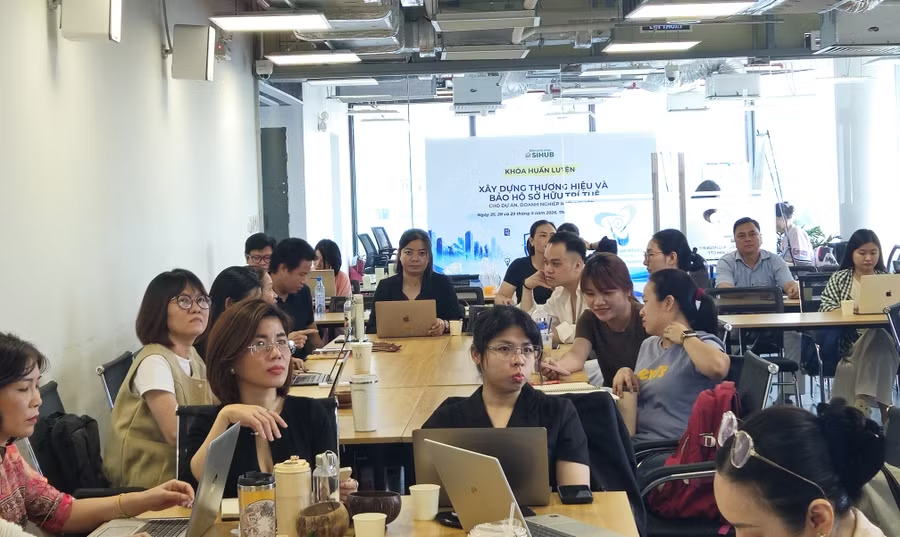
Ms. Dang Thi Luan, Director of the Center for Creative Startups, Ho Chi Minh City Department of Science and Technology, said that the goal of the training courses is not only to equip participants with knowledge, but more importantly, to help learners develop innovative thinking and the ability to transform ideas into practical value.
SIHUB leaders shared that, through training courses, participants are equipped with methods for identifying opportunities, developing solutions, verifying market needs, building business models, and gradually bringing products and technologies to market. For students and young people, this is a foundation for nurturing creativity and proactively creating opportunities. For startups and businesses, this is the capacity for innovation, adaptation, and sustainable development.
“We aspire to contribute to the formation of an ecosystem where people not only have ideas but also the capacity to realize those ideas, connect resources, and create new values for the city,” Ms. Luan said.