The AI cloud provider hit its daily trading limit Wednesday after investors questioned its valuation, signaling global skepticism for data infrastructure firms.
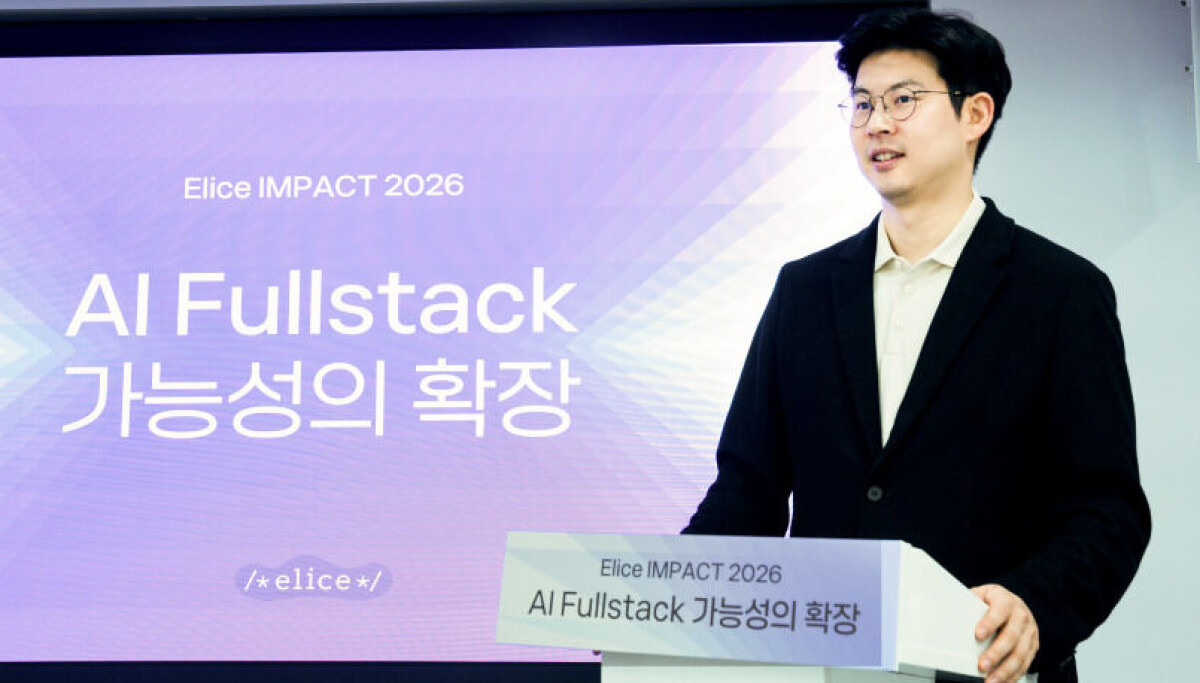
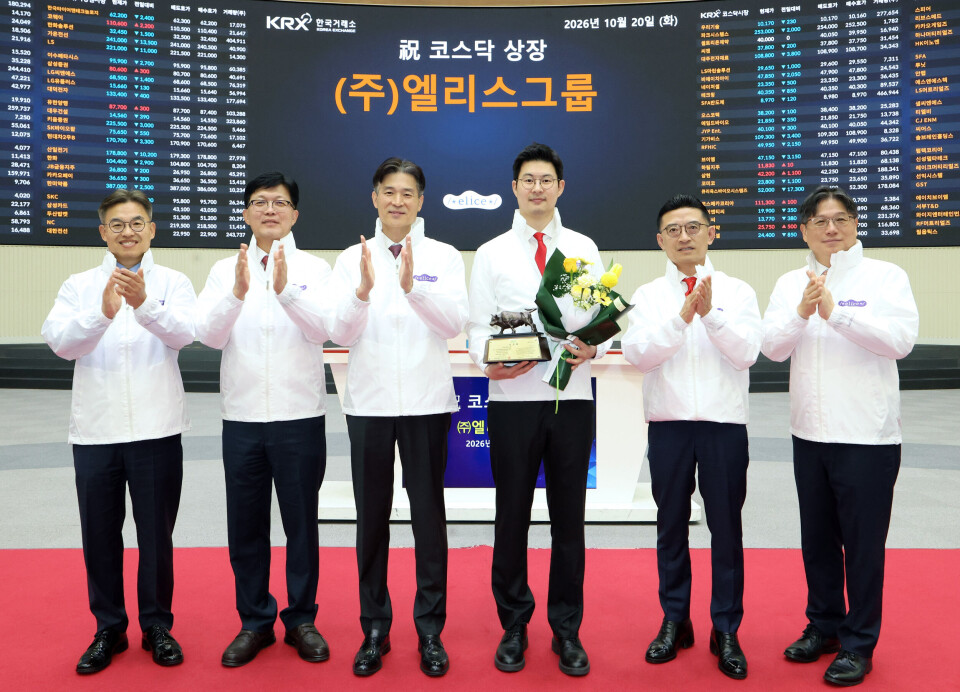
Once one of the hottest IPO prospects in Korea’s tech startup scene, Elice, stumbled badly out of the gate on its first day of trading on Kosdaq on Tuesday.
Elice shares plunged 32.04 percent to close at 61,500 won ($46) after debuting at an offering price of 90,500 won. The company is a neocloud provider that uses its own GPUs to offer public agencies and private companies the cloud computing capacity needed to train and run AI models.
After its disappointing first day, the shares opened at 69,500 won on Wednesday market open. It then shot up to reach its daily price limit at 79,900 won after approximately 10 minutes, where it stayed through the close of trading.
Before its listing, Elice was considered one of the most anticipated IPOs of the second half of the year.
The company set its offering price at 90,500 won after bookbuilding with institutional investors late last month, which valued the company at more than 1 trillion won.
That was in theory. But in reality, its shares sank almost immediately after trading began.
Industry sources pointed to growing skepticism over the prospects of AI infrastructure companies in global markets, fueled in part by recent concerns surrounding CoreWeave.
CoreWeave is a U.S.-based neocloud company that provides computing capacity to AI model developers such as Anthropic and OpenAI using GPUs purchased from Nvidia. CoreWeave has financed most of its GPU purchases and data center construction through debt.
Concerns over such financing models have intensified as CoreWeave’s corporate bond yields have surged — and in doing so, tanked its shares by more than 25 percent.
The broader debate over an AI infrastructure investment bubble has also added pressure to the market.
Microsoft abruptly canceled an agreement with UK-based neocloud company Nscale on Monday to build data centers. In the same vein, Australian data center operator Firmus, which had sought a valuation of 44 billion Australian dollars ($30.8 billion), scrapped its IPO plans on Oct. 9.
Critics have also increasingly questioned whether the circular financing that has been taking place among Nvidia, Big Tech companies and AI startups has reached its limits: Big Tech companies pour enormous sums into AI startups, which then use that money to buy data capacity and computing resources from the same companies, Kristalina Georgieva, managing director of the International Monetary Fund (IMF), wrote in an article on the IMF website on Thursday.
Georgieva warned that the cycle can distort the picture of actual demand.
“The risk is that expectations may run rapidly ahead of productivity gains, setting the stage for near-term disappointment,” Georgieva wrote.
Questions have also emerged over whether Elice itself was valued too aggressively.
The company had 97.4 billion won in total capital in the first half of this year, with short-term borrowings of 35.5 billion won. It posted 34.4 billion won in revenue and 10.3 billion won in operating profit over the same period.
“There is criticism that institutional investors’ expectations were excessive,” an executive at an IT startup said. “[The stock] is likely to go through an adjustment for the time being.”
Still, industry watchers are focusing on what happens after the near-term correction.
“The market may temporarily lose momentum because of concerns about an AI bubble,” Prof. Lee Jae-sung from the AI department at Chung-Ang University said.
But Lee cautioned against writing off AI infrastructure demand too quickly.
“When the ‘DeepSeek shock’ hit, everyone said semiconductor demand would decline, but that did not happen,” Lee said. “Demand for AI training and inference could continue to grow across a range of fields, including physical AI, so we need to wait and see.”
BY SUNG JI-WON [[email protected]]
This article was originally written in Korean and translated by a bilingual reporter with the help of generative AI tools. It was then edited by a native English-speaking editor. All AI-assisted translations are reviewed and refined by our newsroom.
Source link
