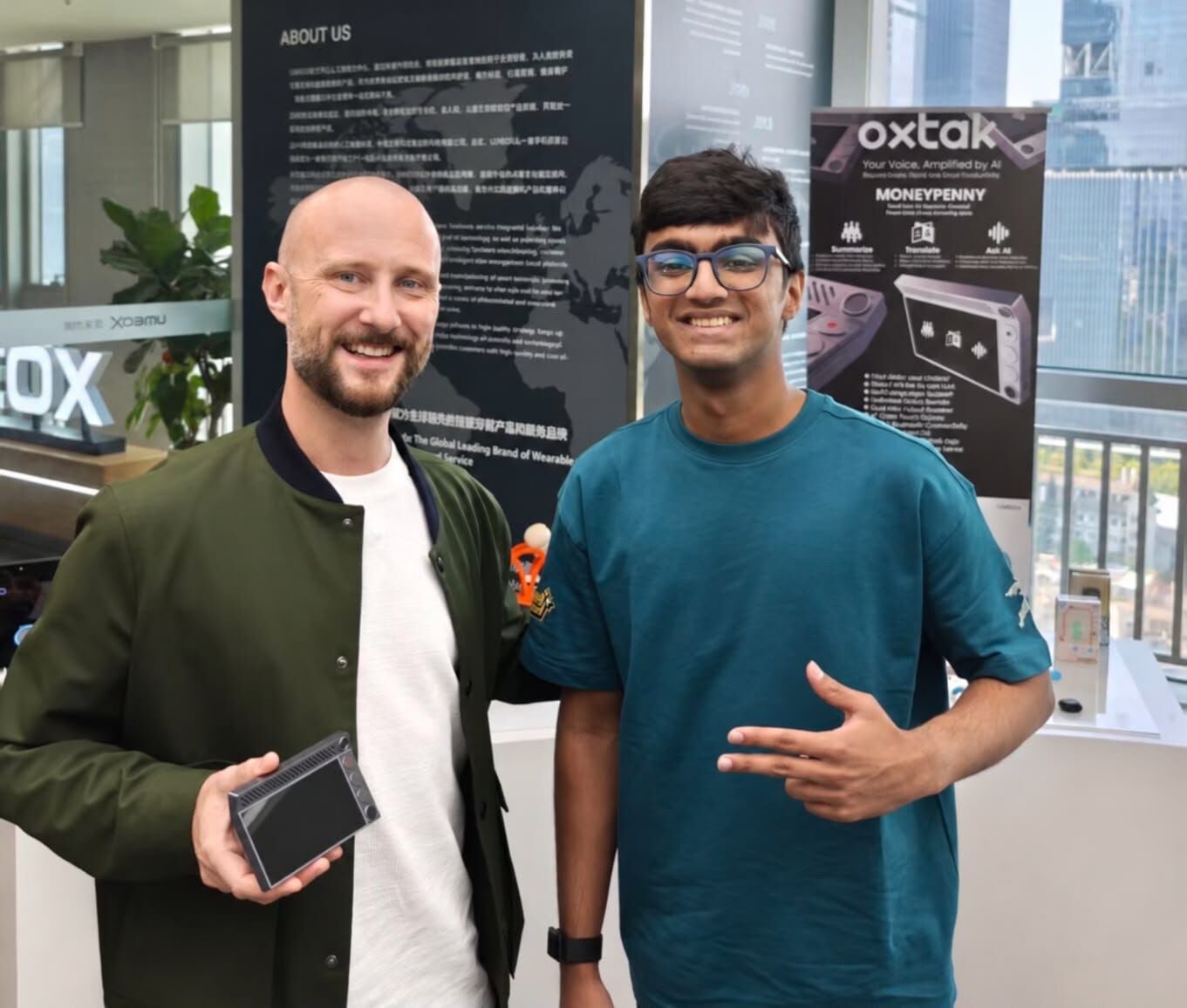
Hyderabad: City-based Aarav Garg, a 20-year-old founding team member and Chief Hardware Officer of AI startup Persona, is leading the development and manufacturing of a screenless, voice-enabled wristband as the company prepares to begin shipments in December 2026.
What does the gadget do?
The wearable, called Persona Band, is designed to bring a personal Artificial Intelligence (AI) assistant to users’ wrists, allowing them to interact with AI through voice commands without relying on a smartphone screen.
Garg is overseeing hardware engineering, product development and manufacturing, working closely with manufacturing partners in China to take the device from prototype to mass production.
The company is currently conducting sample production runs to evaluate build quality, test durability and resolve potential manufacturing issues before approving mass production.
Screenless wearable designed for everyday AI
Persona Band is designed to make conversational AI accessible during everyday activities without requiring users to look at a screen. Weighing 27 grams, the device features two microphones, a speaker and a ring of 12 LEDs that indicate its operating status.
According to the company, the band is designed to offer up to five days of battery life and support more than 120 languages.
The device is intended to work alongside Persona’s AI assistant, which can help users manage appointments, emails, notes and travel through natural conversation. The assistant is currently available in a free beta through iMessage, while the company prepares the wearable for launch.
Challenges behind compact design
One of the biggest challenges has been fitting multiple components, including a speaker, a dual-microphone array and a battery designed to last three to five days, into a compact wearable.
Garg said the engineering requirements forced the team to rethink the internal design and develop custom components, including a battery tailored to the available space.
The company initially considered leaving the speaker out of the first-generation device because of space and power constraints. However, the team eventually decided that users should be able to hear responses directly from the band rather than having to switch to their phones.
Adding the speaker made the product more complex to manufacture but helped create a more complete voice-interaction experience, Garg said.
The team has also simplified the strap mechanism to make wearing the band and changing straps easier. Achieving that convenience, however, has required a distinctive design and engineering approach, creating additional manufacturing challenges.
Waterproofing and durability under testing
As the company moves towards production, its focus has shifted from developing a functional prototype to ensuring consistent quality across manufactured units.
Garg said the team is conducting rigorous tests to identify potential failure points before the first mass-production run. These include submerging the devices in a water tank to check for water ingress and pressing the button 10,000 times to assess durability.
Waterproofing a device of this size while maintaining consistent build quality has been among the major challenges, he said.
The current phase also involves evaluating materials, finishes, assembly processes and the overall customer experience, from unboxing and setup to everyday use.
Plans to expand beyond the wristband
Persona views the band as the first step in a broader effort to develop hardware products built around personal AI.
Garg said the company plans to improve the wearable continuously over the next 12 months while developing an intelligence layer that could power future products. Additional hardware form factors are already being planned internally.
From robotics to AI wearables
The company’s approach is aimed at making AI available through dedicated devices that allow users to interact naturally, rather than depending entirely on smartphone-based interfaces.
Garg’s experience in hardware development began with building robots as a child. He later studied at Purdue University and went on to co-found Omi, another AI wearable startup, before joining Persona’s founding team.
At Persona, his responsibilities extend across hardware engineering, product development and manufacturing, including coordination with overseas manufacturing partners.
His role comes at a crucial stage for the startup, as it works to translate its design into a commercially viable product that can be manufactured consistently and delivered to customers.
$10 million funding at $100 million valuation
Persona has raised $10 million in a funding round led by Vine Ventures, with participation from Cory Levy and Collective Global. The company was valued at a reported $100 million following the round.
The funding is expected to support product development, business expansion and preparations for the wearable’s launch.
Persona Band is scheduled to begin shipping in December 2026, with preorders available at $179. The company’s immediate priority is to complete sample testing, address manufacturing challenges and ensure that the first production units meet its quality standards before shipments begin.