Rivian’s third-quarter results showed the EV startup closer to becoming a profitable carmaker, with the R2 as the key to its future plans. Rivian also believes in its chances to match Tesla as an EV and autonomous driving champion, especially as Elon Musk’s company appears to waver. But it will be a difficult road ahead, despite showing promising progress in 2026.
Many EV startups have tried to follow in Tesla’s footsteps, some of them by literally copying the EV market leader’s strategy. However, none of them have managed to get quite close, and many have disappeared trying to establish themselves as carmakers. There’s a long list of failed companies that tried to replicate Tesla’s success, including Lordstown Motors, Caboo, and Fisker.
Two EV startups are still hanging, although they’re not equals. Lucid Motors has an incredible technology advantage over its rivals, but poor execution and a model portfolio that isn’t fit for current market conditions have put it in a precarious position. The Air sedan will not gain any favor in a market that only wants SUVs, while the Gravity SUV is still too expensive for most EV buyers.
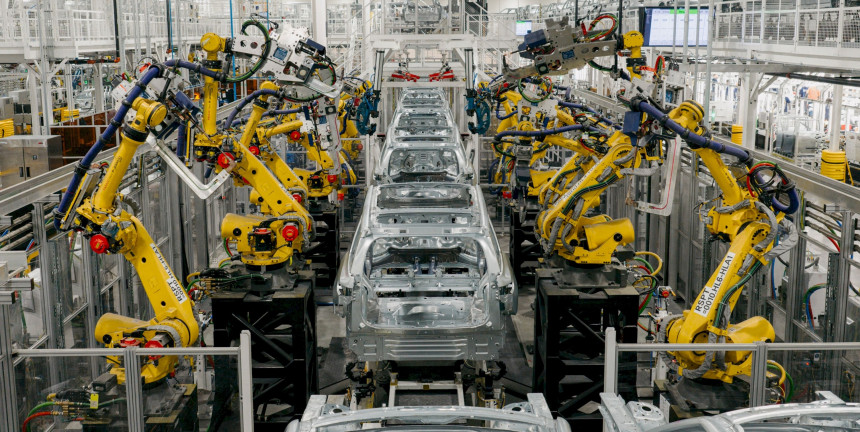
Rivian is further up the ladder, having recently launched its first mass-production EV that props up its hopes of becoming profitable. The Rivian R2 has shown a better-than-expected production ramp-up, with a second shift added recently at its Normal, IL, factory. The carmaker is still losing money on every vehicle it makes, but it hopes the R2 will change that prospect by the end of the year.
Rivian’s third-quarter financial results look promising
In the third quarter of 2026, Rivian beat Wall Street expectations on almost every metric. The EV startup reported revenue of $2.16 billion vs. $1.99 billion expected, which also happens to be a 38% improvement over Q3 2025. The better-than-expected results encouraged Rivian to revise its 2026 guidance upwards, both financially and in terms of vehicle deliveries.
Photo: Rivian
Rivian is still losing money overall (about $8,400 per vehicle delivered), but its losses continued to narrow, with the Q3 net loss below $1 billion for the first time. Rivian reiterated that the R2 will have positive gross margin by the end of the year. However, the company must scale beyond current R2 production plans of 160,000 units in order to achieve overall profitability.
Volkswagen partnership remains key to achieving long-term objectives
Although the R2 remains a crucial topic, one of the less talked-about surprises was the software revenue. The Software and Services part of the financial results has become difficult to ignore, with $605 million in revenue. Roughly $354 million came from the Volkswagen partnership, making the German carmaker Rivian’s most important customer.Volkswagen is paying handsome money to get access to Rivian’s zonal architecture and software. Much has been said about this partnership, including doomsday scenarios. The latest bad news showed that Volkswagen is already hedging its software away from the Rivian partnership by planning to use Xpeng’s software developed in China. This might well be true, but not to the detriment of Rivian, as Rivian’s software guru Wassym Bensaid was quick to point out in a social media reply.

Photo: Rivian
This marks an important moment for Rivian, being the first part of its software stack shared with Volkswagen. The original partnership terms only included the zonal architecture and core vehicle OS. I can certainly see how Rivian’s Autonomy efforts will next be on Volkswagen’s radar, especially if Rivian demonstrates decent competence in this area.
Autonomous driving is the next chapter
If you’re in the Tesla bubble, you probably believe that nobody but Tesla could develop autonomous vehicles, and everyone else is so far behind that you can only see them with a telescope. Well, that’s not very accurate, even though Tesla has an important advantage. Waymo might be further ahead in the autonomous driving game, although Tesla has been growing faster.
Photo: Rivian
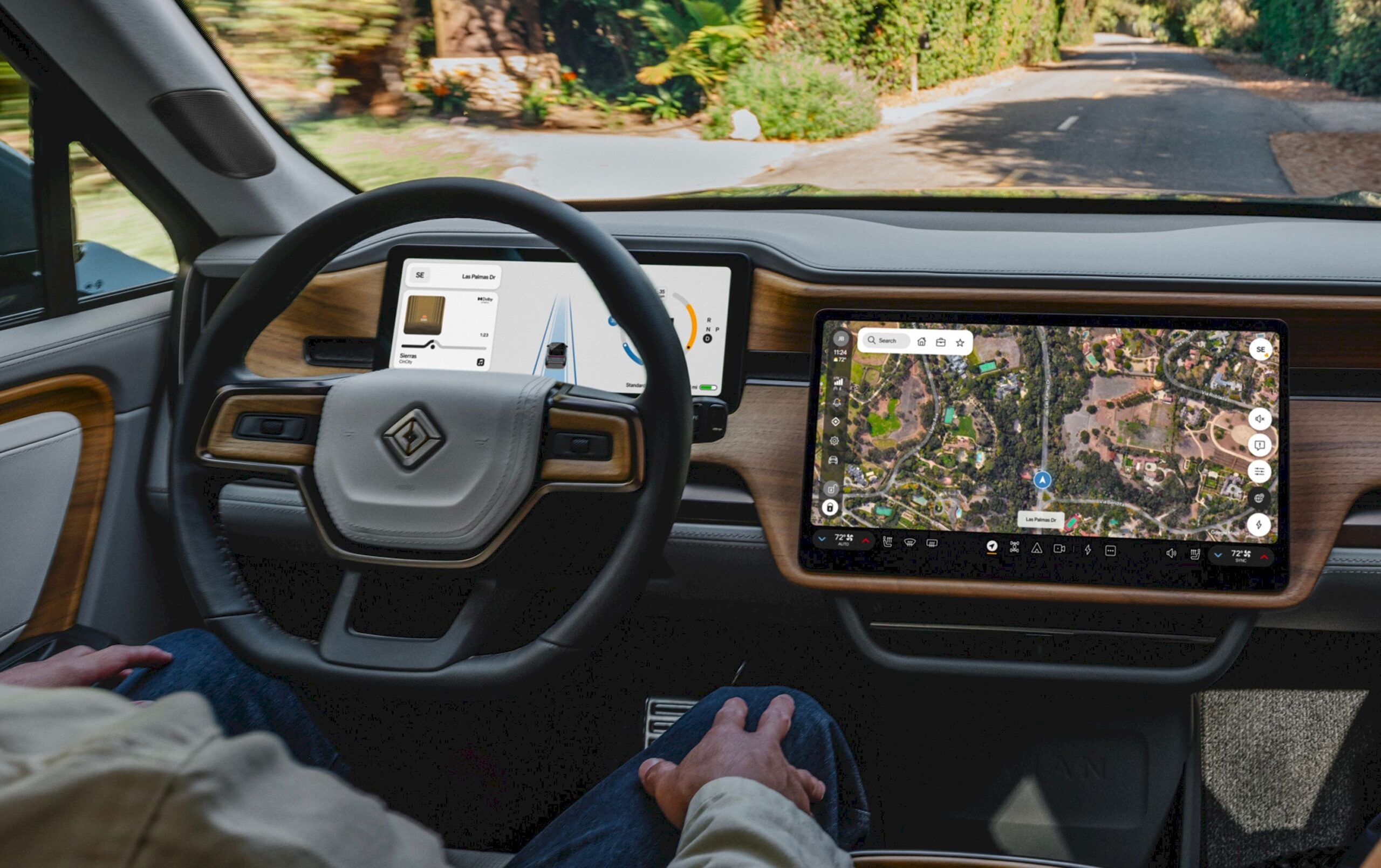
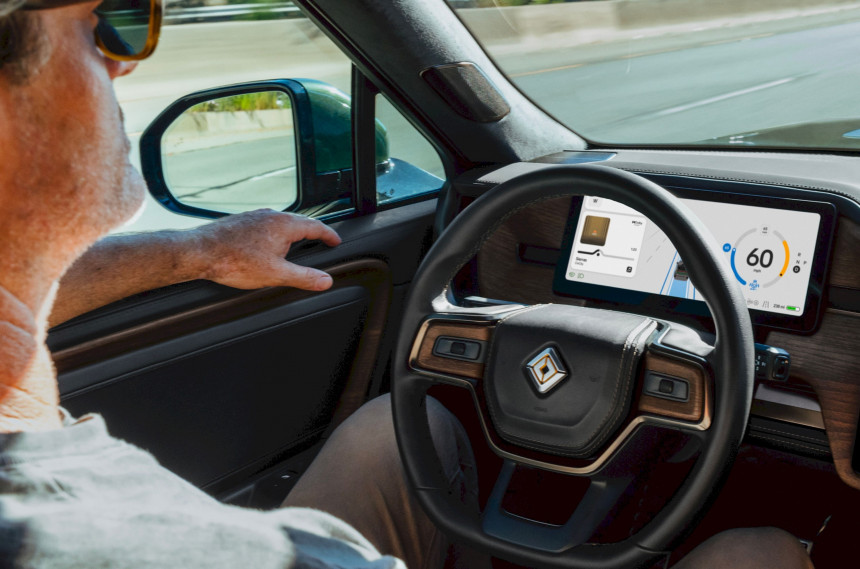
You can see how important autonomous driving is for Rivian, with RJ Scaringe spending an important part of the earnings call talking about it. Scaringe reiterated that point-to-point hands-free driving will launch later this year, starting with its own employees and early-access testers. Regular customers should get the same features next year, followed by the launch of Rivian’s robotaxis in partnership with Uber in 2028.
How well these steps will be executed will largely dictate the success or failure of Rivian’s bid to become an autonomous driving player and take on Tesla. Even though Tesla spent a lot of time polishing its self-driving software, it doesn’t mean that Rivian has no chance of catching up. Let’s not forget that Tesla botched its autonomous driving stack and only turned to end-to-end AI in 2023, with the FSD V12. Almost everything it tried before had to be discarded, so you could say it only has a three-year head start.
Rivian has a lot to catch up, including designing its own chips, a step it announced last year during the Autonomy & AI Day. For some reason, the EV startup still believes Lidar is worth pursuing, even though its current vehicles don’t ship with the required sensors. To complicate things further, Rivian doesn’t offer a timeline for when Lidar will equip its vehicles, or when the RAP1 chips will start production.
Source link