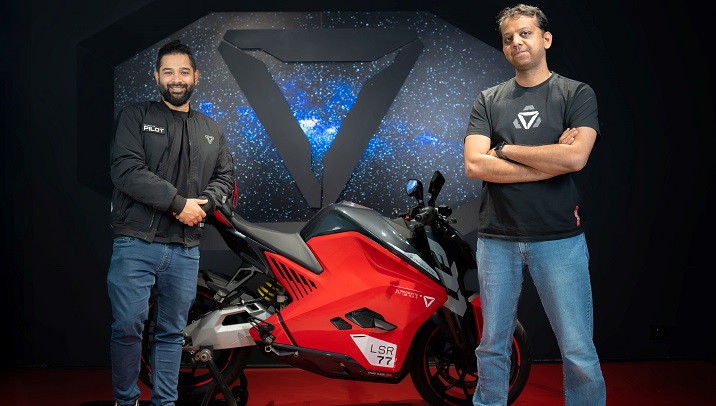
Global venture capital firm Antler plans to back at least 100 additional African startups over the next five years, focusing on investment opportunities in electric mobility, renewable energy, battery storage, and AI infrastructure as highlighted by CEO Magnus Grimeland at a summit in Lagos.
Global venture capital firm Antler plans to support at least 100 additional African startups over the next five years as investment opportunities expand across electric mobility, renewable energy, battery storage and artificial intelligence infrastructure.
The firm’s founder and Chief Executive Officer, Magnus Grimeland, disclosed this at the Building and Funding Africa’s AI summit held in Lagos. Grimeland, who participated in discussions alongside Emmanuel Lubanzadio, Africa Lead at OpenAI, and Tom Duff Gordon, Vice President of EMEA Policy at OpenAI, said African entrepreneurs had significant opportunities to build businesses around emerging technologies and the infrastructure required to support them.
Also readKidnappers abduct 100-level Plateau varsity student, shoot another
He identified electric vehicles, renewable energy, battery storage, electricity infrastructure and data centre technology as promising investment areas. According to him, the growth of electric mobility and artificial intelligence would create demand for supporting infrastructure, providing opportunities for entrepreneurs to develop businesses across different parts of the value chain. Addressing Antler’s interest in Nigeria’s electric vehicle market, Grimeland identified the sector as a significant investment opportunity, citing China’s rapid EV adoption and the growth of electric mobility businesses in Vietnam.
He explained that combining electric mobility with energy storage, renewable energy and additional power generation could create a broader investment opportunity, particularly as artificial intelligence increases demand for electricity.
“If we combine that with energy storage and the renewable energy, plus obviously you need to roll out other sources of power generation, it also fits very well with the whole AI rollout because that requires power as well,” he said. Grimeland added that entrepreneurs could develop businesses across the electric vehicle supply chain, including vehicle production, charging infrastructure and supporting electricity systems. The opportunity comes amid the global transition towards electric mobility.
According to the International Energy Agency’s Global EV Outlook 2025, electric car sales exceeded 17 million units worldwide in 2024, accounting for more than 20 per cent of new car sales. China accounted for more than 11 million of those sales, with electric vehicles representing over 40 per cent of new car purchases.
For Nigeria, the expansion of electric mobility could create opportunities for vehicle assemblers, charging infrastructure developers, battery suppliers and logistics operators seeking alternatives to petrol- and diesel-powered fleets. Electric motorcycles, delivery vehicles, buses and commercial fleets could also provide opportunities for businesses looking to reduce transportation costs.
However, high vehicle acquisition costs, inadequate electricity supply, limited charging infrastructure and access to financing remain significant challenges to widespread adoption. Beyond electric mobility, Grimeland highlighted energy infrastructure as a critical component of the emerging artificial intelligence economy. He noted that major technological shifts typically generate substantial investment in infrastructure before opportunities expand into software and other business applications. The growing demand for artificial intelligence computing has increased the importance of electricity generation, energy storage and data centre infrastructure.
The International Energy Agency estimated in its Energy and AI report that data centres consumed approximately 415 terawatt-hours of electricity globally in 2024, representing about 1.5 per cent of worldwide electricity consumption. The agency projected that consumption could more than double to approximately 945 terawatt-hours by 2030, driven partly by artificial intelligence. For African entrepreneurs, this could create opportunities in power generation, battery storage, smart grids, energy management and data centre services.
Grimeland identified three broad areas through which African businesses could participate in the AI economy: infrastructure development, software and foundational models, and traditional businesses using artificial intelligence to improve productivity. He also cautioned entrepreneurs against developing simple applications that depend entirely on existing AI models without establishing a sustainable competitive advantage. His comments suggest that businesses could create more value by applying artificial intelligence to specific industry challenges rather than simply building products around existing technologies.
In Nigeria’s automotive and logistics sectors, potential applications include fleet management, vehicle maintenance planning, route optimisation, inventory management and demand forecasting. Meanwhile, Lubanzadio challenged the perception that Africa was primarily a consumer of artificial intelligence rather than a continent capable of developing its own solutions. He acknowledged the growing use of AI tools across the continent but argued that this did not adequately reflect the activities of African developers and entrepreneurs building technology-driven businesses.
He pointed to OpenAI’s developer community initiatives in Nigeria, Kenya and South Africa, where local ambassadors support and bring together technology communities. Lubanzadio also highlighted the Codex Challenge, organised through OpenAI’s Open Academy initiative in partnership with Andela, as an example of how young African developers were using AI tools to build innovative products.
According to him, some participants developed impressive solutions in less than two weeks, demonstrating how access to AI development tools could reduce technical barriers for aspiring entrepreneurs. He maintained that African founders did not necessarily need to develop large foundational AI models before creating commercially useful products. Instead, they could leverage existing AI technologies to address challenges in sectors such as transportation, healthcare, agriculture, energy and manufacturing.
For logistics operators, for instance, AI-powered solutions could help improve delivery schedules, analyse transportation patterns, optimise vehicle utilisation and reduce supply chain disruptions. On the investment side, Grimeland disclosed that Antler had backed approximately 2,000 companies globally and expected to support at least 100 additional African startups within the next five years. He said the firm’s investment approach focused on identifying promising founders at the earliest stages of business development and providing them with capital, expertise and access to investors.
“We want to be there not only at day zero but also like partners throughout the entire journey,” he said. Antler Africa partner Anil Atmaramani also explained that the firm prioritised founders with strong industry knowledge and the ability to execute their business ideas. He disclosed that qualifying startups could receive an initial investment of $100,000 at a $1m valuation after demonstrating that their businesses were investable.
The investment approach could benefit entrepreneurs developing solutions in electric mobility, energy systems, manufacturing, logistics and other sectors requiring technical expertise and a strong understanding of local market conditions. Although Antler did not announce a specific investment commitment to Nigeria’s automotive or logistics industries, Grimeland’s remarks identified electric mobility and its supporting infrastructure as areas of interest. Gilbert Ekugbe is a journalist at Punch Newspapers with over a decade of experience reporting on business and economic affairs.
He covers markets, corporate developments, finance, and Nigeria’s broader economic landscape. His reporting is informed by extensive newsroom experience and a strong commitment to accuracy and responsible journalism, helping readers understand complex business issues. This material, and other digital content on this website, may not be reproduced, published, broadcast, rewritten or redistributed in whole or in part without prior express written permission from PUNCH.
You can now comfortably earn US Dollars when you acquire premium domains for as low as $3000 and profit $15,000-$35,000. Ideal for professionals like Entrepreneurs, Doctors, Civil/Public servants, IT Experts, Accountants ETC.Stay informed and ahead of the curve! Follow The Punch Newspaper on WhatsApp for real-time updates, breaking news, and exclusive content. Don’t miss a headline – join now!