
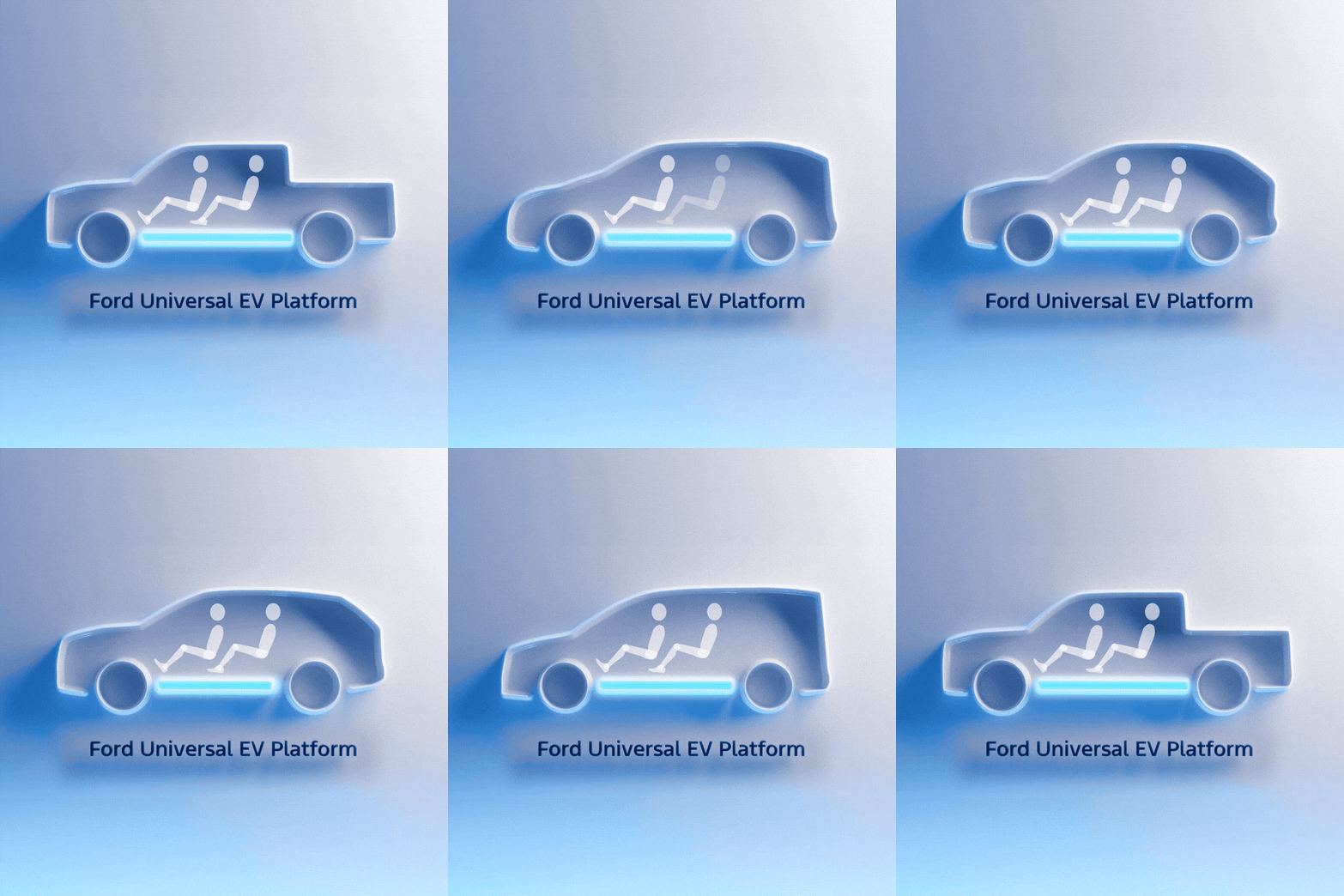


Ford recently opened a “skunkworks” facility to accelerate EV development in the hopes of catching up with China, whose EV industry is rapidly taking over the globe. And we got a chance to look behind the veil and see what they’ve been up to in developing the new “Universal EV.”
The Chinese auto industry is ascendant in this moment. Everyone knows it – including Ford CEO Jim Farley, who has been driving Chinese cars and visiting China, and finding himself “humbled” by what he sees.
So, Ford decided to do something about it. It announced a $5 billion investment into EV manufacturing last year, centered around the “Ford Universal EV Platform” which will allow low-cost production of several different electric vehicles, starting with a mid-size pickup at around $30,000. The Louisville production line that will build the Ford UEV is already being set up with an expected 2027 release.
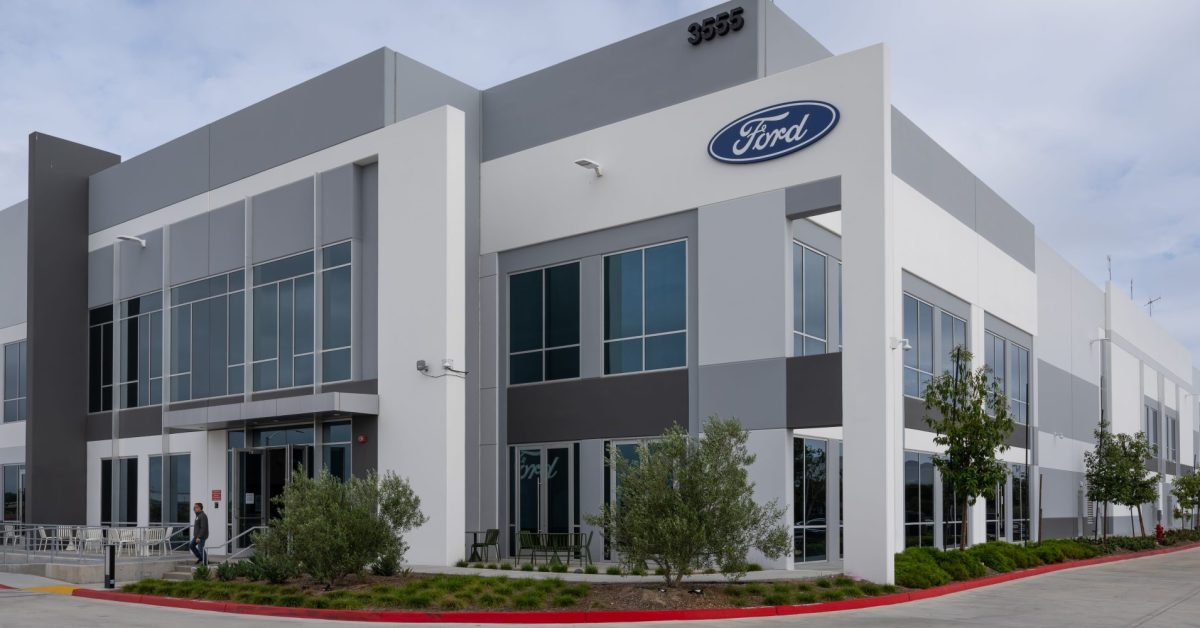
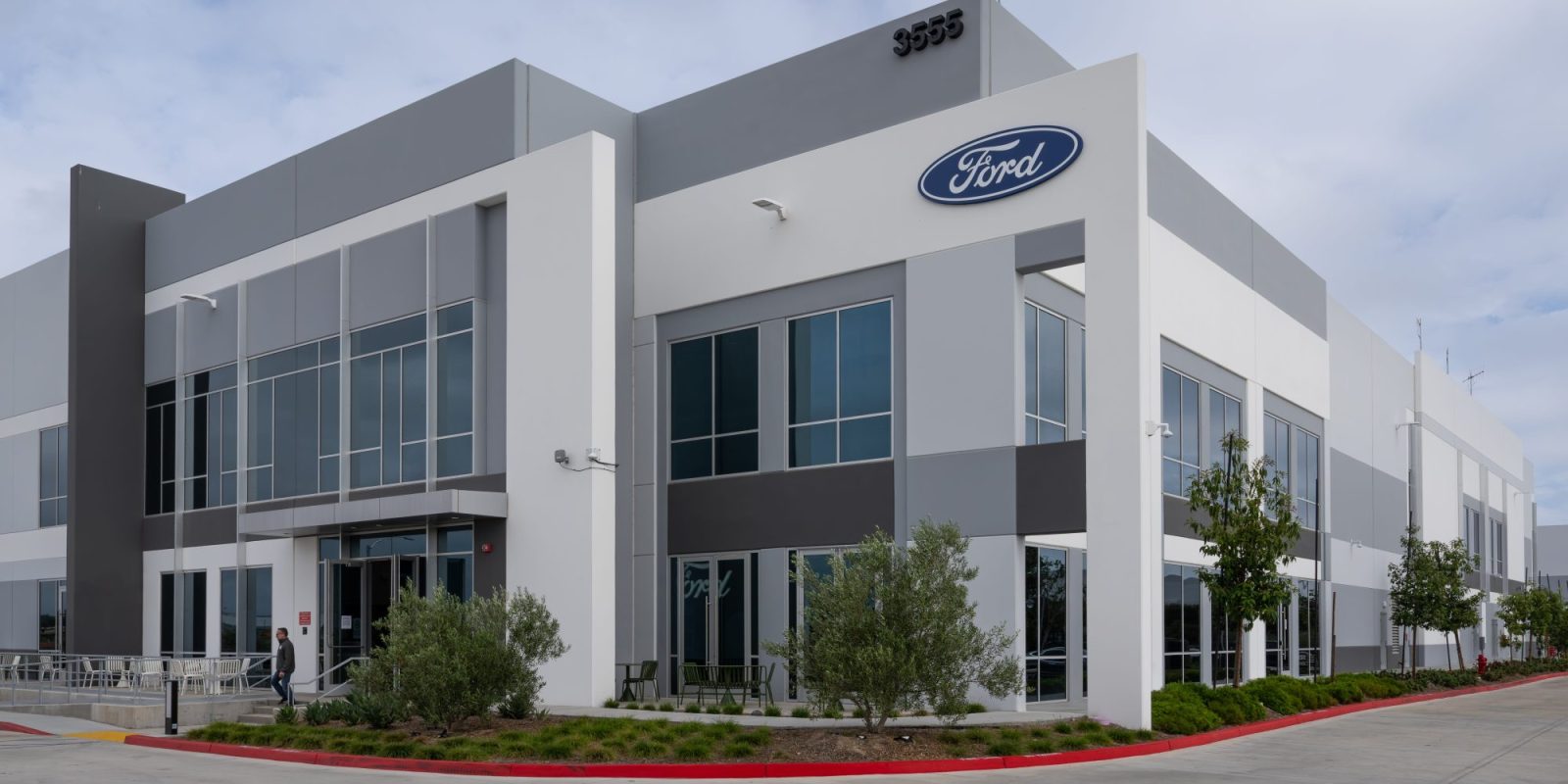
That’s not long from now, and in service of this goal, it has opened a new skunkworks-like facility with the plain name “EV Design Center” in Long Beach, CA, intending to get all the factors of EV design and development under the same roof in order to speed up the process. And it invited us out for a tour last week.
Ford went on a hiring spree to fill out employment at the EVDC, bringing together select Ford employees that it thought were cut out for the startup culture and employees from elsewhere in the EV startup space. It found Long Beach to be a good place for this due to its proximity to high-tech design and manufacturing jobs in the aerospace industry. And having all these toys available in the same location has been a good recruiting tool for top engineering talent, who want to be able to test out their ideas quickly.
Employee #1 at the facility is Alan Clarke, who spent 12 years at Tesla. We also heard from other employees who had worked at an “electric adventure vehicle company” (hmm, wonder which one that could be?). Doug Field, previously of both Tesla and Apple, was involved until he left Ford last month.
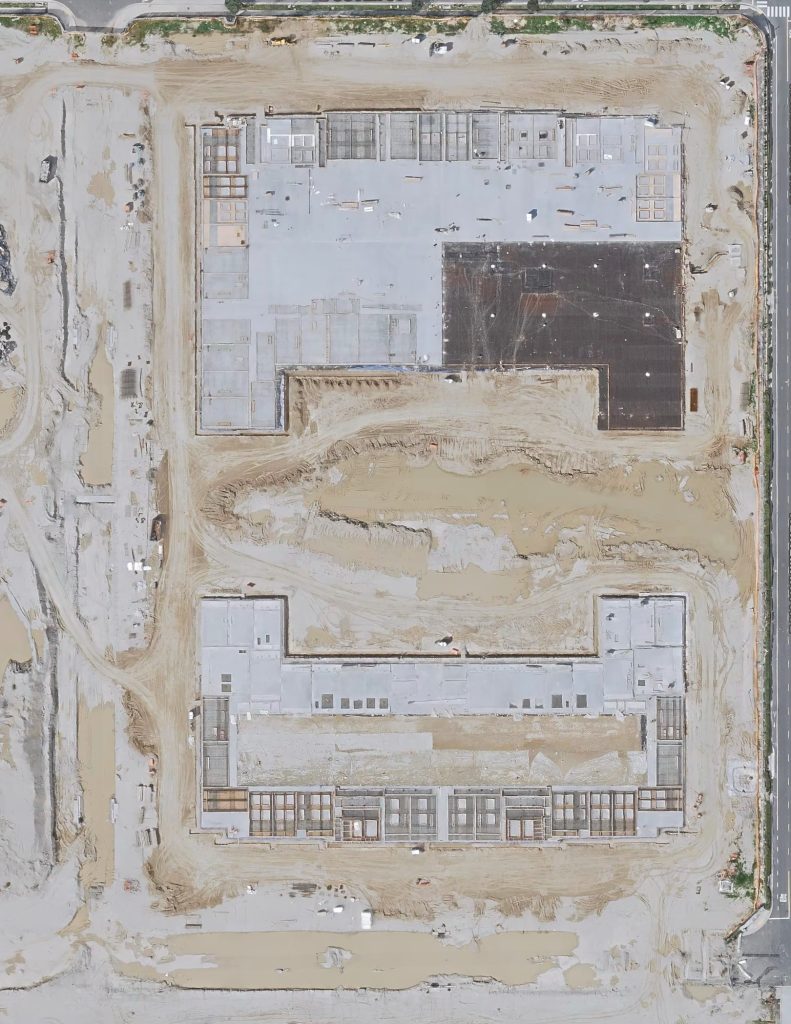
The EVDC spans two buildings just next to Long Beach Airport (interesting, given Clarke came from Tesla’s Design and Engineering Center, which is just next to the Hawthorne airport). And it’s so new that the satellite map still has it looking like this:
So even though it has been open in some way or another for most of a year now, a lot of things were still “in progress” during our tour. Equipment is being moved in, work stations are being set up and so on.
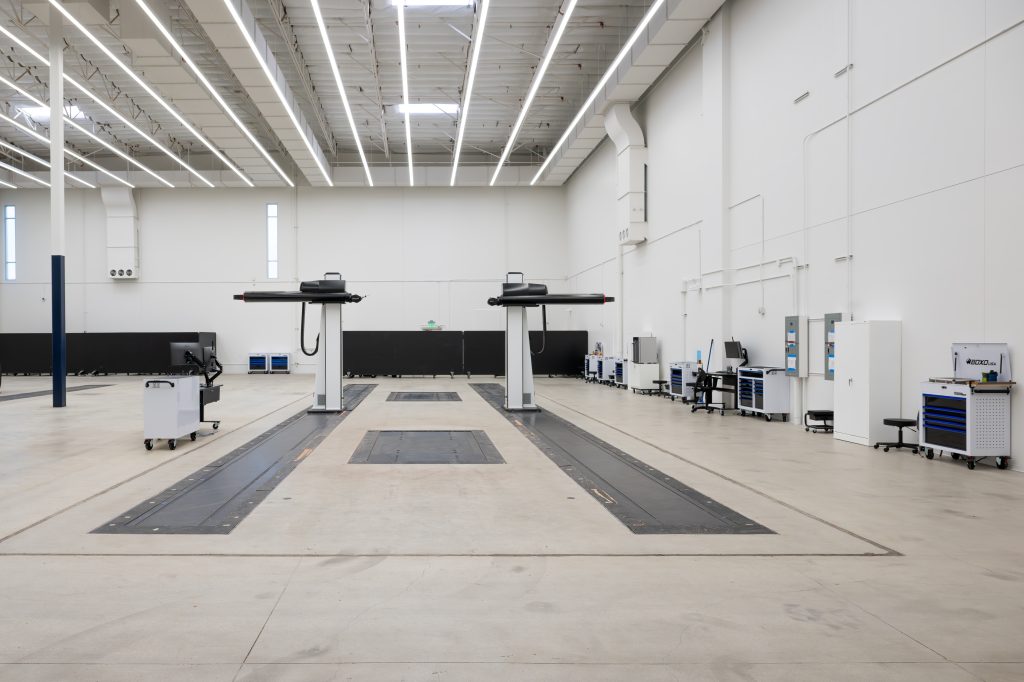
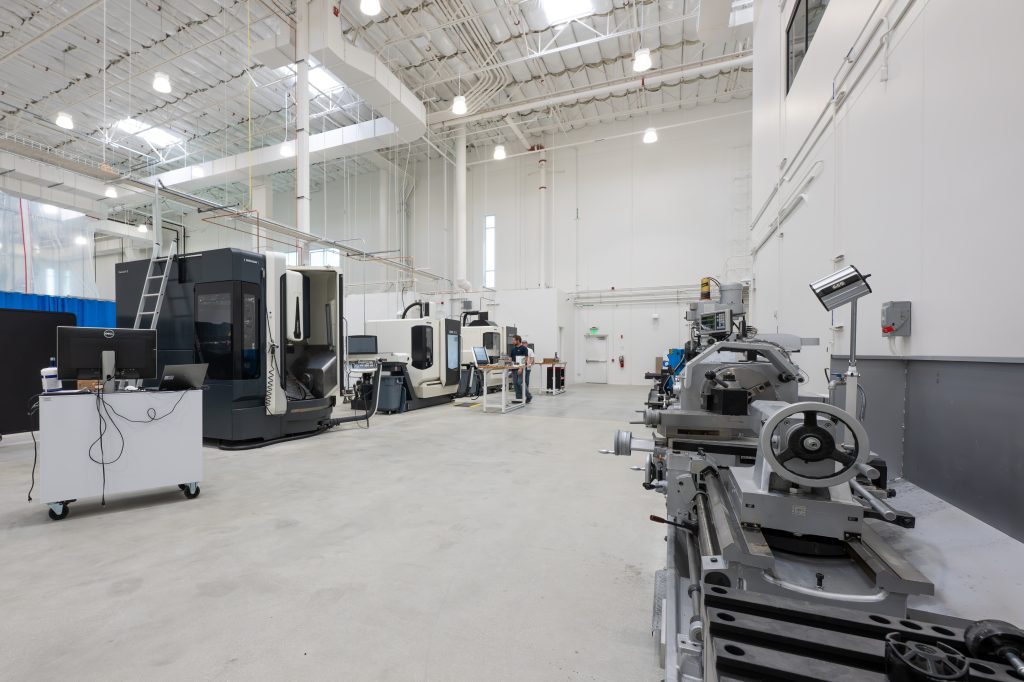
Our tour consisted of several stops through the building at various stations to see how Ford works at each step of the development process, all of which are under one roof (well, two). Here are a few of the interesting bits – but we weren’t allowed to take photos, so all these assets were provided by Ford.
Our tour – heavy on the details
We started in the visualization studio, a big empty room where Ford can use VR to aid the development process, seeing what a car would look like before building physical models of it. Here we saw a model of a car split into three segments – to allow manufacturing of each part of the car in parallel, rather than sequentially on a single assembly line.
Ford is using unicastings to make each of these segments, deleting hundreds of structural parts from the car in the process.
Breaking up the car also allows for better ergonomics for workers, who can more easily access and bring tools into the center of the vehicle. Ford claims it’s reinventing vehicle assembly with this new mentality.
This was the first time on the tour that we heard about Ford’s “the best part is no part” philosophy, which was repeated several times. Reducing the number of parts on the car, and giving parts multiple functions wherever possible, helps reduce cost and complexity, and increase repairability.
Perhaps the most interesting room, to me, was the design studio, because we saw several clay models in there. That said, they were all covered with sheets, and even had the underlying shapes camouflaged to throw us off the track (either that or Ford is making a bunch of polygonal Cybertruck-likes, which I find unlikely).
It did look like there were at least three different models in the room, with something that looked like it would be a long low SUV, something along the lines of a Kia EV6; a long boxy SUV similar to the Rivian R2; and my favorite, something that looked smaller and somewhat like a hot hatch. (Also, uncovered, there was an old Ford Escort racing car in the corner)
Ford said that it is focusing on wholly new parts for its interior materials, rather than carrying anything over from its other vehicles, from paint colors to the hooks used to secure the floor mats.
I asked how this could reduce costs, given access to the Ford parts department was supposed to be one of the things that brought costs down for incumbent manufacturers. Ford said that it still has access to Ford’s parts bin, but can use those assets strategically while otherwise thinking about how to minimize waste by starting with a clean sheet approach.
We then passed fabrication rooms with prototyping machines for various parts of the vehicle, from a rack of 3D printers to a full sized automotive gantry mill.
But even before that portion of the prototyping process, Ford will sometimes do a plywood mockup of a proposed vehicle, just to see how the proportions work and how everything fits together. We saw one of these old models,
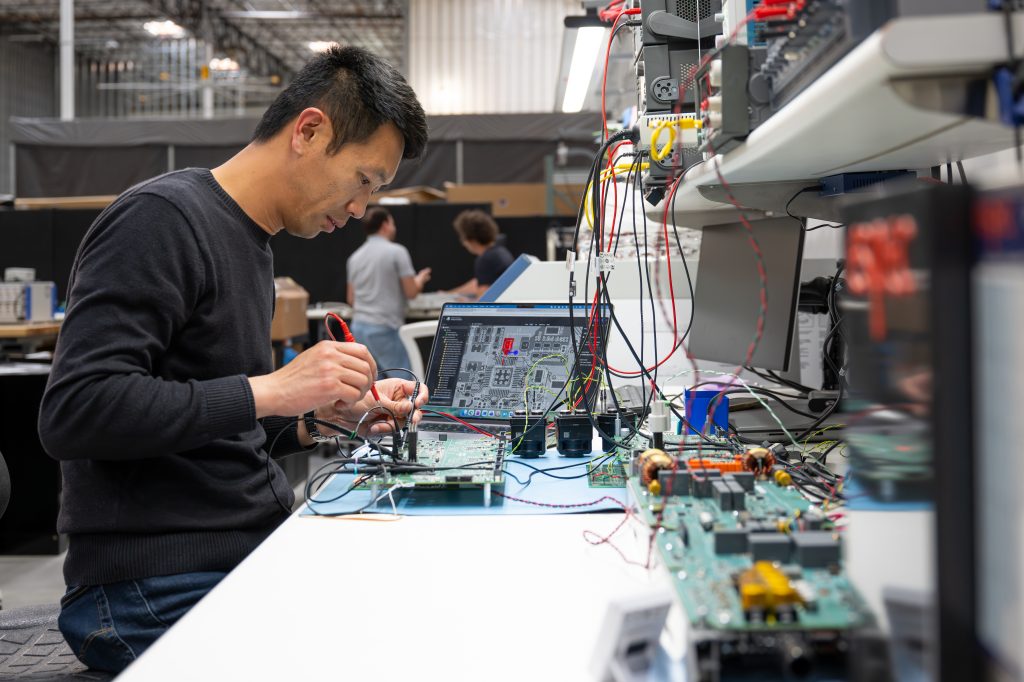
In the second building there were more of the technical, electrical bits of the car. Here Ford has a whole battery lab where it tests batteries, power electronics and charging. Ford is planning to use lithium iron phosphate (LFP) batteries, which are lower cost than the typical nickel manganese cobalt (NMC) batteries seen in EVs (in short: I think LFPs are better for many reasons, and I like this choice).
Some on the battery team expressed happiness with having so many resources at their disposal, after having experienced more “lean” workspaces in their startup past.
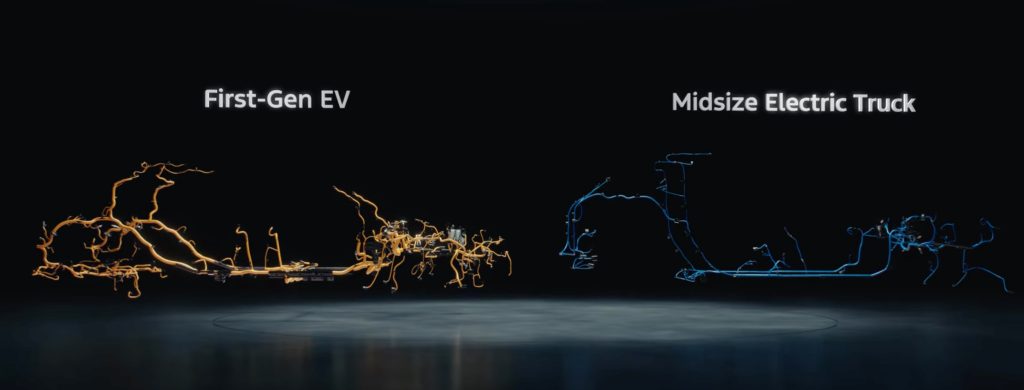
The car will use zonal architecture, which you may have heard of in the VW/Rivian tie-up, as a method of reducing electronic complexity and wiring harnesses. Shifting to a NACS/J3400 inlet also helped reduce wiring complexity, as did merging AC and DC charging into one power electronics box which Ford calls the “E-box.”
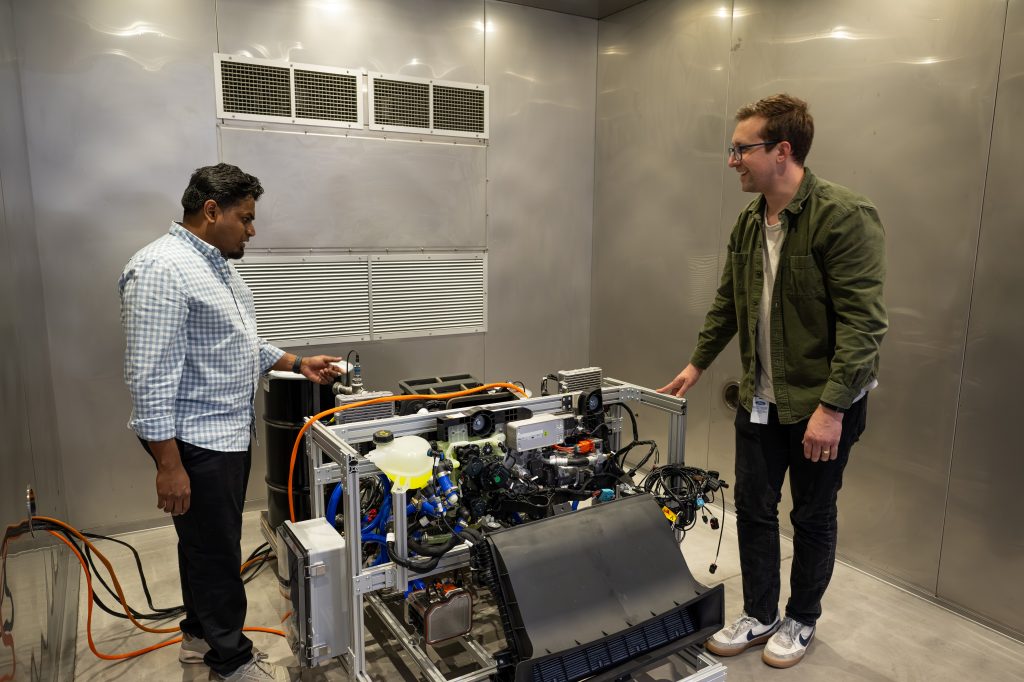
Ford does thermal testing in the same room, with a mockup of the car’s HVAC system – which won’t have a resistive heater, and everything will be done via heat pump, moving heat from where it is to where it’s needed (or where it’s not).
Ford also has a very cool room-sized dynamometer that can test everything about the vehicle in various environmental conditions. It can simulate temperatures from -40 to 150ºF, full sunlight, and the effects of wind, hills and towing. It’s right next to both AC and 400kW DC chargers in the room, to stress test vehicles in difficult driving and charging conditions, and to test what range numbers the cars might get under these conditions.
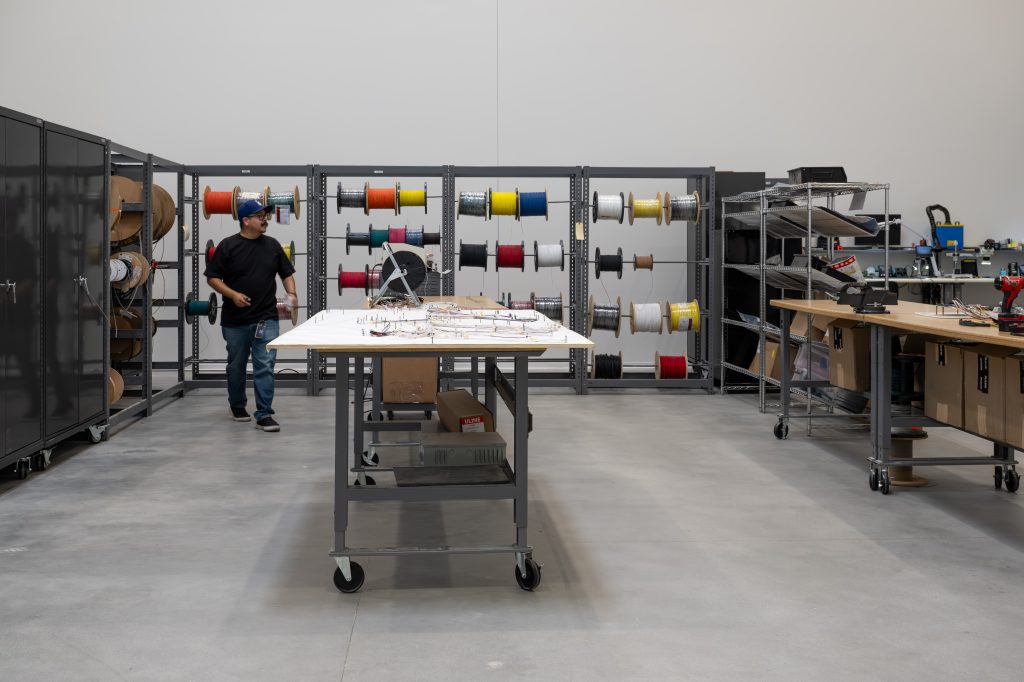
We got to see Ford’s “lab car,” a mockup of the wiring harness to make sure that everything is connected and working properly, and supplier parts and connectors are all up to spec. It also lets Ford test power consumption of parts, and test software updates to its 5 zonal controllers – a much lower number than on most vehicles. Ford wants to maintain control of the car’s microcontrollers so that it can push OTA updates faster and not have to collaborate with suppliers before doing so.
The wire harness is also smaller due to Ford’s transition to 48-volt architecture, first pioneered by Tesla in the Cybertruck. As was the case with NACS, Ford is one of the first to pick up the gauntlet that Tesla threw down.
Finally, the largest room is the fleet center, where Ford has several of its own vehicles and those of competing manufacturers (though the only one we saw from another manufacturer was an Ioniq 5N, and there were oddly some non-EV Fords in there). This is used for benchmarking other brands, and also testing prototypes in a location that’s close to every EV design team, so the fleet team can reach out to any of them if there’s a problem.
As we walked out, we were treated to an obviously-staged drive-by by a camouflaged prototype of a pickup truck… which happened far enough away and quickly enough that we didn’t get any detail out of it. But a rolling prototype of some sort seems to be on the table.
The main theme we encountered through the tour was Ford’s focus on “failing fast,” the startup culture buzzphrase that new ideas should be tried, even if they’re bad, so that we can move on from them and learn and try something else. Constant iteration is the way that businesses get or stay ahead, and it’s something the US auto industry hasn’t necessarily always done.
And right now, it’s something that China does exceedingly well at. China’s manufacturing districts allow for quick iteration, not necessarily always under the same roof as Ford’s EVDC does, but with entire cities built around electronics manufacturing like Shenzen, it’s easy to go down the street to a supplier instead of having to get parts shipped all around the world.
Electrek’s Take – the big picture
Above, I recounted a lot of the minor details of our tour, but in general, I’m more interested in how all this stuff fits into the bigger picture. How is Ford’s effort here going to accelerate EV development, and how is that going to serve our global, species-wide goal of continuing to exist on this planet in the face of climate change, which is disproportionately caused by the automobile.
The tour was impressive, and it looks like Ford is thinking about EVs in what I would consider “the right way.” A ground up, high-collaboration, fast-moving approach is what’s needed in this current moment, and it’s what has been missing from traditional automotive, which has allowed startups, either in the form of companies or countries, to move into the space that traditional automakers might have thought they had locked down.
And notably, amongst the phrases we heard repeatedly (fail fast, best part is no part, etc), one word we didn’t hear was “AI.” Which is actually a bit reassuring – if Ford was just looking to throw buzzwords in our face, then surely that would have been one of the first.
But something did give me pause, because of the context in which the visit occurred.
Recently, Ford has canceled several EV programs. The F-150 Lightning was canned before it could ever get to its purpose-built platform, and its next generation will sport a fossil engine. Ford’s potential next-gen electric van was cancelled, and replaced with a gas model. A potential three-row EV was scrapped. The company also renamed its Tennessee Electric Vehicle Center to Tennessee Truck Plant, and is spinning off its joint battery venture.
Ford says that it “can’t walk away from EVs,” and yet it has recently walked away from several. Ford wants you to buy American EVs instead of Chinese ones, and then it takes its domestic EVs off the market.
All of this is part of a $19.5 billion writedown in Ford’s EV assets, as the company commits to the gas-powered vehicles that are not just destroying the planet and the health of everything on it, but also ensuring the US auto industry falls further behind the rest of the planet.
(Ford claims it’s “following customers,” but EV sales continue to rise globally, especially as a dumb oil war spikes gas prices, and gas car sales will never again reach their 2017 global peak. Ask Kodak, Blockbuster and Nokia how selling into a shrinking market worked for them)
Now, maybe all those moves are just a matter of cutting the chaff and pivoting to focus on a truly next-generation EV, designed from the ground up with a clean sheet approach – which frankly is how EVs should be made anyway. But if so, what about continuity in Ford’s EV programs? Were the previous programs just slapdash efforts to get something on the road, and the real cars will come Soon™ out of the EVDC’s efforts?
And if that’s the case, why is this happening now, and not sooner? We heard of a similar effort within Ford several years ago: Team Edison. That group was tasked with a similar goal of jumpstarting EV development within the company at a time when Ford was far behind. While it looked for a while like Team Edison had borne fruit (Mach-E, Lightning), Ford is now falling behind again by canceling so many of its programs.
(We asked about the difference between EVDC and Team Edison, and Ford said that EVDC has been given more freedom to break Ford’s internal rules, and that Edison never had its own development center with everything on-site. So that’s a big improvement already.)
In addition, Ford has recently lobbied to slow down EV timelines in Europe directly, and has done the same in the US via its membership in the auto industry’s biggest lobbying group, the Alliance for Automotive Innovation. Ford’s CEO, Jim Farley, made a desperate appeal to ensure that Chinese EVs never make it to the US, claiming letting them in would harm the “heart and soul” of the US.
But tariffs/bans just breed complacency, they don’t solve the problem of being behind.
The competition, China, is not canceling EV programs or trying to stop clean vehicle adoption, instead it’s charging ahead. In China, there are new EVs announced every day. There were 1,451 vehicles, 181 world premieres and 71 concept cars at the Beijing Auto Show last week. Just about all of them were electric.
As a result of this, China recently became the world’s top auto exporter. That change happened fast, and in a time of spiking oil prices shocking nations into finally realizing they need to get off of this resource that everyone has known for decades that we need to get off of, China is already equipped to offer that solution to the globe.
Ford reminded us during this tour that it is a global automaker, and it has development offices elsewhere around the globe. This is the only one of those development offices fully focused on EVs, and it’s still being set up. China just showed off 1,451 vehicles last week, and Ford is working on one vehicle in one development office. (Albeit a platform that will be used for other vehicles, hopefully soon after the $30k electric truck’s 2027 release)
That one vehicle would put Ford behind such global automotive powerhouses as… Xiaomi, a smartphone company, that currently produces and sells two EVs, both developed on rather swift timelines. And they’re pretty good ones too.
So Ford’s effort here seems real, and shows a real effort to improve upon processes that have been far too slow for far too long.
But it’s also late, and has been accompanied by efforts showing the automaker is pulling in the opposite direction on a corporate level. With so many canceled or delayed EV programs this last year, and with its lobbying activities trying to push back EV targets, it seems like Ford, on a high level, is pushing against EVs, rather than for them.
That doesn’t mean the employees at Ford’s EVDC aren’t doing the right thing or haven’t been set up for success. It sounds like a smart strategy when all put together, and one that could compete and become faster, which traditional automakers sorely need to compete both with startups and the Chinese.
So while we met with a lot of smart people who are looking at ways to make development timelines faster, that only works if the executive class is not working against them. If the EVDC is allowed to flourish, it could bring great things.
But we’re already seeing great things coming out of Ford’s global competitors, and they’re things that even the company’s CEO acknowledges would be “devastating” to its business if Ford were forced to compete with them.
The clock is ticking Ford – we hope your new development program is given the resources it needs to be fast enough to compete.
Charge your electric vehicle at home using rooftop solar panels. Find a reliable and competitively priced solar installer near you on EnergySage, for free. They have pre-vetted installers competing for your business, ensuring high-quality solutions and 20-30% savings. It’s free, with no sales calls until you choose an installer. Compare personalized solar quotes online and receive guidance from unbiased Energy Advisers. Get started here. – ad*
FTC: We use income earning auto affiliate links. More.
Source link