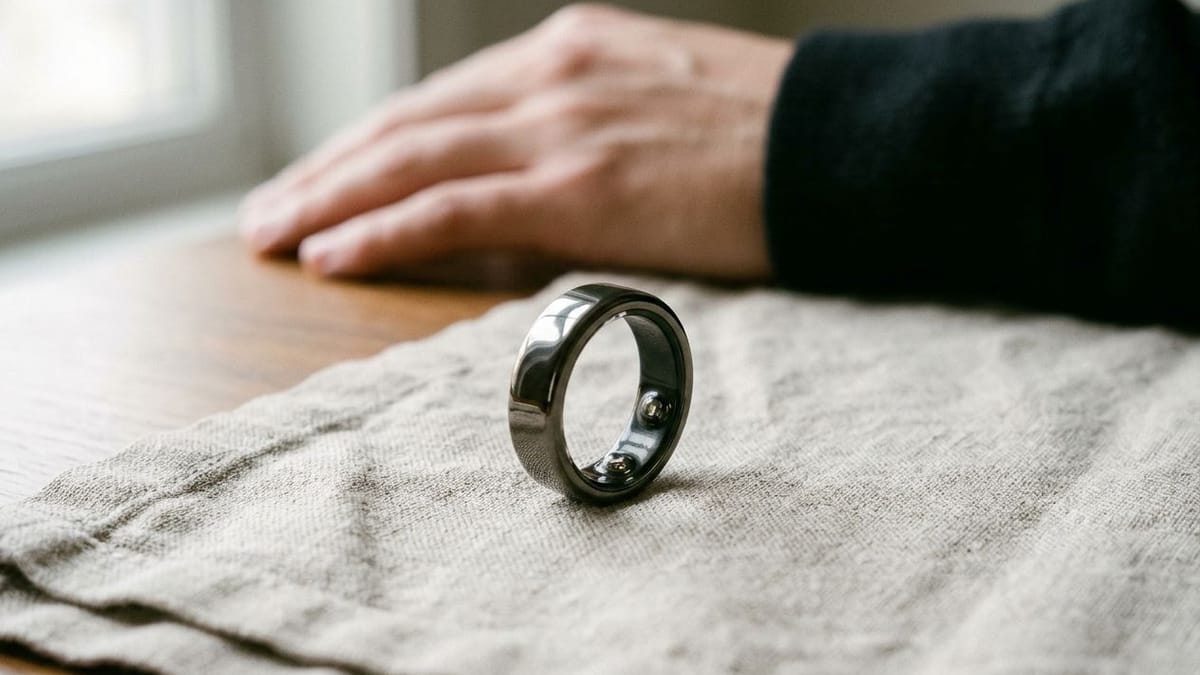
Oura just made its biggest bet yet on AI-powered healthcare, announcing a $625 million acquisition of Counsel Health, an AI-native primary care startup. The deal comes just weeks after the smart ring maker postponed its $2.2 billion IPO indefinitely, citing market uncertainty. The move signals a major strategic shift for Oura – from hardware maker to integrated health services platform – and represents one of the largest healthtech acquisitions of 2026.
Oura is making a massive pivot. The Finnish smart ring maker announced today it’s acquiring Counsel Health, an AI-native primary care startup, for $625 million in a mix of cash and stock. It’s a bold move that transforms Oura from a hardware company into something much bigger – a vertically integrated health platform that combines biometric tracking with actual medical care.
The timing is striking. Just weeks ago, Oura postponed its planned IPO that could have valued the company at up to $2.2 billion. The company cited “uncertainty in the IPO market” as the reason for the delay. Now, instead of going public, Oura is doubling down on a strategy that could redefine what a wearables company can be.
Counsel Health brings AI-powered primary care directly to patients, using machine learning models to triage symptoms, recommend treatments, and connect users with human physicians when needed. The startup’s technology analyzes patient data in real-time, offering personalized health guidance that goes far beyond what a fitness tracker can provide. For Oura, which has built its reputation on sleep and recovery tracking through its signature ring, the acquisition opens a direct path to monetizing the health data it collects.
The deal puts Oura in direct competition with tech giants circling the healthcare space. Apple has been steadily adding health features to the Apple Watch, while Amazon continues to expand its pharmacy and telehealth services. But Oura’s approach is different – it’s betting that combining passive biometric monitoring with AI-driven care can create a seamless health experience that neither pure hardware nor pure software companies can match.
The $625 million price tag is significant, especially for a company that just pulled its IPO. It suggests Oura either has strong backing from existing investors or is confident enough in its cash position to make this bet. The company has raised over $300 million from investors including Dexcom, Eisai, and several high-profile individuals. Those backers are now betting on a very different company than the one they initially funded.
This acquisition fits into a broader pattern of AI tools driving up healthcare costs, with Blue Cross Blue Shield data showing AI adoption led to nearly $1 billion in additional spending over two years. But Oura is betting it can flip that equation – using AI to make primary care more efficient and accessible, not more expensive.
The healthcare AI market is heating up fast. Even Healthcare recently hit a $300M valuation with backing from Khosla Ventures, while countless startups are racing to apply AI to everything from diagnostics to drug discovery. Counsel Health’s acquisition suggests the consolidation phase is beginning, with established players like Oura buying technology rather than building it from scratch.
For Oura’s existing users, the acquisition could mean their sleep and activity data suddenly becomes far more actionable. Instead of just seeing that your heart rate variability is down, you might get an AI-powered consultation about whether you’re coming down with something and what to do about it. That’s the promise, anyway. The execution will depend on how well Oura can integrate Counsel Health’s technology with its hardware and whether users are comfortable with that level of data sharing.
The deal also raises questions about Oura’s path to profitability. The company has been burning cash to grow its user base and develop new products. Adding a primary care service could create a recurring revenue stream through subscription fees or insurance partnerships, but it also adds complexity and regulatory burden. Healthcare is a notoriously difficult business, with thin margins and heavy compliance requirements.
Oura’s pivot mirrors moves by other wearables companies struggling to differentiate in a crowded market. Fitbit sold to Google for $2.1 billion in 2021. Whoop remains private but has raised hundreds of millions to build out its subscription model. The hardware alone isn’t enough anymore – companies need services, data insights, and deeper integration into users’ lives to justify their valuations.
The acquisition comes at a time when privacy concerns are mounting around AI wearables, with regulators and consumers increasingly wary of how health data gets used. Oura will need to navigate those concerns carefully as it integrates Counsel Health’s AI capabilities. Any misstep on privacy could derail the entire strategy.
Counsel Health’s team and technology will be integrated into Oura’s operations, though details on timing and how the service will be offered remain unclear. Will it be bundled with Oura’s existing subscription? Offered as a premium tier? Available only in certain markets? These decisions will determine whether the acquisition pays off or becomes an expensive distraction.
Oura’s $625 million bet on AI-powered primary care is either visionary or desperate – possibly both. By acquiring Counsel Health weeks after pulling its IPO, the company is betting it can transform from a niche hardware maker into a comprehensive health platform before the money runs out. If it works, Oura could define a new category where wearables and healthcare services merge seamlessly. If it doesn’t, the company just burned through a massive chunk of capital on a pivot that distracts from its core business. Either way, the acquisition signals that the wearables market is entering a new phase where hardware alone won’t cut it anymore. Watch how quickly Oura can integrate the technology and whether users actually want their ring to become their primary care provider.