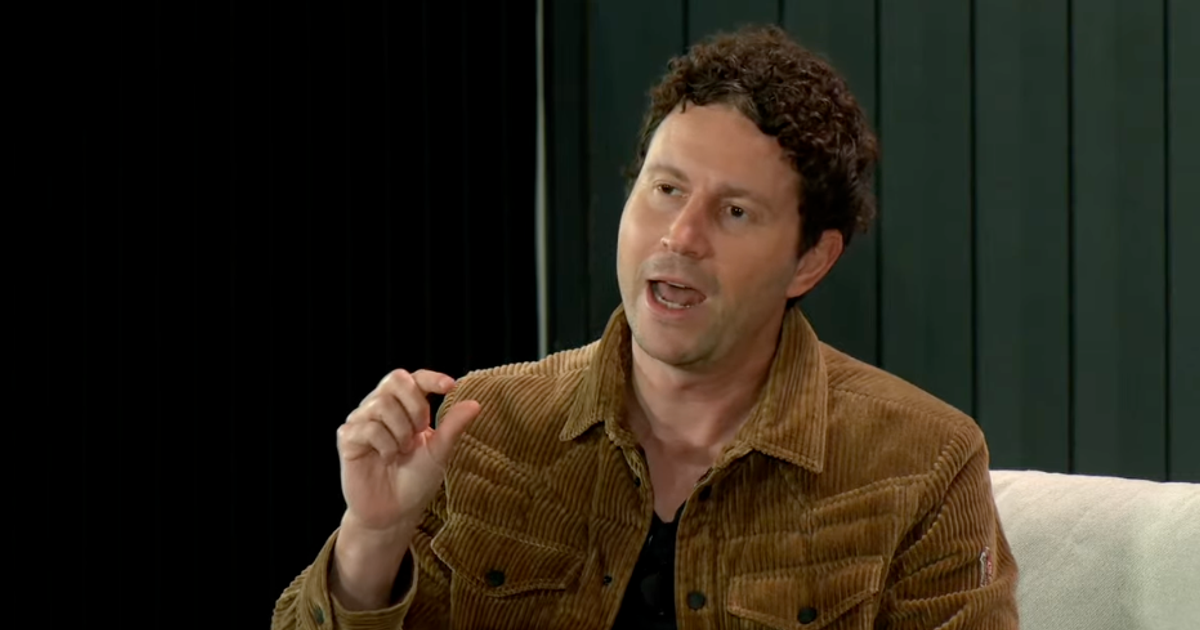
The CEO of a major medical AI startup said on Monday that medical students should do paper exams and master the material, even if they also use AI.
“The risk of cognitive offloading is really, really acute,” OpenEvidence CEO Daniel Nadler said at Semafor’s Silicon Valley & The World. He would advise students to “train classically, learn classically, learn the hard way, do paper exams, do paper tests, make sure you actually know it,” he told Semafor’s Mohammed Sergie.
Nadler’s company aims to cover a niche within the medical business, synthesizing complex medical information with AI trained on millions of medical papers. The startup has hit a $15 billion valuation on the promise that AI can condense the complexities of the medical field into information palatable to physicians.
The threat of cognitive offloading, or deskilling, is real. Early studies have found that deferring work to AI can weaken neural networks, leading to lower cognitive performance. Nadler says the concern is especially pressing for younger generations, those who have grown up in academic environments with access to AI.
He noted that all of his company’s engineers use “dozens and dozens of AI buddies.”
Benjamine Liu, the CEO of Formation Bio, which uses AI to accelerate drug development, also noted onstage on Monday that in the pharmaceutical industry “AI systems can begin to now do the work of entire teams.”
Noting that the GLP-1 drugmakers “did more revenue than OpenAI and Anthropic combined last year,” he told Sergie that “some people underestimate how big pharma is.”
“We’re early innings in these things that help you live longer and healthier — and in an area that our industry sometimes misses,” Liu said.