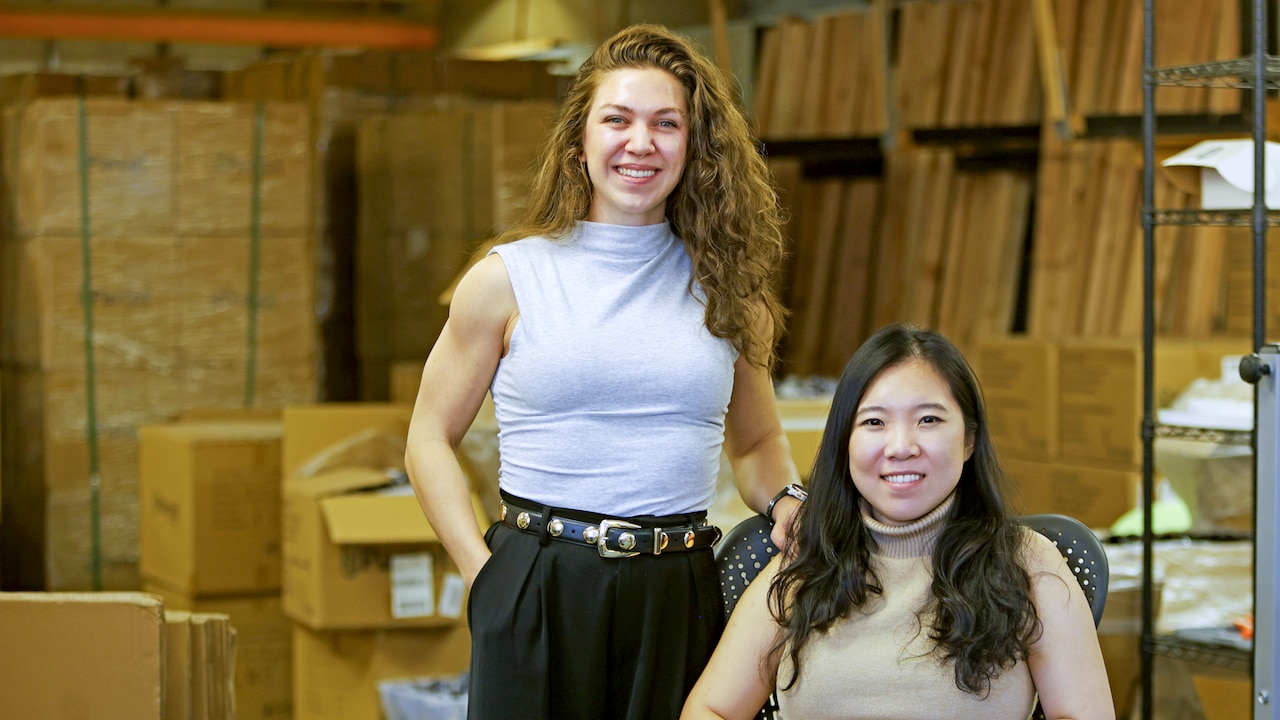
Speaking about her goals for the Pittsburgh-based startup Parcel Health two years ago, Melinda Su-En Lee said she hoped her team could displace one million plastic pill bottles from landfills in 2024.
They’re now on track to double that.
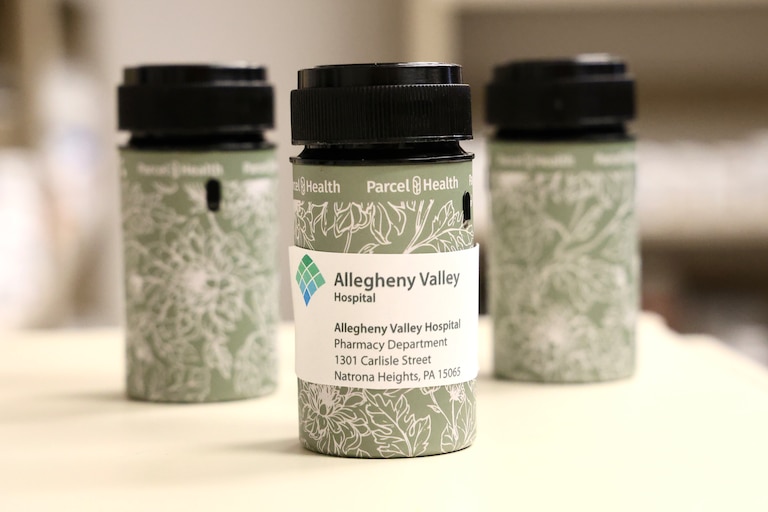
The healthcare consumables company, headquartered in Point Breeze, has grown exponentially. Maker of the paper-based pill bottle the Tully Tube, made with up to 71% less plastic than traditional pill bottles, the company went from having about five partnerships in 2024 to 35 at 70 locations, including UPMC, Allegheny Health Network, University of Pennsylvania, Dartmouth Health and various pharmacies in 17 states.
Tully Tubes are more joyful and accessible to patients, said Lee, now 33 years old and living in Bellevue.
“It’s not just about sickness,” said Lee, who co-founded Parcel Health.
At Parcel’s office in Rockwell Park, several employees sit with laptops around a table, but most of the room is filled with rows of boxes housing Tully Tubes and other inventory. One open box revealed caps with Allegheny Health Network branding; another with Dartmouth Health-branded Tully Tubes.
The company, which launched the Tully Tube in August 2024, has spent time since optimizing the product with at least 10 iterations, Lee said. They have recently added QR codes to the bottom of bottles that customers can scan to set up medication refill reminders. They also improved the tubes’ water resistance, and they’re exploring sustainable packaging, such as bubble mailers and compostable pill bottle bags.
This effort landed them a spot in Time Magazine’s Best Inventions of 2026, announced in October — and Lee said the business is only growing from here.
“We need packaging to move on,” she said. “It’s a really important interface and glue between the healthcare system and the patients themselves, and it’s also a huge source of waste.”
Americans throw tens of thousands of tons in plastic pill bottle waste into landfills each year; roughly equivalent to the weight of six Eiffel Towers — and millions of Americans are on prescription medications, often multiple. Parcel Health sees both trends as an opportunity to offer pharmacies, health systems, dental offices, vet clinics and customers a different option.
“It’s a no-brainer,” said Kyle McCormick, founder, president and lead pharmacist at Blueberry Pharmacy in West View, which has partnered with Tully Tube since its inception. “We’ll look back and think, ‘Why did we ever use [plastic] packaging?’”
From Duolingo to Astrobotic, Pittsburgh has become a hub for innovation and a landing pad for world-class science. It’s also geographically ideal for distribution, said Lee.
“Us having our warehouse here, making sure that our products can go out very quickly to the Midwest, but also the East Coast and the South, is a huge advantage to us being here,” she said.
Allegheny Health Network was one of Parcel Health’s first partners: Its investment arm, Alpha Lab (AHN in collaboration with Innovation Works), was the group’s first big investor. Tully Tube is now in use at eight AHN pharmacies: Allegheny Valley, Canonsburg, Allegheny General, Jefferson, Forbes, West Penn, Wexford and St. Vincent.
In a sustainability report, AHN estimated that it has displaced 720 pounds, or more than 32,000 plastic pill bottles, within a four-month period. Some of its pharmacies have replaced 100% of its pill bottles with Tully Tubes.
“It’s just the right thing to do from an environmental perspective,” said Laura Mark, vice president of pharmacy for AHN. “We’re trying to be innovative and change the practice of healthcare.”
Dartmouth Health has displaced 610,000 plastic pill bottles since it partnered with Parcel Health last September, said Chelsea Thurston, director of pharmacy operations for Dartmouth Health. She said 60% to 70% of its pill bottles have been replaced with Tully Tubes, and the health system has worked with Parcel to refine the design of the lid to make the tubes easier to open.
University of Pennsylvania said it has displaced one ton of plastic from landfills from its partnership, having distributed nearly 122,000 Tully Tubes and avoided the emission of 6 metric tons of carbon dioxide into the atmosphere.
“The transition has gone really well, and we are excited to dispense in these containers for the majority of our prescriptions,” said Nishaminy Kasbekar, vice president and chief pharmacy officer at Penn Medicine, in an email.
Patients have also been very receptive, she said, enjoying both the sustainability and the personalized design of the bottles. As part of its growth, Parcel Health recently partnered with a large children’s hospital to have pediatric patients design art for the hospital’s pill bottles.
“The customers love it,” said McCormick, of Blueberry Pharmacy. “I just handed off a paper bottle right now as I’m talking to you.”
McCormick is planning to transition 100% of his pill packaging to Tully Tubes in the next year. He believes not only are they more sustainable than plastic, but that they’re sturdier and better for storing medications. Blueberry Pharmacy also opted for customized packaging, and customers respond to the product’s personalization.
Parcel Health has received accolades before, but was especially excited to make the Time Magazine list because of its prestige. Lee even got a call from her parents in Malaysia. She and the team hope the notch will drive patient awareness of their product.
“I hope it communicates to [customers] that there are options out there, and that they can start advocating for more sustainable packaging in their pharmacies,” said Mallory Barrett, co-founder of Parcel Health.
The company’s partnerships have inspired health systems to continue their search for sustainable packaging. AHN, for instance, is looking into finding compostable materials for coolers that deliver temperature-sensitive medication to patients, Mark said.
“These are things we seek out,” she said. “We see an opportunity for how we can change the way we practice, and we continue to look for additional solutions.”