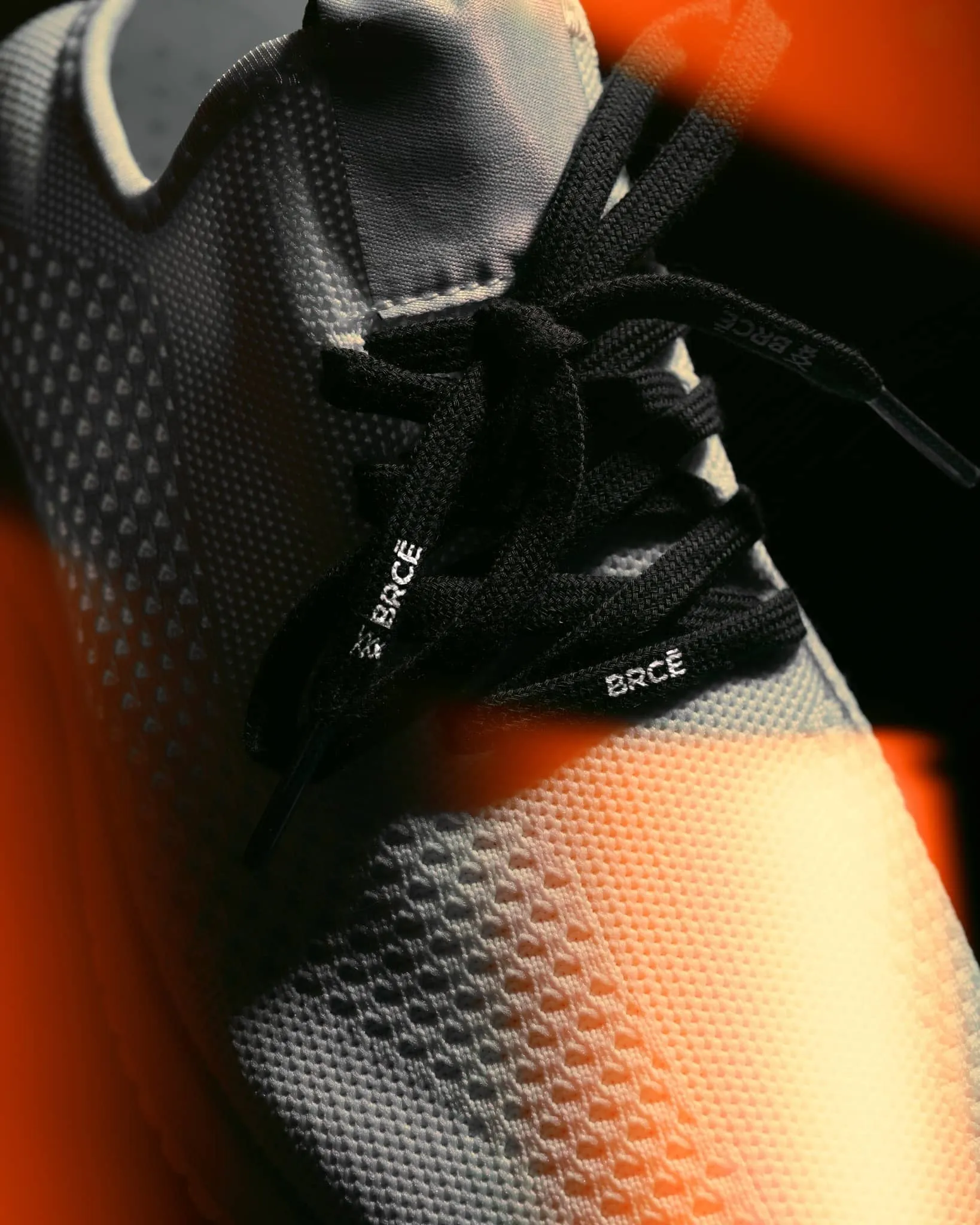
BRCĒ may sound like the latest tour-level shaft, but it’s actually a new kind of safety net hiding in plain sight: your shoelaces. The student-founded company is about to test that idea on primetime television, as its co-founders walk onto ABC’s “Shark Tank” on Wednesday, March 4, to pitch what they call “Shoelaces That Never Quit.”
Watch BRCĒ’s “Shark Tank” episode on Wednesday, March 4, 10:00-11:00 p.m. ET/PT on ABC and stream next day on Hulu.
From College Injuries to a Material-Science Mission
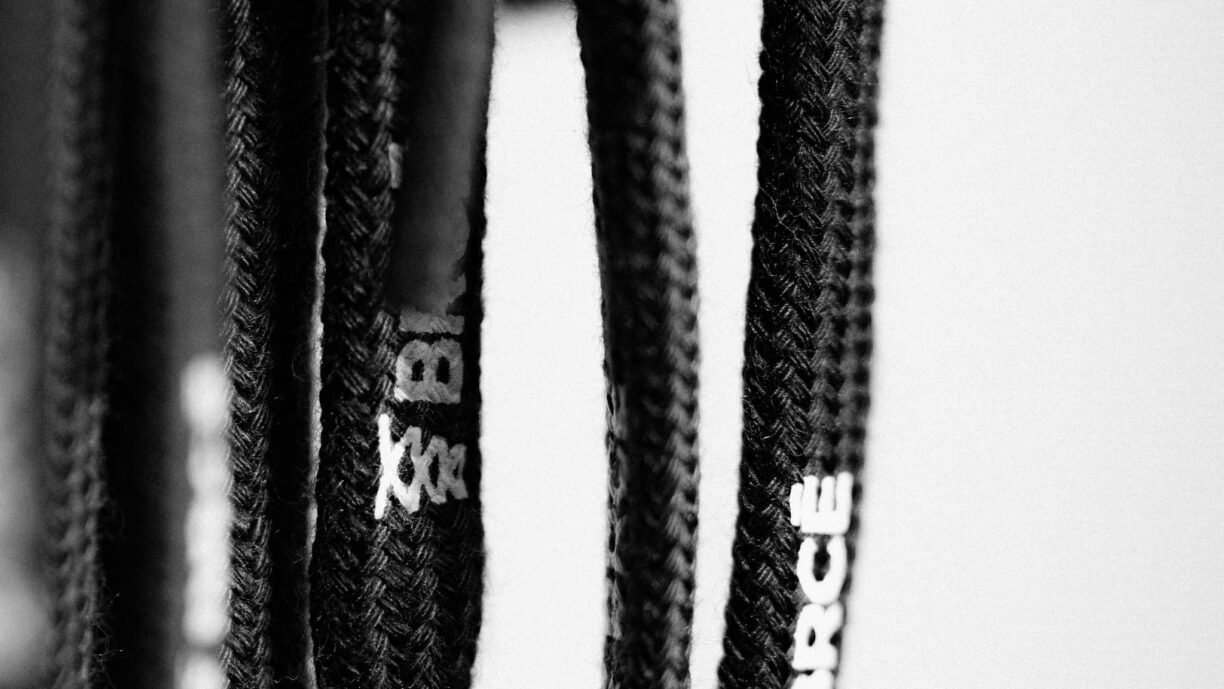
BRCĒ (pronounced “brace”) is the sort of startup origin story you don’t usually get from a laces company. Founded by Michigan State University students and former competitive athletes Madhav Aggarwal and Tanvi Gadamsetti, the business grew out of something grimly familiar to anyone who’s rolled an ankle on a routine cut or landed on someone else’s foot under a rebound.
“Both of our athletic careers ended because of preventable injury,” said Madhav Aggarwal, CEO of BRCĒ. “We have made it our life’s mission to apply innovative material science to dramatically reduce the risk of injury stemming from equipment failure. Our BRCĒ materials are patent-proven to ‘Never Quit’ and shoelaces are just the start as we continue on our mission to improve performance, safety and recovery across industries.”
This isn’t just a new weave pattern or a different colourway. The pair have built BRCĒ on a patented high-performance polymer-composite material – stronger than steel, fire resistant, lightweight and weather resistant – designed originally not as a fashion statement, but as a genuine performance and protection platform.
The Overlooked Failure Point in Sports Gear
Talk to athletes and they’ll recount blown knees, torn hamstrings, stress fractures. Very few will point the finger at the humble lace. Yet across performance and protection categories, equipment and apparel often fail because the underlying materials haven’t kept up with the demands placed on them.
That’s the problem BRCĒ is trying to solve at one of sport’s most boring-looking but important touchpoints: the knot on top of your foot. Loose laces don’t just look sloppy; they change the way your foot moves inside the shoe, shifting your centre of mass and forcing tiny compensations with every step.
The numbers are not subtle. According to the National Library of Medicine, ankle sprains account for 45% of sports injuries, with over 70% of repeat injuries tied to inadequate foot stabilisation or loose footwear, as highlighted by the National Athletic Trainers’ Association.
While most braces immobilise and most taping restricts ankle movement and flexion, BRCĒ laces are designed to preserve mobility while improving stability at the source through secure, consistent lace tension. Better grip inside the shoe enables smoother force transfer, more fluid movement, and greater control with every step – whether you’re planting for a jumper, chasing down a breakaway, or grinding up the 18th fairway with a score you’d like to keep.
Laces in a World of $100 Million Ankles
“People take shoelaces for granted, but the world’s greatest footwear brands and $100 million athletes are counting on laces that are scientifically proven to loosen during competition,” said Tanvi Gadamsetti, COO of BRCĒ. “So while shoelace technology might seem trivial, watching your favourite team compete and lose because your star player is sidelined with a giant bag of ice on their ankle is no trivial matter.”
That’s the uncomfortable truth at the heart of BRCĒ’s pitch: in an age of carbon plates, AirPods, and smart insoles, the component literally holding the shoe together is still, in many cases, an afterthought.
By wrapping its flagship product in a patented material platform rather than a marketing slogan, BRCĒ is attempting to move laces into the same conversation as performance apparel and protective gear — not as accessories, but as hardware.
What Makes BRCĒ’s Material Different
BRCĒ’s patented polymer-composite isn’t limited to laces on paper. The technology’s applications span performance apparel, protective gear and industrial products, all areas where strength-to-weight ratio, fire resistance and weather resistance actually matter.
For now, though, the proof-of-concept lives in untie-resistant shoelaces. The idea is simple: keep tension locked in, even as the athlete’s movement, sweat, and impact forces attempt to loosen it. In theory, that means fewer in-shoe micro-movements, more predictable foot placement, and less cumulative strain on the ankle.
For a runner, that could translate into more consistent strike patterns and less wobble on uneven ground. For a basketball or football player, it’s about stability when cutting and landing. For golfers – who may think this is someone else’s problem – it’s about secure footing on wet slopes, bunker faces, and uneven lies where a tiny slip can be the difference between a birdie and a physio appointment.
A Record-Breaking Patent – While Still in College
In an arena dominated by long-established footwear giants, BRCĒ has already chalked up one unlikely record. It is the first company run by students to have received a utility patent in material science while its founders were still in college.
The patent for its high-performance polymer-composite material was granted in only 62 days, the fastest approved patent in the history of material science. That kind of turnaround is usually reserved for technologies deemed both novel and potentially impactful far beyond a single consumer product.
In September 2025, BRCĒ was named a Top 5 innovation of 2025 by the USPTO & National Inventors Hall of Fame, a nod that places a pair of student-athletes and their laces in the same conversation as some of the most influential new technologies of the year.
From Sports Labs to Sidelines
BRCĒ isn’t pretending to be a lifestyle brand. Its product range is unapologetically performance-first: patented, performance-based shoelaces tailored for running, tennis, hockey, basketball and football. The common thread across all of them is the same: keep the foot better stabilised inside the shoe without locking the joint into a cast.
In practice, if BRCĒ’s promise holds up under the grind of training and competition, this could be a useful extra line of defence for athletes who already live in braces, tape and ice baths. It’s not claiming to replace those tools, but to tackle the problem earlier in the chain – at the point where the shoe meets the ankle.
For more information about BRCĒ’s full lineup of patented, performance-based shoelaces supporting running, tennis, hockey, basketball, and football, please visit https://www.brce.shop/.
What’s at Stake in the Tank
“Shark Tank” has turned more than a few niche ideas into mainstream fixtures, and the stage is made for a story like BRCĒ’s: two college seniors, careers cut short by preventable injuries, returning to the arena as inventors rather than athletes.
If the Sharks see value in a piece of tech hiding in the eyelets of a shoe, BRCĒ could find itself with the capital and connections to get its laces onto the feet of elite athletes and everyday weekend warriors alike. If not, the company still walks away with something many sports-tech startups never get: a national audience hearing that, statistically, the next rolled ankle is more likely to be a matter of physics than bad luck.
Make sure to check out BRCĒ’s “Shark Tank” debut on Wednesday, March 4th at 10:00 p.m. ET/PT on ABC and Hulu. Whether or not they walk out with a deal, the message is already tied up neatly: in a sports world obsessed with marginal gains, sometimes the smartest upgrade is the one you’ve been stepping on for years.