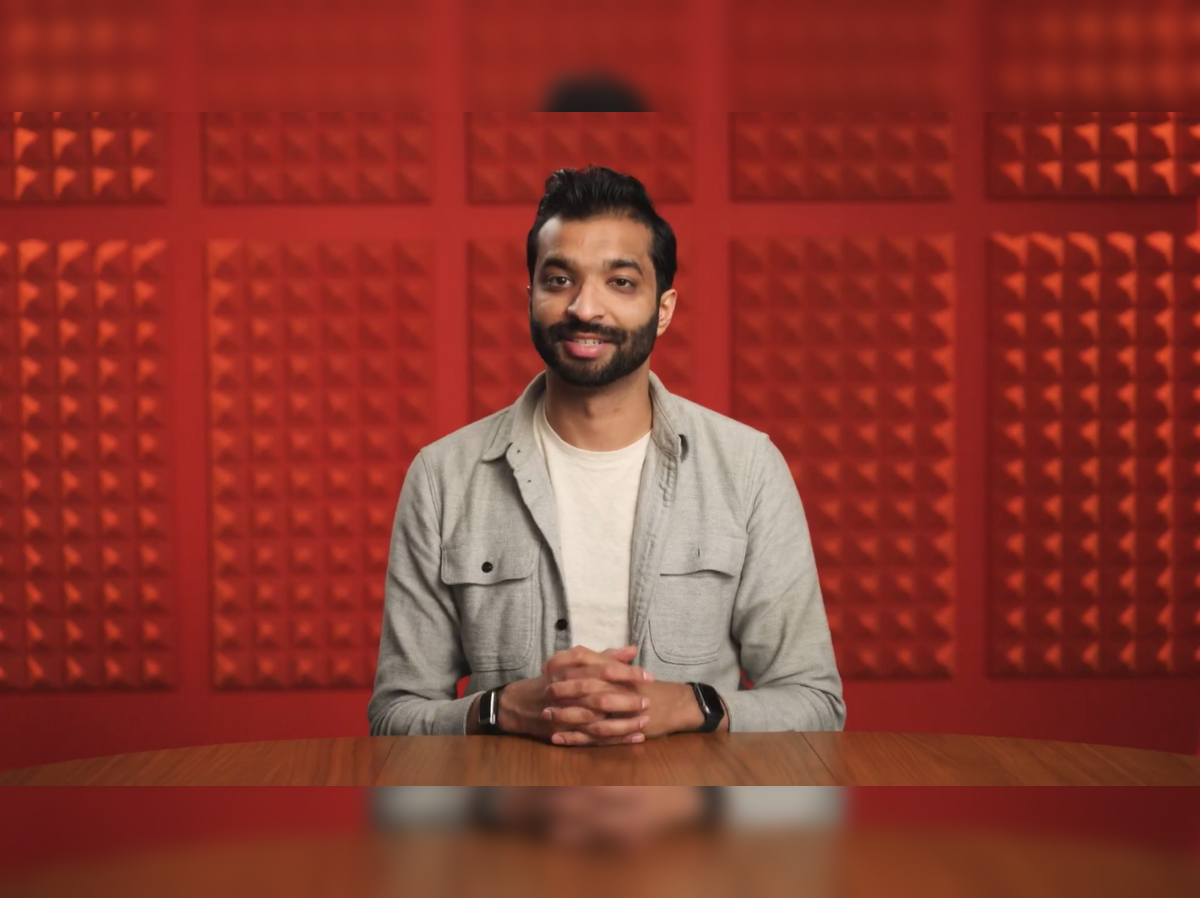
In order to tap aspiring entrepreneurs across colleges and universities, Gupta said YC will be visiting IIT Delhi this week and holding a programme there. The event in Bengaluru will be attended by Gupta along with the accelerator’s partners Jared Friedman and Jon Xu. Founders of Y Combinator’s Indian companies — like Razorpay’s Harshil Mathur, Meesho’s Vidit Aatrey, Zepto’s Aadit Palicha, Groww’s Lalit Keshre, and Emergent’s Mukund Jha — will also speak at the event.
“We used to fund people a decade out of college. Increasingly, we’re funding people right out of college, or even dropouts. You’re more likely to be exposed to the newest tools by hacking on side projects at university than at work. Wherever the great raw technical talent is, that’s where we’ll find the great startup ideas. India has that in abundance,” Gupta told ET.
The YC Startup School can accommodate 2,000 people but Gupta said they have received over 25,000 applications. “We’re really excited for what that means, and for the amount of builder energy and excitement around startups in India.” Gupta joined YC a year ago, and had earlier cofounded Reverie Labs, which developed machine learning models for drug discovery.
The San Francisco leg of the event this year will see speakers like Nvidia CEO Jensen Huang, OpenAI CEO Sam Altman, Meta’s chief AI officer Alexandr Wang, and Google DeepMind chief scientist Jeff Dean.
AI’s dizzying valuations
Gupta pushed back on the scepticism around AI valuations and massive funding rounds “If you look at things through the lens of linear growth, nothing is going to make sense… You have to look at exponential demand… It’s hard to rationalise 5x month-on-month growth.”
Over the past few weeks, vibe-coding startup Emergent — part of Y Combinator’s Summer 2024 cohort — has faced questions over its annualised revenue run rate of $100 million, which it reported in February, just eight months after launch. This sparked a debate over vanity metrics in the AI ecosystem.
“It’s totally possible there are some companies picking a metric that makes them seem better or worse or whatever. I’ll encourage everyone to keep in mind… if you look at the top model companies, people consistently believe it is impossible for them to achieve their growth, and then they do it over and over again,” Gupta said, without specifically commenting on Emergent’s numbers.
He also said that even though capital deployment was skewed towards larger companies vis-a-vis startups, it isn’t hard for younger ventures to build in the AI space. “It’s true that a startup has to think about how they’re going to compete against the big model companies, but it’s not that different from how startups had to think about whether Google would kill their idea 10 years ago. Back then it was Google… now it’s OpenAI. It’s always a question a startup has to think about,” he explained.
Gupta also pointed out that large AI labs have limited bandwidth and are unlikely to dominate every startup category, arguing against the view that they will outcompete the broader ecosystem. He noted that while some startups compete directly with major labs, others operate in specialised domains where incumbents may struggle.
He added that while coding remained a natural strength for large labs given their engineering-heavy teams, such competitive dynamics are not new and startups will continue to find opportunities.
Listen in | ET Morning Brief: Ankit Gupta, general partner at Y Combinator
Indians and YC
“We’ve always been excited about funding Indian founders. One of my best companies from the last batch is two guys from India who moved to San Francisco. What we’re seeing now is that a lot of Indians are choosing to start global businesses with a hybrid presence across India and the US,” Gupta said.
“Two of the companies we’re going to highlight at Startup School are Emergent and Giga ML. Both are technically San Francisco-based — their headquarters are in the US — but they’re selling to a global audience and have large engineering teams in India”.
He added that in contrast, startups such as Zepto, Meesho, Razorpay, and Groww from the older YC batches were built specifically for the Indian market.
YC’s robust outreach comes on the back of the number of Indian startups selected by it plummeting to just four in 2024 from 66 in 2021, marking a sharp decline in one of its most active international markets in recent years, ET had reported last year.
Indian founders increasingly opt to remain domiciled locally (instead of the US) amid evolving regulatory dynamics and better prospects on the Indian stock exchanges. “There’s going to be quite a few companies that can be economically valuable for India’s development, while also accessing global capital by going public on Wall Street. But for companies that want to be based in India, sell to the Indian market, and IPO in India, we’re happy to support them too,” Gupta said.
“We have a lot more information now about what growth looks like for companies. We’ve seen the experience of our Indian firms, so we know how to prepare others for what’s ahead,” he added.
To shift its domicile back to India, Groww paid $160 million in taxes, while Meesho had to cough up around $280-300 million. Razorpay, which has appointed bankers for its IPO (initial public offering), shelled out around $150 million.
Also Read: Keen to bet more on Indian founders amid strong show: YC Partner
Foundational shifts
Gupta said competition in frontier AI is already expanding beyond the US, with China emerging as a serious challenger to leading American labs. “China is offering formidable competition… which implies there isn’t a monopoly of American companies,” he said, attributing this to a mix of deep capital pools and strong technical talent.
He noted that India, too, has the key ingredients to compete. “India has great talent and should have lots of capital… it’s a really big economy,” he said, adding that startups like Sarvam AI are beginning to drive this thesis, though more effort is needed.
However, he said that companies such as OpenAI and Anthropic don’t have a lock on innovation. Pointing to emerging alternatives like France’s Mistral AI and several Chinese players, he reiterated: “They don’t have a monopoly on good ideas, execution, or capital.”
A key pattern in China, he said, is that many AI labs are backed by large, cash-generating tech giants. “They tend to be attached to some giant money-printing machine,” he said, citing examples of firms like Xiaomi and Baidu. “India has a few of those too. It’d be interesting to see if they started their own research labs. They’d probably need to be attached to a Tata or Reliance or something like that,” Gupta said.