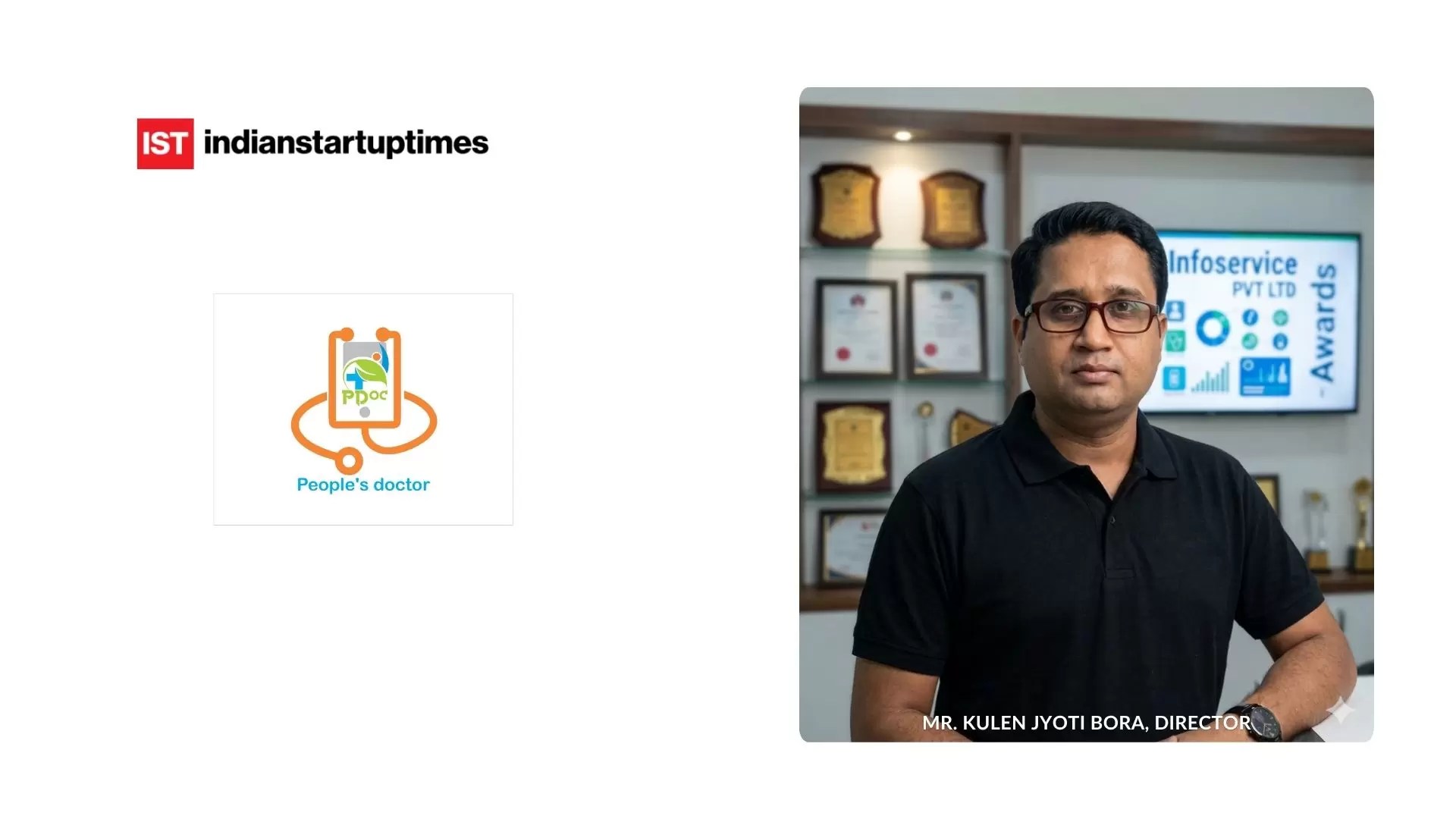
In a country where access to quality healthcare is often shaped by geography and affordability, Kulen Jyoti Bora is working to rewrite the narrative. As the Director of PDoc, he is building an inclusive, tech-enabled healthcare platform designed specifically for rural and semi-urban India—regions where digital adoption continues to face real-world barriers. In this exclusive interaction, he shares his journey, the inspiration behind PDoc, and how the platform is transforming patient access and convenience.
Kulen’s journey with PDoc began with a clear and urgent challenge: bridging the gap between healthcare providers and patients in underserved regions. He observed that millions in rural India struggle to access timely medical care due to logistical constraints and technological limitations. This realization led to the creation of PDoc, a platform that brings healthcare closer to patients by enabling remote doctor booking without requiring physical presence. By prioritizing affordability and accessibility, PDoc aims to simplify the healthcare experience for those who need it the most.
At its core, PDoc addresses two major inefficiencies in the traditional appointment system. The first is the digital divide—many rural patients lack access to digital payment systems such as credit cards, debit cards, or net banking. To overcome this, PDoc introduced a preloaded appointment system that works both online and offline, allowing users to book appointments without mandatory digital payments. The second issue is the lack of transparency in clinic wait times. Patients often spend hours waiting without clarity on when they will be seen. PDoc solves this by offering real-time status tracking, enabling patients to arrive at clinics only when their turn is near.
Operating in a competitive health-tech landscape, PDoc distinguishes itself through its “offline-first” approach tailored for Bharat. Unlike many platforms that rely solely on digital infrastructure, PDoc blends physical and digital channels to ensure inclusivity. The platform offers transparent wait-time visibility, offline appointment centers to penetrate rural markets, and flexible booking options for users. Additionally, it provides clinics and hospitals with a dedicated interface to manage doctor schedules and patient flow efficiently. This hybrid model makes digital healthcare accessible even to those outside the formal banking ecosystem.
The platform primarily caters to rural and semi-urban patients who may lack digital literacy or access to online payments, as well as local clinics and hospitals looking to modernize their appointment systems. By focusing on these underserved segments, PDoc is unlocking a vast and previously untapped healthcare market.
The impact of PDoc is already visible on the ground. In one instance, a patient was able to secure an appointment with a leading gastroenterologist within just three days—compared to the usual 20-day waiting period. Kulen also recalls a personal experience that deeply influenced his mission. His diabetic mother had to travel 8–10 kilometers early in the morning just to secure a token for a consultation, often waiting hours before seeing the doctor. After onboarding the same doctor onto PDoc, the process became seamless—not only for his family but for many others traveling long distances for care.
A significant gap that PDoc continues to bridge is India’s reliance on a cash-based economy. A large portion of the rural population remains unbanked or uncomfortable with online payments. PDoc’s preloaded booking system allows users to purchase physical kits or recharge through local clinics, ensuring that even those operating outside the digital economy can access modern healthcare services.
Looking ahead, Kulen envisions a future where healthcare in India evolves into a fully connected, patient-centric digital ecosystem. Technology, he believes, will no longer be optional but a core infrastructure layer that manages the entire patient journey—from appointment booking to post-treatment follow-ups. PDoc aims to play a central role in this transformation.
From a business standpoint, PDoc has developed a dual-segment model that caters to both online and offline users. While digital users can leverage integrated payment gateways, offline users are supported through a network of distributors, retailers, and clinics. The company employs hyper-local marketing strategies, including canopy activities and hospital coordinators in urban areas, and appointment centers and awareness campaigns in rural regions. With over 150 clinics and more than 1,000 doctors already onboarded, PDoc is steadily expanding its network, using physical clinics as “refill stations” to convert walk-in patients into digital users.
Despite being at a seed stage, the company has achieved notable milestones, including over 16,000 app downloads and a growing base of 2,600 paid users. It has also received strong institutional recognition, including acknowledgment from the Department for Promotion of Industry and Internal Trade (DPIIT), selection in the Assam Startup Cohort in collaboration with IIM Calcutta, and grants from organizations such as NRL iDeation, AIIDC, NEEDP, and STPI OCTANE.
However, building for Bharat comes with its own set of challenges. High customer acquisition costs, especially in rural areas, limited effectiveness of traditional digital marketing, and resistance from doctors to adopt new digital systems have all posed hurdles. PDoc addressed these challenges by shifting to a partner-led distribution model, leveraging trusted local clinics and pharmacies to onboard patients and build trust within communities.
One of Kulen’s most important lessons as a founder is rooted in adaptability. As he puts it, “Adaptation is better than innovation.” While the world rapidly transitioned to UPI and digital payments, PDoc introduced a ₹99 preload card, aligning with the comfort and habits of rural users. The philosophy is simple—meet customers where they are, not where you expect them to be.
Currently bootstrapped and supported by institutional grants, PDoc is now preparing to raise angel investment to fuel its next phase of growth. Over the next two to three years, the company aims to scale from 150 clinics to more than 500 across Assam, evolve into a comprehensive OPD management system, and ensure that even patients in remote areas no longer have to wait in long physical queues for medical consultations.
As a leader, Kulen emphasizes purpose-driven work. For him, the mission goes beyond business metrics—it is about reducing the physical and emotional burden on patients. By aligning his team with this deeper purpose, he fosters a culture of impact that transcends a conventional work environment.
PDoc is not just another health-tech platform; it is a grassroots innovation built for India’s real challenges. By blending technology with on-ground realities, Kulen Jyoti Bora and his team are creating a healthcare ecosystem that is inclusive, accessible, and truly patient-centric. As India moves toward a digitally enabled healthcare future, PDoc stands out as a solution designed not just for urban India, but for the heart of Bharat.
Interview by: Arushi Agarwal