When Flo, the period tracking app, achieved unicorn status in the US, the criticism was swift.
This is a product built for women without a single woman in the founding team. The female founder-sized hole seemed obvious.
So why hasn’t the same scrutiny been applied to Eucalyptus – a startup with four male cofounders whose growth was supercharged by GLP-1s largely used by women?
The recent $1.6 billion sale has been loudly applauded across Australia’s startup and venture ecosystem. And rightly so. It’s a landmark outcome for digital health.
But it also highlights something VCs and the broader ecosystem are less comfortable talking about: Who gets to build solutions for women’s health and should representation in the founding team matter?
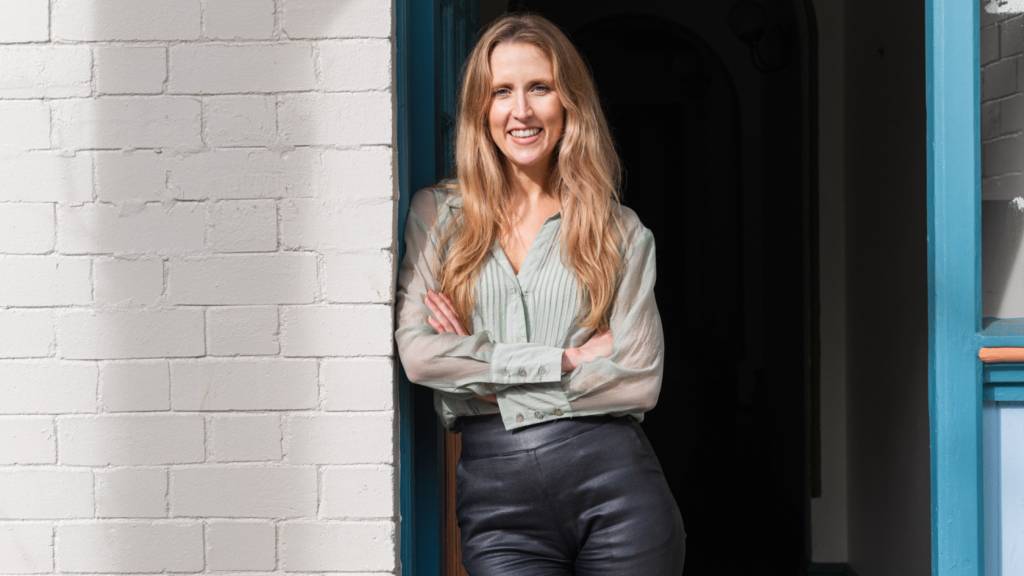
As the solo founder of Amelia Bio, a women’s microbiome health startup, it’s not hard to guess my answer, but if you can stick with my rationale, here’s why:
GLP-1 medications (cue Ozempic, Wegovy etc.) are disproportionately prescribed to women. In the US, women are about 1.7x more likely to be using them (15% vs 9%).
This is where it gets interesting. Because in Australia, obesity rates are almost identical – around 31% for men and 32% for women, according to the Australian Bureau of Statistics.
So, if clinical need is roughly equal, why are women driving demand? It’s hard to ignore the role of cultural pressure. In fact, Australian GP data shows that women are more likely than men to be using GLP-1s for weight-loss without diabetes.
Women are more likely to be judged on appearance and more likely to feel the weight, literally and socially, of needing to be “smaller”.
No shade to GLP-1s. They are clinically important and life-changing for many. I’m not a medical doctor and misuse of GLP-1s is a discussion for the experts. But when you zoom out, the representation factor becomes harder to ignore.
The TLDR is this:
Women are the greater proportion of patients using GLP-1s yet no one saw it fit to have a woman in a co-founder seat, contributing to decisions at the highest level.
A system designed to do this
Is this the fault of Eucalyptus’ founders? I don’t think so. This is a system doing exactly what it’s designed to do.
Eucalyptus didn’t appear overnight. It was built across multiple funding rounds, backed by experienced investors, with boards and advisors shaping its trajectory.
At no point in that process did anyone meaningfully pressure the team to consider:
“Should we invest in a company serving predominantly female patients without representation of that market at co-founder level?”
That silence is telling. And if we look at the funding data to support that bias, it’s brutal.
In Australia, just 2% of venture capital funding goes to all-female founding teams, according to the Cut Through Venture Startup Report in 2025. Mixed-gender teams do slightly better but still receive a minority share. At series B+ level there was no funding to female founding teams.
A familiar pattern
The overwhelming majority of capital continues to flow to male-only teams, particularly at the later stages where billion-dollar unicorn outcomes are created.
So, when a male-led team builds a unicorn company with multi-million dollar rounds of investment targeting women, it has a sad predictability to it. The sadness comes from the female-founded innovation that has been overlooked because they didn’t have a “charismatic” (male) leader at the helm.
This is where the debate moves beyond gender balance for founders and into a healthcare one.
Women have historically been underrepresented in medical research. It wasn’t until the early 1990s that women were consistently included in clinical trials. Even now, gaps remain in how conditions present, how drugs are metabolised and how side effects differ across genders.
Women are more likely to have symptoms dismissed. More likely to experience delays in diagnosis. And more likely to be navigating healthcare systems that weren’t originally designed with them in mind.
When we layer that with a funding system that overwhelmingly backs male founders you get reinforcement of an existing cycle. Male-led R&D, originating from male-led funding, to male-led companies, that are solving female problems. Repeat.
AI spots the patterns
How do you measure real-world impact of this cycle in today’s telehealth world?
For the sake of trying to find a gauge, I asked AI to analyse reviews across GLP-1 platforms like Juniper and Pilot to identify differences in how female vs male users describe their experience.
The patterns were:
- Women were more likely to talk about the emotional and psychological impact of treatment.
- More likely to raise concerns about long-term safety and side effects.
- And far more likely to reference body image, pressure, and expectation – not just clinical outcomes.
These are not fringe concerns. And they’re easy to miss if no one in the room has lived them.
Who designs and delivers healthcare products matters. It shapes how problems are framed, what trade-offs are prioritised, how risks are communicated and ultimately, whether patients trust and stick with a solution.
To be clear, I have deep respect for Eucalyptus. The founders have built an exceptional business. However, the patriarchal bias at its foundation is worthy of scrutiny.
Their exceptional achievements don’t exist in a vacuum. It’s some smart founders building on cultural systems, which includes who gets funded and who gets repeated support to build. Right now, that system is not neutral.
The question is:
Why are we still funding men to solve women’s problems, at scale, while women remain locked out of the capital required to do it themselves?
Until that changes, we’re missing out on better healthcare.