



Good morning. Allbirds — the once-buzzy US$4 billion shoe company beloved in the tech world that collapsed after going public — was set to close up shop after striking a deal last month to sell its footwear assets. That was until it came up with a last-ditch rescue plan: pivot to AI.
The company announced that it will be rebranding as NewBird AI and, instead of selling overpriced sneakers to startup founders, will now provide AI compute infrastructure. How did the market react to this transparently desperate move? By sending shares up 582%, of course.
Today’s reading time is 5½ minutes.
MARKETS
| ▲ | TSX |
34,155.99 |
+0.16% |
|
| ▲ | S&P 500 |
7,022.95 |
+0.80% |
|
| ▼ | DOW JONES |
48,463.72 |
-0.15% |
|
| ▲ | NASDAQ |
24,016.02 |
+1.59% |
|
| ▼ | GOLD |
4,813.9 |
-0.75% |
|
| ▲ | OIL |
91.39 |
+0.12% |
|
| ▲ | CAD/USD |
0.73 |
+0.20% |
|
| ▲ | BTC/USD |
74,665.48 |
+0.47% |
Markets: Canada’s main stock index rose once again as investors increased their risk appetite amid optimism for a U.S.-Iran peace deal. Shopify was a big beneficiary, with shares up 8.1% on the day.
BUSINESS
The boardroom playbook is coming for pro sports
AI is already making decisions in C-suites across the world. That may now include which players your favourite sports team decides to trade.
Driving the news: The CEO of Maple Leaf Sports and Entertainment (MLSE) — the majority owner of almost every pro sports team in Toronto — reportedly pushed AI-generated trade suggestions and notes to the Maple Leafs front office during the trade deadline this year, per The Athletic.
It’s a virtually unheard-of example of a C-suite exec directly meddling in player decisions, though the MLSE head honcho, Keith Pelley, denied his suggestions came from AI.
The report also details ways in which MLSE execs rapidly cut expenses, including raising prices for players buying tickets for family and friends or eating at the MLSE-owned Real Sports Bar & Grill (pretty crazy they have to pay for these at all).
Why it’s happening: Rogers, which owns 75% of MLSE, is nearing a sports monopoly in Canada’s largest city, and is looking to squeeze as much cash as it can out of that dominant position in the market.
The telco is reportedly eyeing an IPO to spin off its sports assets into a single division, which would create one of the largest sports and entertainment companies in the world.
If they buy the final 25% stake in MLSE this year (which is likely), Rogers would be the sole owner of the Toronto Raptors, Toronto Maple Leafs, Toronto Blue Jays, Toronto FC, Toronto Argonauts, and Sportsnet.
Why it matters: MLSE appears to be running the hedge fund playbook that has started to seep into pro sports: executive-driven, profit-obsessed, and treating players as short-term assets. In this formula, winning often becomes an afterthought to the organization’s bottom line (The Fenway Sports Group, which owns the Boston Red Sox, is a prime example).
Our take: A Rogers IPO could exacerbate this spreadsheet-first approach, as public market investors are going to be more focused on quarterly earnings (aka beer and hot dog sales) than wins and losses, which could mean a reluctance to spend on top talent as long as people keep showing up to games.—LA
BIG PICTURE
Live Nation was deemed an illegal monopoly in a landmark court ruling. The Ticketmaster owner was found to have illegally used its position as a live event promoter, ticketing company, and venue owner to overcharge fans by an average of US$1.72 per ticket (which seems low to anyone who’s bought a concert ticket lately). The ruling paves the way for a legal remedy that could include Live Nation being forced to divest from Ticketmaster. (Bloomberg News)
Uber is putting US$10 billion into robotaxis. Between its equity stakes in robotaxi firms and investments in vehicle fleets, Uber has now committed over $10 billion to the self-driving car space, with plans to launch robotaxi service in 15 cities this year. In a shift from its core business model as a gig economy platform (with few concrete assets), the company is now buying up tens of thousands of autonomous vehicles to deploy itself. (Financial Times)
Saudi Arabia-backed LIV Golf is on the cusp of shutting down. After sinking US$5 billion into the venture, the Saudi Arabian sovereign wealth fund is reportedly close to cutting off funding to the LIV Golf tour, which has made waves in recent years for poaching top players with nine-figure contracts. The league, which has been a perennial money loser, is now repositioning itself as an AI compute company (we’re kidding, but would it really shock you at this point?). (TSN)
What else is on our radar:
Facing mounting costs from the World Cup, the city of Toronto will now charge up to $300 for a FIFA Fan Fest that was originally supposed to be free.
IN THE LAB
You can grow anything in a lab these days, including chocolate

Source: Jessica Loaiza / Unsplash.
Cadbury owner Mondelez successfully produced a dozen milk chocolate bars with lab-grown cocoa butter from Celleste Bio, a cellular technology startup that it backs. Celleste produced the butter, which it says is bio-identical to the real thing, by taking cells from cocoa beans and feeding them sugars and nutrients in large tanks to mimic the natural growth process.
Why it matters: Persistent cocoa shortages have led to price shocks in the past two years, resulting in costlier treats and forcing some manufacturers to cut their bars with other fats. Celleste believes its product can supplement supply, with a goal of producing 50,000 tonnes of lab-grown butter annually by 2035 — about 5% of the chocolate industry’s annual need.
TECH
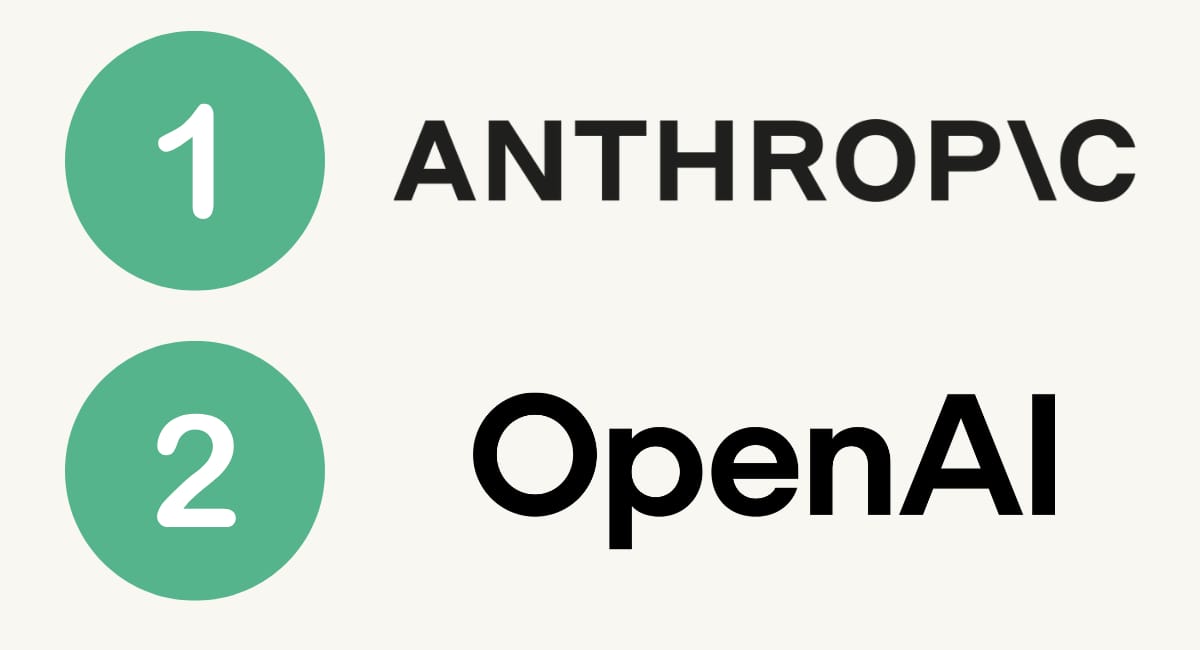
Anthropic is now the AI top dog
Anthropic has closed the gap, and then some, on OpenAI.
Driving the news: Anthropic has reportedly received several offers from investors for a new funding round that could give it a valuation of over US$800 billion, sources told Bloomberg. The AI giant has brushed them aside (possibly because shareholders don’t want to give up shares ahead of a potential IPO in October), but hasn’t ruled out accepting more cash.
Why it matters: Between the market shift to enterprise customers, the success of Claude Code, and buzz around Mythos (an AI agent the company says is so powerful it must be kept under lock and key), it would appear that Anthropic has overtaken OpenAI as the top dog in gen AI.
Last week, Anthropic reported that its expected revenue surged to $30 billion from $19 billion. For comparison, OpenAI said that its revenue was $24 billion annualized.
And while OpenAI still has a higher valuation at $852 billion, a new Financial Times report detailed how its backers are increasingly questioning this lofty estimation.
Yes, but: It’s not all roses for Anthropic. In recent weeks, the company has taken heat from power users over a perceived drop in performance of Claude Opus 4.6 and Claude Code. Some even believe Anthropic is purposely degrading Claude as it struggles with a lack of compute. Anthropic has denied this, but the incident is still indicative of growing pains.—QH
ONE BIG NUMBER
✏️ 40%. Share of Ontario high school students that met attendance standards (present for 90% of classes), down nearly 20% from the 2017-2018 school year. It wasn’t much better in elementary schools: only 55% of students met attendance standards. The trend has triggered a new policy proposal that mandates attendance account for 10-15% of students’ total grade.
Source link