There’s been a legal battle raging across the country for about 13 years now over who’s allowed to sell you a new car.
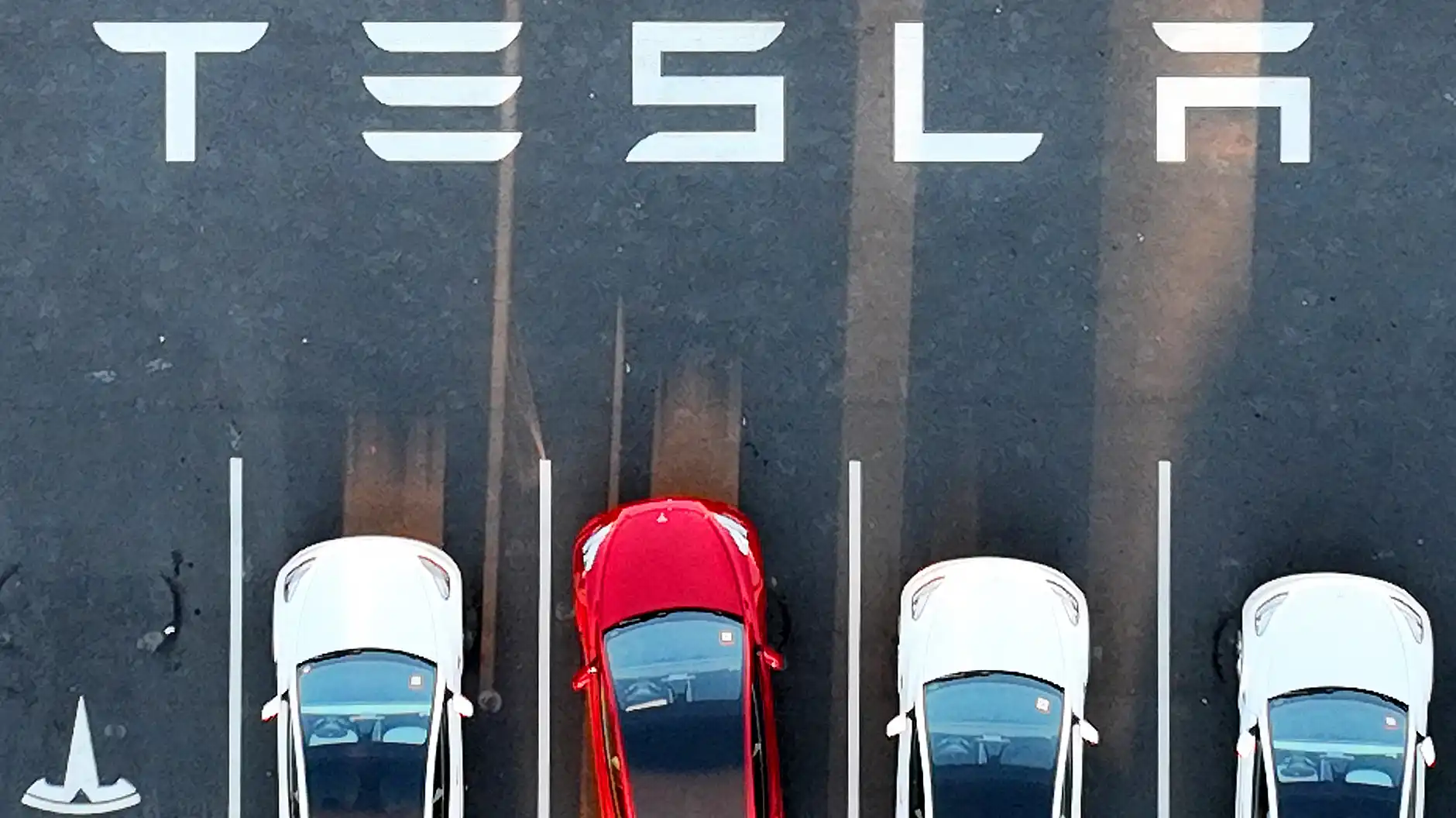
Ever since Tesla came on the scene, it’s sought to sell its electric vehicles directly to consumers. But many states require new vehicles to be sold through independent dealers that have franchise agreements with carmakers.
Other startup car companies, including Rivian and Lucid, are now following Tesla’s path. Earlier this year, those two companies won the right to sell their cars directly to consumers in Washington State. And they’re reportedly eyeing other states where direct sales are still banned.
So why do dealership requirements exist in the first place?
The answer goes back over a century, to the early days of the automobile. Back then, there were hundreds of car manufacturers in the U.S., and many different ways to buy vehicles, according to Daniel Crane, a law professor at the University of Michigan and author of the book “Direct Hit: How Tesla Went Straight to Consumers and Smashed the Car Dealers’ Monopoly.”
“You could order one from the Sears or Montgomery Ward catalog,” Crane said. “You could buy one from a gas station or a traveling salesperson. You could buy them from company-owned stores.” Or, you could buy a car from local independent dealerships.
But by the 1920s, the U.S. auto industry started to consolidate from those hundreds of companies into just the “Big Three”: General Motors, Ford, and Chrysler.
They were all based in Detroit, but they sold to the entire country, which presented a problem.
“American consumers weren’t ready to buy a very expensive product from a distant company they didn’t know,” Crane said. “They needed a person that they trusted in their local community to sell the car to them.”
So, car manufacturers contracted with local dealers to sell their vehicles, and carmakers focused on making cars. That gave the “Big Three” a lot of power over the dealers, said Kathryn Judge, a law professor at Columbia and author of “Direct: The Rise of the Middleman Economy and the Power of Going to the Source.”
“[The “Big Three”] could force smaller franchises to buy things they didn’t want to buy, and to accept terms that were really unfavorable to them,” Judge said.
For example, when the Great Depression hit, demand for cars plummeted. But Ford kept running its production line at full capacity, Daniel Crane said, and forced its dealers to buy inventory they couldn’t sell. Eventually, the dealers fought back.
Starting in the 1930s, dealers pushed states to pass laws to level the playing field with the car companies. Those included bans on car manufacturers selling direct to customers. The idea was to prevent car companies from opening up retail stores of their own, selling cars at a lower price, and undercutting their dealers.
So, for decades, consumers didn’t have any other option, Kathryn Judge said. “If you wanted to buy a car, you needed to go to a dealer, and the dealer was your primary source of information about the different options that were available.”
But then came the internet, where customers could get their own information. And then came a startup called Tesla, with CEO Elon Musk.
“[Musk] makes a business decision that Tesla will have to go direct, open its own stores, sell online, and have its own service centers as well — no independent dealers involved at all,” Daniel Crane said.
Dealerships hated this and fought with Tesla in court and in state legislatures. Tesla and other EV startups came out on top, in many cases, and won exemptions that allow them to sell direct.
Over a decade into this conflict, which Crane calls the “Tesla wars,” the legal landscape looks pretty different: “There are states that are very closed, and states that are quite open, and a whole variety of possibilities in between those things,” he said.
In some states, Tesla, Rivian, and other startups can sell direct, but traditional carmakers still can’t.
All that brings us to the latest chapter in this battle, over a brand called Scout Motors, which is owned by Volkswagen. It plans to sell its SUVs and trucks directly to consumers starting in 2027.
“We got overwhelming feedback that the consumer was tired of the existing model, felt abused in the existing model, and they were begging us for direct sales,” said Cody Thacker, Scout’s vice president of commercial operations.
Dealership groups have filed multiple lawsuits arguing that Volkswagen dealers should get to sell the Scout brand.
The National Automobile Dealers Association did not provide a comment by Marketplace’s deadline, but in the past has said it would challenge “all attempts to sell direct.“
Scout argues that its direct-sales model will lower consumer prices.
But Ray Shefska, co-founder of the car-buying site CarEdge, who worked in dealerships for four decades, said dealerships can help cut prices too.
“When you have multiple dealers of the same brand in a market area, there will be competition, and the customer can utilize that competition to hopefully get a better price,” Shefska said. “When you’re buying direct from the manufacturer, that doesn’t exist.”
In the best-case scenario, he said, dealers can add a level of service and connection to your local community that a manufacturer can’t.