“When the Medical Technology Testing and Training Institute and the Startup Support Center open this year, Daegu will be reborn as a hub leading innovation in the medical industry.”
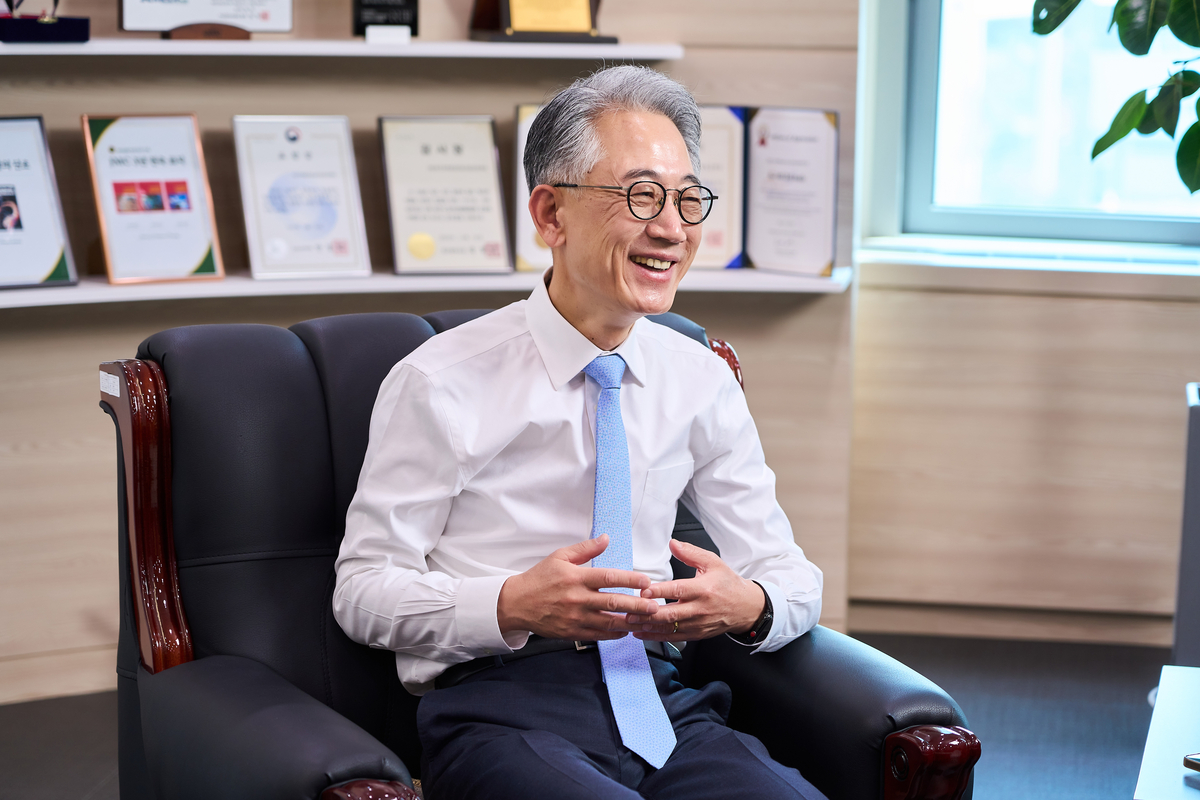
Park Ku-seon, chairman of the Daegu-Gyeongbuk Medical Innovation Foundation (K-Medi Hub), said this in an interview with The Seoul Economic Daily on the 7th, adding, “To leap forward as a medical powerhouse, we are accelerating the expansion of infrastructure and the advancement of R&D equipment.”
The Medical Technology Testing and Training Institute will open this September, and the Startup Support Center will open in December, both within K-Medi Hub.
K-Medi Hub is a public institution under the Ministry of Health and Welfare, established to foster the medical industry as the nation’s next-generation growth engine.
With infrastructure including the New Drug Development Support Center, Advanced Medical Device Development Support Center, Preclinical Center, and Pharmaceutical Production Center, it performs diverse roles spanning from the development of new medical technologies to corporate success.
The Medical Technology Testing and Training Institute is a specialized facility for education, training, and national licensing exams aimed at strengthening the expertise of healthcare professionals such as doctors and nurses.
In simulation training rooms built identically to actual operating rooms, trainees will undergo hands-on training using cutting-edge equipment such as ultrasound and laparoscopic devices.
This will not only elevate the quality of domestic medical technology but also function to promote the excellence of K-medical technology worldwide through training programs for overseas healthcare professionals.
“We are in discussions to host various medical academic conferences at the institute,” Park said. “If events such as the Asia-Pacific Anti-Aging Conference, held annually in Daegu, are hosted here, the status of ‘Medi-City Daegu’ will naturally rise overseas as well.”
The Startup Support Center is drawing high expectations as a frontline base for startup incubation specialized in new medical technology fields such as digital therapeutics and artificial intelligence (AI) drug development.
Beyond simply providing space for companies, it will offer one-stop support across the full product development cycle — from technology development to licensing and commercialization — utilizing the foundation’s advanced infrastructure.
Strong synergy is particularly expected with the Public Innovation Workshop, which opens next month.
“The workshop is an open laboratory where anyone with an idea can create prototypes using research equipment such as 3D printers and scanners,” Park explained. “When the two infrastructures are linked, they will breathe new life into the region’s medical startup ecosystem.”
Park served as the third chairman of the Osong Medical Innovation Foundation until May 2021, and has been serving as the fifth chairman of K-Medi Hub since January last year.
He has led innovation in the medical industry by heading both of the two major foundations established for the development of the nation’s medical industry.
“Osong, built in a box-type configuration, has limited scalability, whereas Daegu has very high scalability thanks to its ample available land,” he said. “Beyond the training institute and startup center, Daegu will be able to perform even more functions in the future.”
Along with infrastructure expansion, K-Medi Hub is also accelerating the advancement of its R&D infrastructure this year in line with the acceleration of AI and digital transformation.
“The medical industry is the field where the introduction and convergence of cutting-edge technology is most active,” Park said. “The advancement of research infrastructure is not a choice but a necessity, and we are concentrating the foundation’s capabilities and resources on new industry areas.”
A representative example is the establishment last year of dedicated departments for AI-based new drug development and digital healthcare medical device development, creating an environment for immersive advanced technology research.
This year, the foundation will begin full-scale introduction of top-tier cutting-edge research equipment to support this.
In particular, starting this year, K-Medi Hub will participate in the “Regional Hub AX Innovation Technology Development Project” centered on Suseong Alpha City, jointly developing with companies the core technologies for customized advanced medical devices essential for AI transformation (AX).
With Kyungpook National University, the foundation will participate in the “AIx Bio Innovation Research Hub Pilot Project” to build an automated experimental platform for AI drug development.
The system, in which AI predicts effective drug candidates and the foundation immediately verifies them, is expected to dramatically reduce the enormous time and cost required for new drug discovery.
Meanwhile, K-Medi Hub has received an ‘A rating’ for seven consecutive years through last year in the Ministry of Health and Welfare’s management performance evaluation.
In particular, last year, nine out of 23 other public institutions received an A rating, and K-Medi Hub raised its standing by ranking first overall in comprehensive score among all evaluated institutions.
This was in recognition of high performance in areas including record-high technology service revenue, the establishment of digital platform-based technology, the expansion of full-cycle corporate support, and strengthened overseas export support.
“We will establish ourselves as an innovation hub for the medical industry that can grow alongside companies and enhance competitiveness in the global market,” Park said. “To this end, Daegu also needs a medical-specialized industrial complex — like the Osong Life Science Complex — where medical technologies can be directly commercialized and large corporations can move in.”