

As we look across the current automotive landscape, it is rare to see a company capture the cultural zeitgeist as effectively as Rivian. Following the recent “Open House” events in Normal, Illinois, and a series of strategic production leaks, the buzz surrounding the upcoming R2 platform has reached a fever pitch. For those of us who track the intersection of technology and transport, this isn’t just another vehicle launch; it is a fundamental test of whether a mission-driven startup can scale into a mass-market powerhouse.
The R2 Platform and the Strategy of Refinement
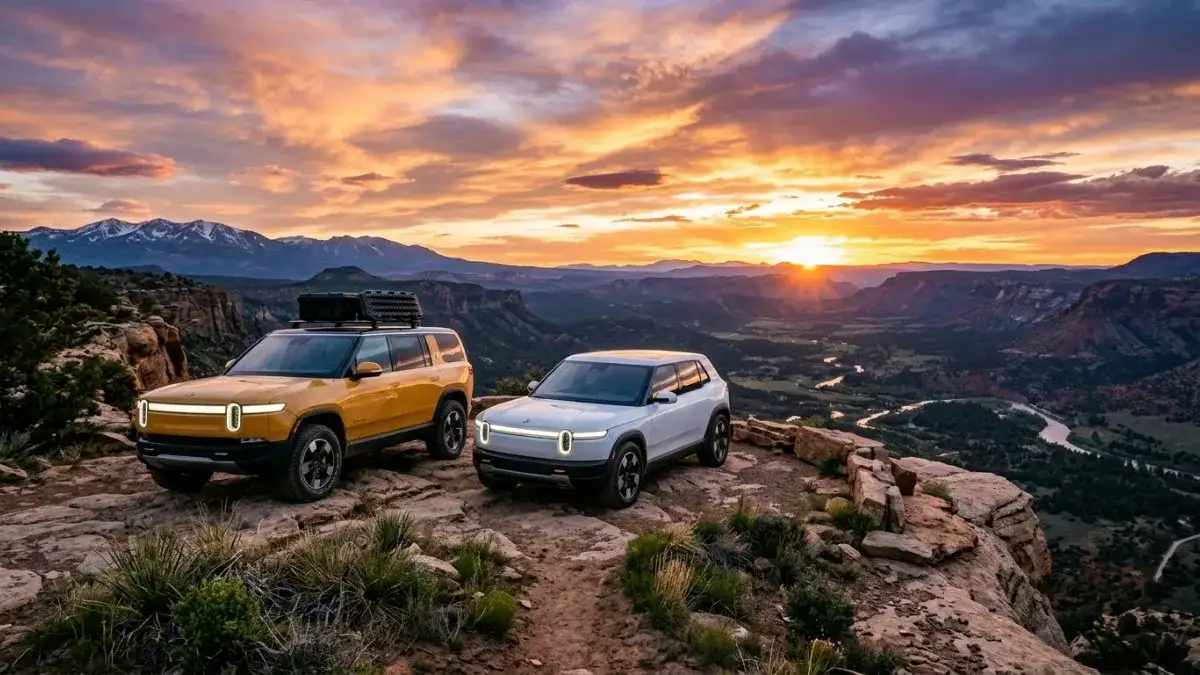
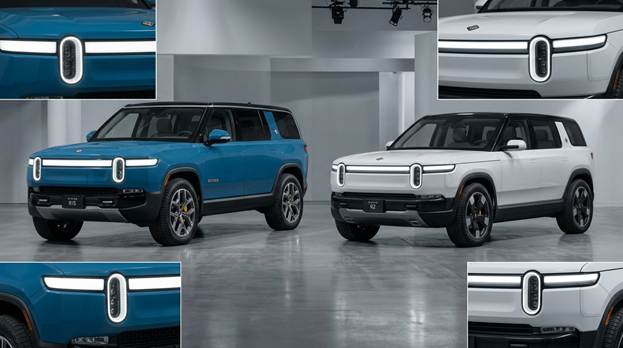
The recent reveal of the Rivian R2 represents a pivotal moment for the Irvine-based automaker. While the R1T and R1S established Rivian as a luxury outdoor brand, the R2 is designed to be the volume leader. It is a midsize SUV that retains the “Adventure” DNA of its larger siblings but shrinks it into a package—and a price point—that targets the heart of the US car market.
What makes the R2 particularly compelling is how Rivian has managed to maintain its brand identity while stripping out the immense complexity (and cost) of the R1 platform. By moving to a high-pressure die-casting architecture and a simplified battery pack design, Rivian is signaling that they have learned the hard lessons of manufacturing. Search volume for “Rivian R2 specs” has spiked because consumers are realizing they can get the Rivian aesthetic and ecosystem for roughly $45,000, placing it directly in the crosshairs of the Tesla Model Y.
Analyzing the R1 vs R2 Value Proposition
The community events in Illinois have sparked intense debate regarding “R2 vs R1S.” While the R1S is a technical marvel with its quad-motor setup and hydraulic kinetic roll control, it is also a vehicle that many families find prohibitively expensive or simply too large for urban environments.
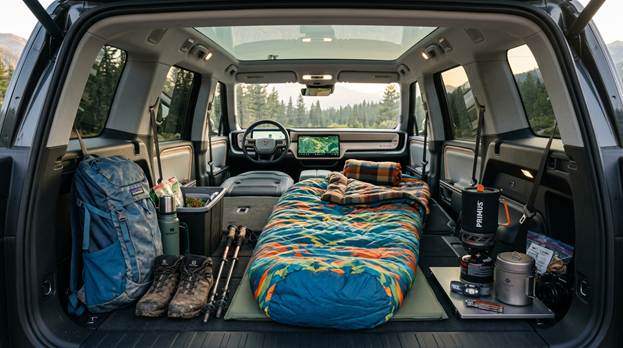
The R2 solves this. It offers a more maneuverable footprint while introducing features the community has begged for, such as the fold-flat front seats and the “proprietarily Rivian” powered rear glass that drops completely into the tailgate. This isn’t just about making a cheaper car; it’s about making a more usable one. The R2 is the vehicle that moves Rivian from a “niche luxury” brand to a “household name” brand, a transition Kelley Blue Book notes is essential for Rivian to capture the mass-market SUV segment.
Why Rivian is Winning the Culture War
I often look at EV success through the lens of user experience and emotional resonance. Tesla won early because they were the only ones playing the game, but Rivian is winning now because they offer a soul that Tesla has arguably lost. Tesla has become the “appliance” of EVs – efficient, but increasingly sterile and controversial. Rivian, conversely, has built a brand around the “Great Outdoors,” an aspirational lifestyle that resonates deeply with American buyers.
I see this transition happening in real-time within my own circle. A close friend of mine currently owns both a Rivian R1T and a Tesla Model 3. For years, the Tesla was the daily driver, and the Rivian was the weekend toy. However, after seeing the R2 reveal, they immediately placed an order for the smaller Rivian to replace the Tesla. The reasoning was simple: the Rivian software interface is more intuitive, the build quality feels more substantial, and the brand doesn’t carry the same “baggage” that Tesla currently does. When a “Tesla family” decides to become an “all-Rivian family,” it is a warning shot to Elon Musk that his lead is no longer insurmountable, especially as Tesla’s market share continues to dip amidst rising competition.
The Path to Dethroning the King
To truly “dethrone” Tesla from the top spot in US EV sales, Rivian must move beyond being a cult favorite and solve the “Three S” challenge: Scale, Service, and Supercharging.
- Scale: Tesla’s advantage is their ability to pump out millions of units. Rivian’s expansion of the Normal plant and future Georgia facility must operate with the efficiency of a Toyota factory.
- Service: As more Rivians hit the road, the service infrastructure must keep pace. You cannot sell a mass-market car if the nearest service center is three states away.
- Supercharging: Rivian’s move to the NACS (North American Charging Standard) and their integration into the Tesla Supercharging network is a masterstroke. By removing “range anxiety,” they have neutralized Tesla’s biggest competitive advantage.
According to market analysis by Allcott et al. (2024), the consumer shift toward EVs is increasingly driven by “brand loyalty and ecosystem integration.” Rivian is building a closed-loop ecosystem – Adventure Gear, the Rivian Waypoints network, and integrated insurance – that rivals Apple’s “walled garden” approach. This is the only way to beat Tesla: don’t just build a better car; build a better ownership experience.
Expanding the Lineup: What Comes After R2?
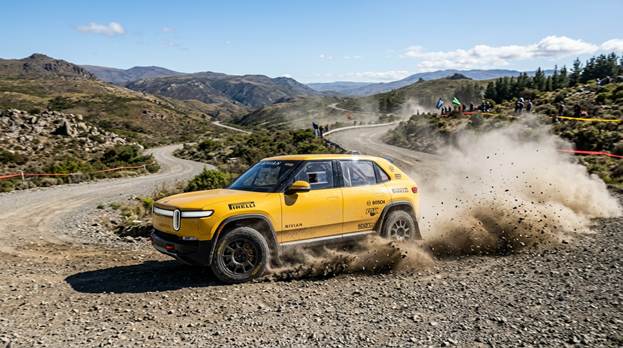
The roadmap for Rivian doesn’t end with the R2. We have already seen the surprise unveiling of the R3 and the rally-inspired R3X. These vehicles suggest that Rivian intends to move even further down-market and into more specialized niches.
Where do they go next? I suspect we will see a “Rivian R1X” – an ultra-high-performance version of their flagship to compete with the Hummer EV. Furthermore, Rivian’s commercial van (EDV) platform, which recently opened to non-Amazon fleets, has the potential to be a massive revenue driver if they can successfully pivot it toward smaller tradespeople and delivery fleets globally.
Wrapping Up
Rivian is currently the most exciting story in the automotive world. They have successfully navigated the “Valley of Death” that claims most EV startups and are now entering a phase of rapid expansion. The R2 is the right vehicle at the right time—offering the style and capability of the R1 platform at a price point that the average American family can actually afford.
If Rivian can execute on its production targets and continue to foster the intense brand loyalty that has defined its early years, Tesla may soon find itself in an unfamiliar position: second place. The “Open House” in Illinois wasn’t just a celebration of a new car; it was the beginning of a new era for American motoring.
Disclosure: Images rendered by Artlist.io
Rob Enderle is a technology analyst at Torque News who covers automotive technology and battery developments. You can learn more about Rob on Wikipedia and follow his articles on TechNewsWord, TGDaily, and TechSpective.
Follow us today…
Source link