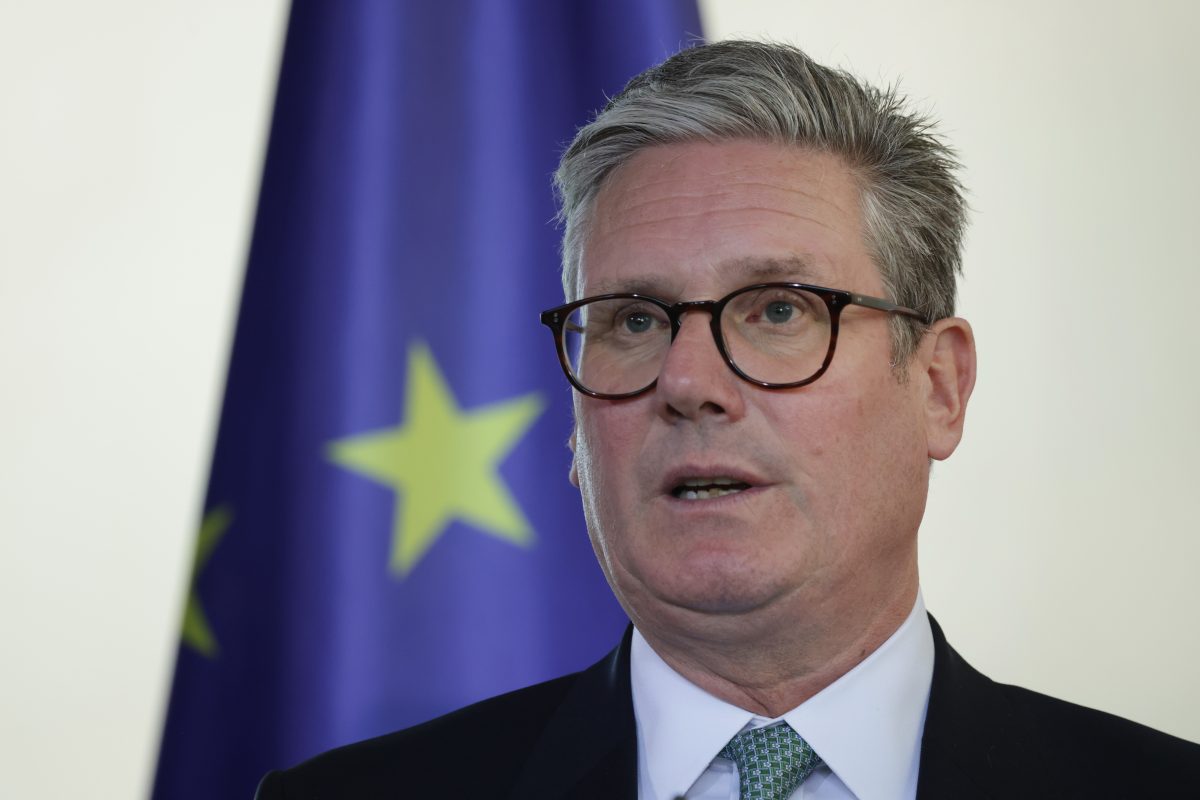
Sir Keir Starmer has said Britain must not “stick its head in the sand” on artificial intelligence, with the technology set to fundamentally reshape the UK economy.
The Prime Minister used his speech at London Tech Week to unveil a major sovereign computing push, new AI skills programmes and a vision for keeping Britain’s fastest-growing tech firms at home.
Opening Europe’s biggest tech conference on Monday, the Starmer argued the UK faced a defining choice in the global AI race.
“On artificial intelligence, Britain has three options. One, we could stick our head in the sand, pretend it isn’t happening and hope for the best. I won’t accept that.
“Option two, you can remove the guardrails completely and ignore the consequences.”
“Or we can take a third path – where we back the British businesses creating the jobs and technologies of the future.”
The PM’s intervention come as London reclaimed the top spot from Paris in Dealroom’s latest global tech ecosystem rankings, with startups in the capital pulling in $17.7bn (£13.2bn) of investment last year in as AI funding almost doubled.
Starmer repeatedly stressed the importance of technological sovereignty, arguing Britain must create the conditions for firms to “start here, scale here and stay here”.
“Government is active in its approach to this, supporting risk-taking, making its own bets, providing the conditions for businesses to thrive, but also making sure we are sovereign,” he added.
Sovereign investments
Central to the announcement was a new sovereign compute strategy, including plans to purchase around £400m worth of specialist AI chips and expand the UK’s domestic computing infrastructure.
The government said the investment would help build national AI capability and support British startups seeking access to high-performance compute.
Starmer added the government would also scale up national AI compute clusters as part of a broader industrial strategy aimed at reducing dependence on overseas infrastructure.
The announcement builds on Labour’s wider push to establish domestic AI capabilities through its Sovereign AI programme, which was launched earlier this year to support UK frontier AI firms.
And the PM’s speech coincides with a major industry announcement from London-based AI firm Cosine, one of the companies selected under the initiative.
Cosine said it had assembled a coalition of major British institutions to help develop Lumen Sovereign, which it describes as Britain’s first sovereign frontier AI model.
BT, HSBC, BAE Systems, Babcock, Lloyds Banking Group, NatWest, LSEG, PwC, Thales UK, Leonardo UK and Telefónica Tech UK&I have signed agreements to participate in the model’s design phase.
New AI skills drive
Alongside infrastructure announcements, ministers unveiled a new package of AI skills and employment programmes aimed at helping young people enter the workforce.
Tech secretary Liz Kendall announced a £20m Early careers jobs alliance bringing together government and employers to look at how AI is reshaping entry-level work and ensure career pathways remain open as automation spreads across the economy.
The government will also expand its Techfirst programme, with 400,000 pupils from disadvantaged schools set to receive AI and technology training.
New AI bootcamps will launch in Greater Manchester and Lancashire this summer before a wider national rollout.
Starmer revealed that 1.7 million workers have already received AI training since the launch of the government’s wider upskilling drive.
“We can’t know exactly where AI will cause disruption,” he said. “But we can know how we will respond.”
The PM pointed to Britain’s position as the world’s third-largest technology economy and said startups had attracted almost half of all European tech investment this year.
“Britain has every reason to be confident,” he said. “But the real question is whether we shape this change or allow it to shape us.”