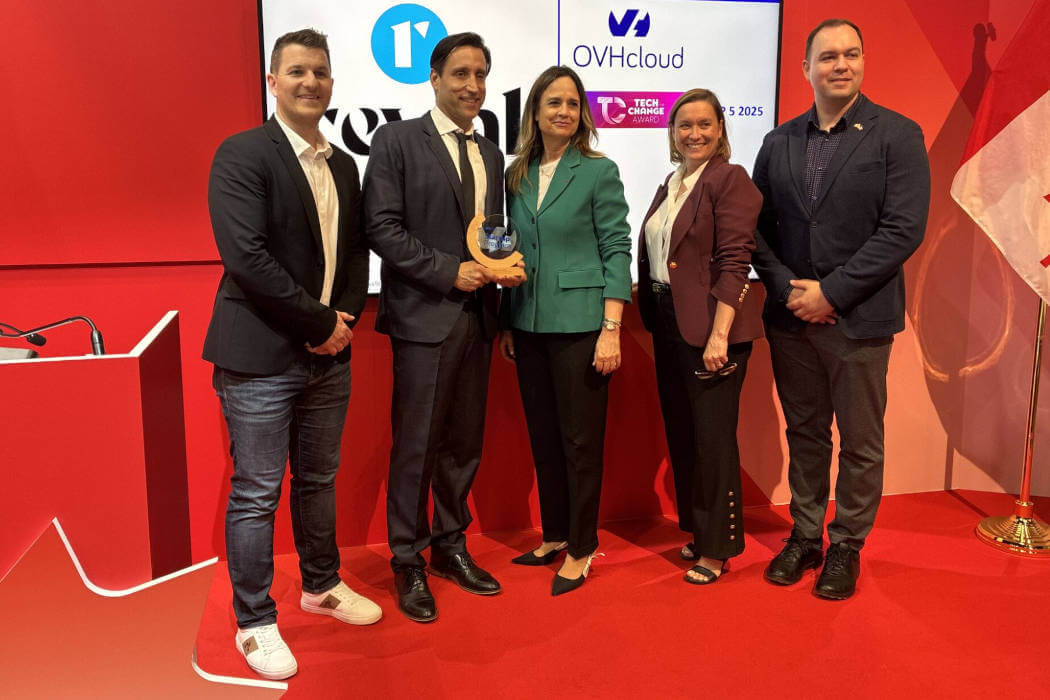
Reveal Life Science uses molecular vision to detect cancers during surgery.
A Canadian medtech startup, built on another Canadian company’s data infrastructure, has secured the top prize at one of Europe’s biggest tech conferences.
The news: Montréal-based medical AI company Reveal Life Science took home first place in the OVHcloud Startup Challenge at VivaTech in Paris on Thursday, beating out dozens of international competitors. The startup won for its tech that reads tissues in seconds to determine whether they are healthy or cancerous, using a chemical analysis technique called Raman spectroscopy. Reveal claims that its AI platform contains the world’s largest datasets of molecular data.
From the source: Another unique feature of Reveal’s tech is its data hosting, which it does through fellow Canadian company Qohash. “Control of sensitive data is a strategic advantage,” Qohash founder and CEO Jean Le Bouthillier said in a statement. “Qohash ensures that the most critical medical data never leaves the control of those who hold it.”
Following the thread: Reveal is trying to do something incredibly hard: ensure that cancerous tumours are fully eradicated during surgery, with no margins of error, to eliminate chances of regrowth. Reveal claims its technology has been validated across more than 700 surgeries and 20,000 intraoperative measurements, but it hasn’t quite reached its goal of no margin of error: it’s currently 93 to 97 percent accurate when used on brain tumours.
RELATED: Syantra’s breast cancer blood test isn’t looking for cancer at all
This month, the company and surgical innovation centre IRCAD announced a Canada-France partnership to bring its AI to breast cancer surgery. Though it hasn’t been cleared for sale yet, Reveal has obtained an FDA Breakthrough Device designation, which typically speeds up the regulatory review process for US sales.
Final thought: Federal AI supercluster Scale AI is leading the Canadian delegation to VivaTech, giving Canada an opportunity to flex its AI startup talent in front of international peers. It also comes amid the federal government’s plans to lead an alliance of aligned democracies on AI, which it revealed in its national AI strategy. This week, BetaKit reported that many AI experts are in favour of a middle-power coalition outside of the US and China to shape AI guardrails.
Feature image courtesy OVHCloud via LinkedIn.