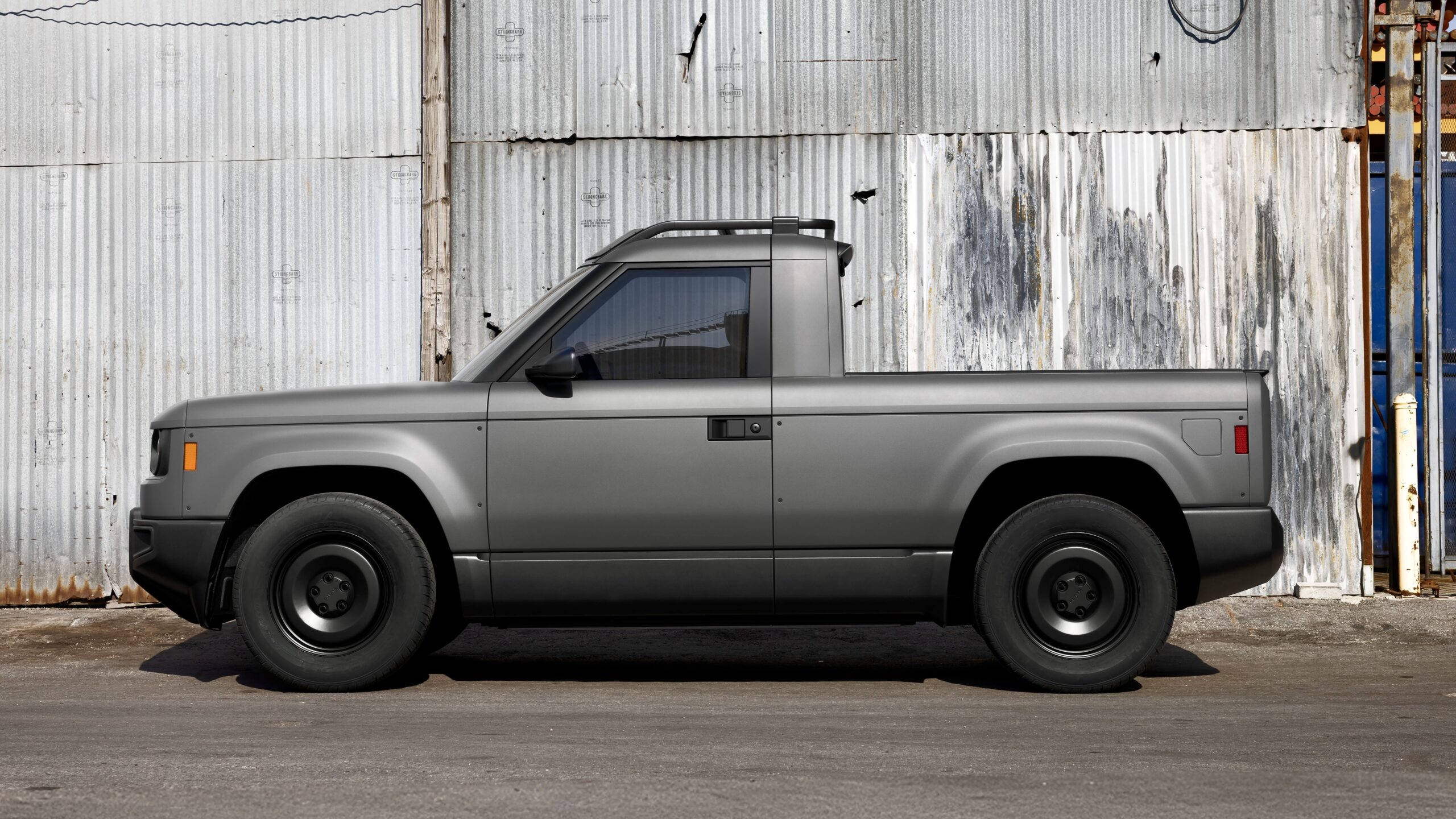

The numbers are much smaller today, but the United States has been home to around 3000 different automotive brands over the last century and change. The era of electrification has seen the number of auto producers climb again—but not every new car company is set on EVs as an entry point. REO Industries is about as fresh as start-ups get, but the brand is already swinging for the fences with its promises. The company claims to be developing a lineup of three four-wheel drive trucks and SUVs designed with affordability and capability in mind. And while cheap trucks are exciting enough, these REO machines are reportedly gasoline-powered and set to offer a manual gearbox.
You would be forgiven for not being all that familiar with the REO nameplate. The REO Motor Car Company was founded in 1905 by Ransom Eli Olds, following his contentious departure from Oldsmobile. The automaker produced passenger cars through 1936, but is ultimately best known for its utility vehicles and trucks that lasted a bit longer. The Speed Wagon is the brand’s most famous entrant, which is truly the progenitor of the pickup truck segment in the States. (It’s also, of course, the inspiration behind the American rock band REO Speedwagon.)
The rights to the REO name changed hands via sales and mergers over the decades, before landing in the hands of the REO Industries founder and CEO, Zach De Bernardi, who secured the trademark for the brand just last month. The new auto executive says he didn’t set out to revive the brand in particular, but he knew that heritage and history are hard to come by in the automotive space; the fact that REO’s own history lined up with his mission only made the match more natural.
De Bernardi is, admittedly, not an industry veteran. He comes from a real estate career built in and around Dallas, Texas, which has allowed him to enjoy his love of cars; he’s built overland-ready Land Cruisers, GXs, and 4Runners, and ripped around in souped-up RX-7s, Civics, and Stageas. JDM cars are clearly a passion, but his personal favorites all sit in that 1990s-2000s era. The mechanical nature and simplicity of those products—particularly Toyotas—are at the core of his view of what these products need to be.
“There’s a lot of Toyota DNA from vehicles I love that’s going to be put into this vehicle,” De Bernardi told Road & Track.
While you might be expecting REO Industries to arrive with a new Speed Wagon, that will not be the case for the first model. While the brand says it does indeed hold that trademark, instead, REO Industries is looking to Mr. Oldsmobile’s career, opting to launch with three models under the Runabout nameplate: the Runabout T4X, the Runabout T4C, and the Runabout S4C SUV.
The original Runabout, or Curved Dash Olds as it became known, was Oldsmobile’s first vehicle, and the most popular car in the United States before the arrival of the Ford Model T. It was also an early example of genuinely affordable transportation, retailing for $650—around $25,000 in 2026 scratch. It may come as a welcome surprise that that’s exactly the sort of pricing the brand is hoping to achieve with the new products; base prices of the entry level T4X are projected to start around $21,500.
How does REO intend to sell trucks in the $20,000 range? Well, for starters, this isn’t a Ram 1500, Chevy Colorado, or even Ford Maverick competitor. De Bernardi refers to these machines as belonging to the “Ameri-Kei” class. The segment is unabashedly inspired by the micro machines in the Japanese Kei category, but upscaled to something more comfortable on U.S. roadways. That said, they will be basic, with the T4X potentially arriving without a radio or finished door cards. More creature comforts are expected as you go up the offer sheet, with the automaker currently evaluating different à la carte options for those who need a bit more luxury. However, screens will be at a minimum, with physical controls in order for every function of the pickup.
REO Industries
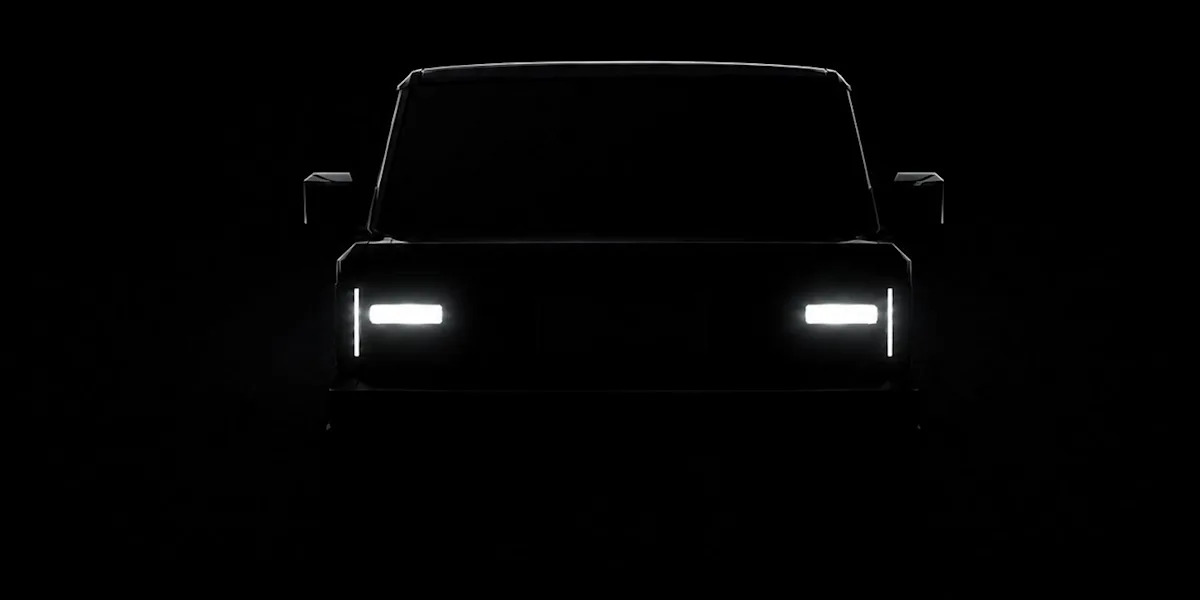
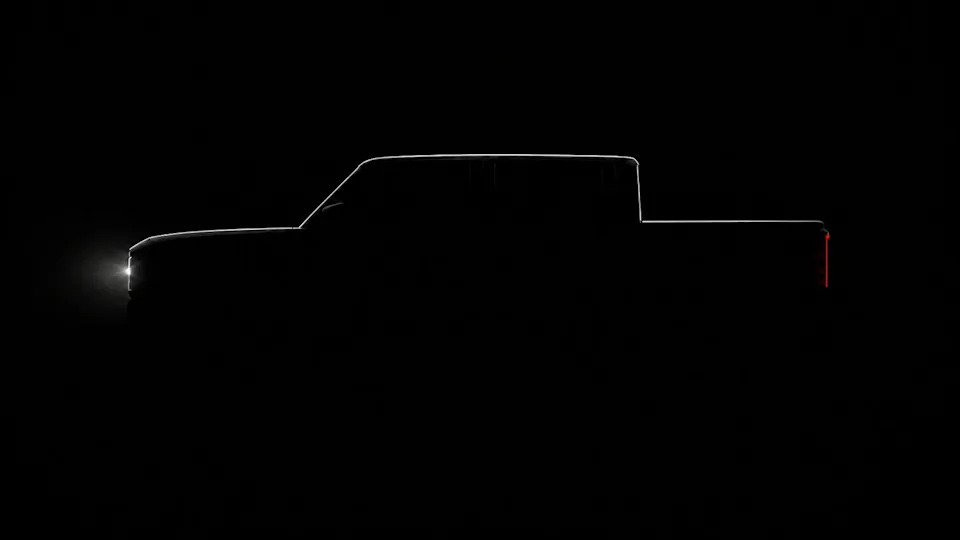
(REO Industries)Top image: REO Runabout T4X.Bottom image: REO Runabout T4C.REO Industries
(REO Industries)These new micro-trucks could be the first true test of President Donald Trump’s easing of regulations as they relate to Kei-sized vehicles, and emissions compliance more broadly. In fact, it was the president’s regulatory agenda and dissatisfaction with the state of EVs is what made this project possible in the first place.
“When the CAFE laws, or CAFE fees, got removed in December of 2025 that was the biggest indicator to me and our team that, Hey, something like this is possible,” De Bernardi told R&T. “I’ve been watching Slate and the mini-truck market and things like that. It’s great, we love it, and wish them the best. But a lot of the feedback … you kind of just pay attention [and hear], ‘Oh, this would be fantastic if it just had a diesel, or if it just had a little four-cylinder,’ because that’s what the American buyer market wants. Largely because the infrastructure in the United States has not been taken seriously to electrify homes, or [build] charging stations.”
De Bernardi has confirmed that REO has yet to have any conversations with the Trump Administration about the realities of building these smaller trucks in the States, but they are hoping to get more guidance (and assistance) throughout the process. The Texas state government may also play an important role, as De Bernardi intends to set up shop not too far from the OEM presence of Toyota and GM.
“What we’re setting out to do is ask the question, ‘What’s the definition of a truck?’ We’re going to build that. We’re just going to make it smaller, and we’re going to try to make it more affordable, and we’re going to do what makes sense economically in terms of a startup. We’re aiming for the largest pool of buyers. And then downstream, as it gets more successful, we can add different powertrains, as inevitably the political climate in America changes again … and we have to be adaptive to CAFE fees if it comes back, and overarching green initiatives,” said De Bernardi. “We have to be flexible, but we’re building this truck for the mass market.”
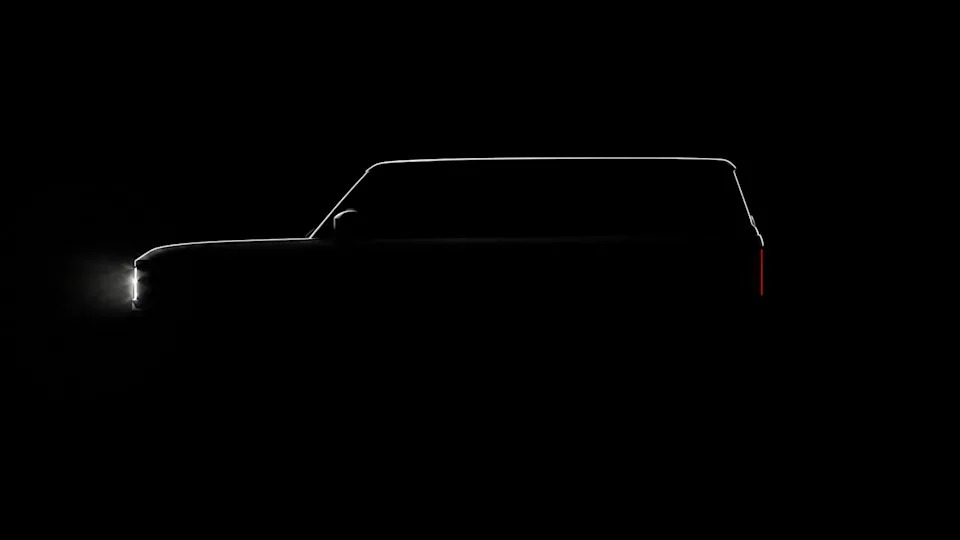
REO Runabout S4C.REO Industries
(REO Industries)The entry-level T4X is set to measure just 180 inches long, putting it in line with cars like the Honda Civic or Mazda 3. It’s projected to be around both 74 inches tall and wide, which is just about in line with a mid-size truck on sale today. The trucks will all feature a body-on-frame construction and mechanical four-wheel drive, according to the company; maximum tow capacity is set at around 4500 pounds, which is plenty for a lot of small truck buyers.
Power is said to be provided by a free-breathing four-cylinder engine, which will pair with either a six-speed manual or an automatic transmission. No word yet on where the powertrains are coming from, but we know De Bernardi wants it to be American-built and without direct injection to make things overly complicated. It’ll also need to bolt up to a stick shift, which narrows the options list a bit further. (You can all make an educated guess from there.)
The most interesting part of the REO pitch comes by way of its “open-source” approach. Buyers will have access to all of the information about the truck, and are encouraged to produce new parts and components for them; engineers can work with the brand to validate the parts, and people will be able to list them for sale right on the REO site if they meet the requirements. Given how popular additive manufacturing is becoming, this seems like a really cool way to get interesting accessories on your order sheet.
The company isn’t limiting this approach to accessories down the line, however. The brand is being rather secretive about the work they are doing with an international design firm, but that’s in part because they want input; De Bernardi says he and the crew are still reading every bit of correspondence from potential buyers, and they want to hear what they have to say while there’s time to make changes. That said, R&T was told that the goal of showing off the final design during the fourth quarter of this year is absolutely on track.
Recent automotive history is littered with well-intentioned companies that failed to get off the ground; Fisker, Lordstown, Faraday Future, Nikola, Canoo, and even Sony are just a few highlights of recent memory. All of those companies may have been slated to build electric vehicles instead of not gasoline-powered trucks, but they all as great reminders of how difficult the car business truly is. Even with smart products and seemingly endless amounts of investor capital, putting thousands of vehicles in customer hands is an uphill journey. Tesla remains the only newcomer in recent memory to work its way to operating at a net profit, helped in large part by the sheer volume of cars it cranks out globally—a tall task to match for any startup.
Still, it is getting clearer as the days go by that cars are simply too expensive for many Americans these days. If it takes a startup to shake things up before we get any change, so be it. Look what happened when that other Texas-based automaker got some real momentum behind it.
You Might Also Like
Source link