
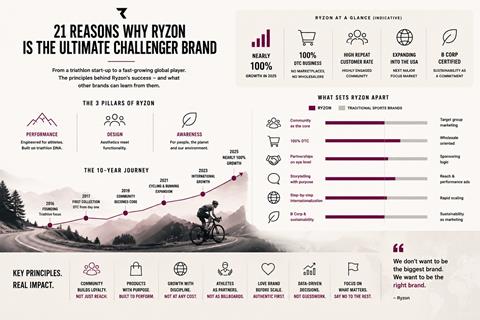

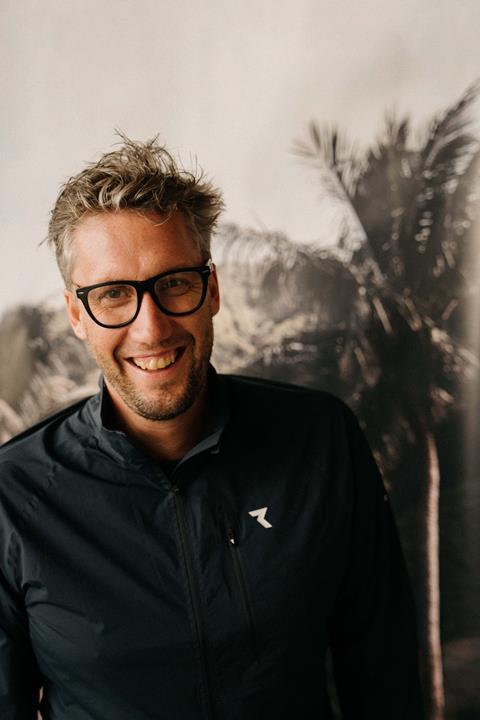

Nearly 100 percent growth in a challenging market. No major venture capital funding rounds. Instead, a community like Rapha’s, data expertise like About You’s, and a commitment to performance like On’s – combined with a unique identity all its own. And then, in 2025, as Ryzon co-founder and CEO Mario Konrad puts it, “all at once, a whole lot of dominoes fell – and then multiplied.”
Today, the company generates revenue in the mid-eight-figure range – but for the founders, that number isn’t the main focus. Far more exciting is the question of what actually defines Ryzon. Is it a “love brand” or a “performance brand”? Mario Konrad and Sven Schröllkamp, Global Pro Sport & Partnership Manager, offer different answers. How an idea from ten years ago became one of the most exciting challenger brands in the sports industry – in 21 reasons.
Start small, think big
Triathletes are considered the nerds of endurance sports. They discuss aerodynamics, wattage, and seat pads as if their lives depended on it. It was in this small, demanding niche, of all places, that Ryzon’s story began.
When Mario and Markus Konrad founded the brand in 2016 together with designer Fabian Jung, they made a conscious decision to avoid the well-trodden path. Instead of trying to cover as many sports as possible at once, they initially focused on a small but extremely demanding community. Their vision: to rethink performance – functional, aesthetic, and produced in Europe as sustainably as possible.
The beginnings were modest. The founding team invested around €58,000 in samples and prototypes; only 74 pieces of the first triathlon suit were produced. At first, some of the products were sold directly out of the trunk of a car.
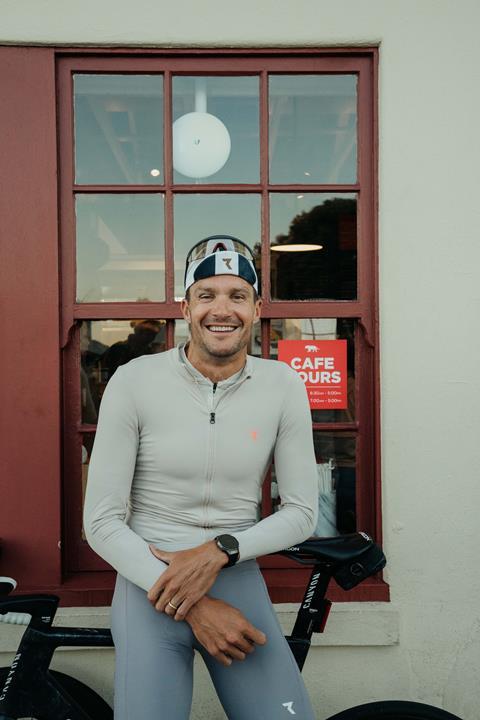
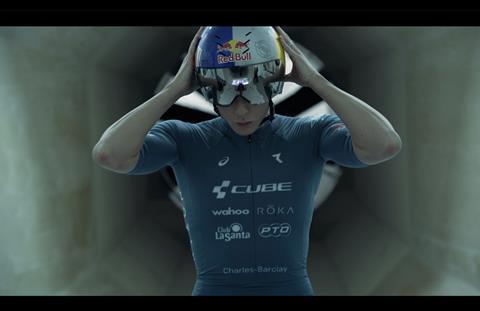
Jan Frodeno provided important inspiration. He already had an Olympic gold medal under his belt when he won the Ironman in Hawaii for the first time in 2015. In total, the German triathlete triumphed three times in Kona. Initial discussions evolved into a partnership that went far beyond traditional sponsorship. Together, they conducted wind tunnel tests, refined materials, and developed products – and along the way, the young brand quickly gained visibility in the triathlon scene.
In a nutshell
Those who win over the most demanding athletes build credibility that’s nearly impossible to replicate later on.
Born from the sport
Many brands are founded because someone spots a gap in the market. Ryzon came into being because the founders were part of the scene themselves. They developed the brand as athletes, for athletes. Mario Konrad, for example, competed in the German Triathlon Bundesliga.
This mindset continues to shape the company to this day. Product development, athlete partnerships, and communication are guided less by trends and more by the needs of people who prefer to spend their weekends on a bike, in running shoes, or in the water.
Perhaps that’s exactly why Ryzon, despite its growth, still feels more like a labor of love than a business venture. Konrad describes the company as a “learning organization”: “The path to becoming an expert is, so to speak, a constant process of learning.”
In a nutshell
Authenticity arises where product and passion come together.
Good stories beat reach
When Jonas Deichmann joined Ryzon, he wasn’t yet a social media sensation. The brand saw potential in him, nonetheless. “He came to us back then with 12,000 followers,” recalls Sven Schröllkamp, Global Pro Sport & Partnership Manager.
Reach wasn’t the deciding factor. What mattered was the story. Circumnavigations of the globe, long-distance adventures, and a certain touch of craziness fit perfectly with the brand’s DNA. “From the very beginning, we’ve always tried to tell genuine, authentic stories,” says Schröllkamp.
Today, more than 318,000 people follow the adventurer and extreme athlete on Instagram. Looking back, the partnership seems like a stroke of luck. In fact, it demonstrates one thing above all: Ryzon didn’t invest in reach, but in a personality and their story – long before they were known to an audience of millions.
In a nutshell
The best story often wins out over the widest reach.
Athletes, not billboards
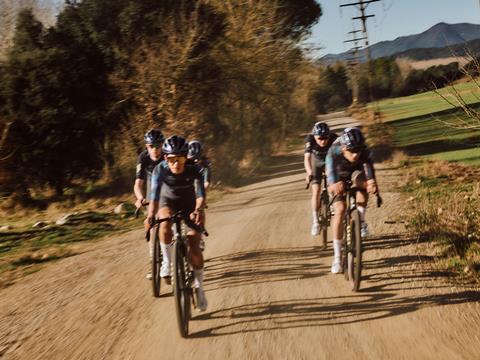
Many sponsorship deals operate on a simple principle: money in exchange for visibility. Ryzon is trying to do things differently. Athletes aren’t just supposed to wear products – they’re meant to become part of the brand. This applies to personalities like Jan Frodeno, Jonas Deichmann, and Lucy Charles-Barclay, as well as to partnerships with the Canyon DT Swiss RAAW Racing Team. What matters most isn’t so much the reach as the shared story.
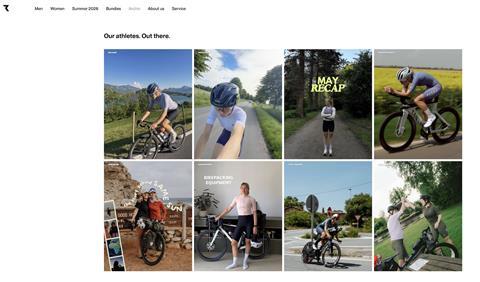
“There’s also a great, great deal of work and time that goes into this, which we’re happy to invest. For us, the focus is on the human connection,” says Schröllkamp. Accordingly, you won’t find a traditional “These are our athletes” list at Ryzon. On its own channels, the focus isn’t on medals or follower counts, but on experiences. “Our athletes. Out there.” is the headline on the website. The brand tells stories about people – not about sponsorship contracts.
In a nutshell
The strongest partnerships begin where sponsorship ends.
Community before campaign
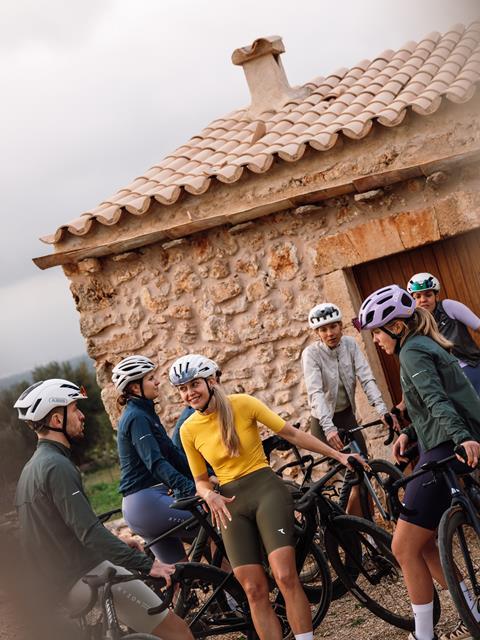
Pop-up stores, community rides, and events aren’t part of Ryzon’s marketing plan. They’re part of its business model. If you want to understand the brand, you have to understand that many decisions aren’t primarily driven by reach or conversion.
“The main reason we do the pop-up stores is the community aspect,” says Schröllkamp. The fact that the events have since become financially successful came later.
In a nutshell
Community isn’t a marketing channel – it’s a competitive advantage.
https://www.instagram.com/p/DYCTYpfDNpu/?img_index=1
Content is a team sport
In many companies, storytelling falls somewhere between a marketing cliché and a PowerPoint slide. At Ryzon, things seem to be different. Athletes are supported, stories are planned, and content is developed for the long term. There’s a dedicated team behind it all. Schröllkamp explains it this way: “Storytelling, storytelling, storytelling. That’s the be-all and end-all for us.”
That may sound simple. In fact, there’s a deliberate decision behind it: it’s better to tell a few good stories than many random ones. When Deichmann joined Ryzon, no one suspected that, a little later, he would become the hero of an entire endurance sports community in Mexico with his triathlon around the world. The brand focuses precisely on stories like these.
At the same time, Mario Konrad still sees potential. When professional cyclist Juri Hollmann is waiting for him at the Cologne headquarters or female athletes spontaneously go for a run with the team, the camera isn’t always the focus. “The question isn’t who’s holding the camera, but rather: Does anyone want to go to lunch with Juri?” That’s precisely where the brand’s strength – and at the same time, its weakness – lies. “We do a great job of implementing the community aspect because we keep it very honest and authentic. But we still see even more potential.”
In a nutshell
The best stories happen in real life – and are only told afterward.
Between a performance brand and a love brand
Ryzon has its roots in competitive sports. Its origins lie in triathlon – a discipline in which every watt, every gram, and every second counts. At the same time, the brand aims to be more than just functional apparel. It wants to inspire people to get into sports without coming across as overly serious. And: Emotional connection is built through stories, design, and community.
“At heart, we’ve always been a ‘love brand’ while remaining a ‘performance brand,’” Schröllkamp explains. Mario Konrad, on the other hand, sidesteps the question of whether Ryzon would rather be the technologically superior brand or the emotionally strongest brand in ten years. For him, both aspects go hand in hand. “We want to do things with joy – always with a professional standard. Performance and ease are our two poles.” It is precisely within this tension that the brand operates to this day.
In a nutshell
The best brands combine performance with playfulness.
https://www.instagram.com/p/Daad4O8DBrq/?img_index=1
No middlemen, no marketplaces
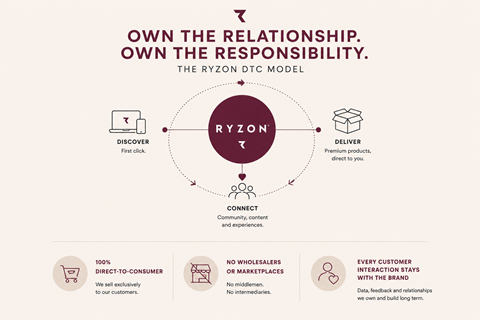
While many sports brands rely on wholesale, retailer networks, or marketplaces, Ryzon takes a different approach. The brand sells exclusively directly to its customers – and thus assumes full responsibility for the customer experience.
This means not only more control over prices, communication, and brand image, but also more risk. Brands operating on a DTC model must finance collections well in advance and forecast demand as accurately as possible. “Especially as a direct-to-consumer brand, you’re always pre-financing inventory with very long cycles,” explains Mario Konrad.
For Ryzon, therefore, doing away with middlemen is less of a sales model and more of a core belief. The brand maintains a direct relationship with its customers – from the first click to the second, third, or fourth purchase.
As a result, the model is more similar to Rapha, Gymshark, or Pas Normal Studios than to traditional sporting goods manufacturers. The difference: Ryzon is building this approach without billion-dollar venture capital rounds.
In a nutshell
Whoever controls the customer relationship also takes responsibility for it.
Eight years of coming close, but falling short
Today, everyone is talking about growth. The real story, however, unfolded long before that.
Ryzon grew, gained customers, and built brand awareness. Yet the company was still not profitable. Instead of large funding rounds, family and friends helped finance the next steps. “We muddled through for eight years with support from friends and family and were always just barely below the profitability threshold,” reveals Mario Konrad. In hindsight, he describes the model as “not quite purely bootstrapped” – that is, largely self-funded, supplemented by capital from private sources.
The reason: As a direct-to-consumer brand, Ryzon had to finance its inventory long before it was sold. Especially in the early years, when reliable sales data was still lacking, every collection was a bet on the future. The paradox: Demand wasn’t the problem – it was the capital needed to meet it.
In a nutshell
The biggest hurdle for many DTC brands isn’t demand – it’s financing growth.
The brand is the distribution channel
With traditional sports brands, retailers handle part of the branding work. Products sit on the shelves, salespeople explain the collection, and store windows ensure visibility. Ryzon doesn’t have any of that. “As a D2C brand, we have to take marketing into our own hands. Retailers don’t do it – we don’t have retailers. That’s exactly what gives us the opportunity to cultivate our customer relationships directly,” adds Mario Konrad.
That’s why the company has consistently invested in brand-building over the years. With around 14 marketing employees, it’s now one of the company’s largest teams. “We didn’t turn a profit for many years because we poured everything into the brand.”
A company that sells exclusively through direct-to-consumer channels must do more than just develop and sell products. It must also create every touchpoint with the customer itself – from the first Instagram post to the community ride.
In a nutshell
In the DTC model, the brand isn’t a marketing tool – it is the sales channel.
Scarcity as a competitive advantage
After the COVID-19 boom, many sports brands got caught up in discount wars. Inventories had to be cleared, and margins sacrificed. Ryzon was largely spared this – though more out of necessity than strategy. “We actually always had higher demand for the brand than we could meet,” says Mario Konrad. The chronically limited product availability was an operational challenge, but in hindsight, it proved to be an advantage. “We didn’t have to join in on those post-COVID discount wars to clear out our inventory. And I think that helped the brand.”
However, even Ryzon can’t do without price incentives entirely. Bundles and outfit packages are part of the business model. The difference: They’re meant to increase the average order value and create added value – not to reduce excess inventory.
In a nutshell
Brands rarely lose out because of prices that are too high – but rather because of too many discounts.
Love at second glance
The most important customer isn’t the one who buys once.
The most important customer is the one who comes back.
That’s exactly why Ryzon started tracking repurchase rates early on. Konrad is rightly proud of this: “We have very high repeat purchase rates. We’ve always tracked that.” Long before the company became profitable, the founders saw a sign: Customers were coming back. Again and again. That gave them the certainty that the business model was working – even if the break-even point was still a long way off.
In a nutshell
Loyalty is often more valuable than growth.
The math had to add up first
Many companies increase their marketing budgets because they want to grow. Ryzon didn’t do so until the numbers added up. For years, the company meticulously tracked repurchase rates, customer acquisition costs, and customer lifetime values. The turning point came when existing customers began covering an increasingly larger portion of fixed costs: “That’s when we were able to implement many, many more marketing initiatives,” explains the CEO. Accordingly, Ryzon increased its investments. “We more than tripled the marketing budget.”
In a nutshell
Marketing isn’t a growth engine – it’s an amplifier of a functioning business model.
On equal footing with publicly traded companies
Many sports brands make decisions based on experience or gut instinct. Ryzon strives to make them as data-driven as possible. That’s why the company invested in its own data infrastructure early on – long before terms like AI or predictive analytics became industry standards.
“We’re now very advanced and ambitious when it comes to our data infrastructure,” says Mario Konrad. He’s particularly proud of feedback from a major agency: “We received feedback that a data infrastructure like this is more common among publicly traded companies.” For a brand that started as a triathlon startup, that’s remarkable. Today, Ryzon sees itself not only as a sports brand but also as a company that increasingly makes data-driven decisions.
In a nutshell
The most successful challenger brands combine gut instinct with data.
More clubhouse than store
For Ryzon, stores are more than just retail spaces. They’re meeting places. The flagship store in Cologne serves as the company’s headquarters, a café, and the starting point for regular community rides and runs. It’s similar in Munich: Anyone who wants to can try on a jersey, put it on right away, and Head out – or just grab a coffee.
In this way, the brand creates places where customers can touch the products, meet athletes, or simply become part of the community. Especially in the digital age, this physical contact is gaining popularity again. Of course, the stores sell products, but above all, they bring the brand to life.
In a nutshell
Retail works best when it offers more than just merchandise.
Pop-ups as a testing ground
A weekend in Hamburg. A pop-up in San Francisco. A store centered around a race. For many brands, pop-ups are primarily additional retail space. For Ryzon, they’re a flexible tool.
Sometimes the goal is to connect with existing communities. Other times, it’s about getting to know a new target audience. And sometimes – as is currently the case in the U.S. – they serve as a first introduction to a new market. For Ryzon, pop-ups aren’t an end in themselves, but rather an opportunity to test products, formats, and locations under real-world conditions. This aligns with the company’s culture: try it out first, then scale up.
In a nutshell
Pop-ups don’t just sell products. They provide insights.
https://www.instagram.com/p/DXUwoJLjMM9/?img_index=1
The moment the brand gained visibility
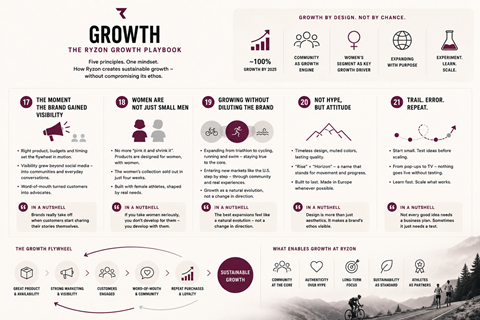
Almost everyone is talking about the number: nearly 100 percent growth by 2025. More intriguing, however, is the question of how this came about.
The answer isn’t a single recipe for success, but rather many pieces of a puzzle, as Mario Konrad reveals: For the first time, there was enough inventory on hand. The unit economics were right. The marketing budget had been significantly increased. TV campaigns and larger influencer collaborations provided additional visibility. At the same time, many customers returned and made repeat purchases. “All of this together set the flywheel in motion,” says Konrad.
At some point, something happened that can hardly be measured by traditional marketing metrics. The brand became visible – not just on social media, but on group rides, at races, in running clubs, or over coffee after a ride. People began talking about Ryzon – and recommending the brand to others. “Once you reach a certain scale, you achieve a critical level of visibility through word-of-mouth,” says Konrad, describing this moment. In other words: At some point, the community takes over part of the marketing work.
In a nutshell
Brands really take off when customers start sharing their stories themselves.
https://www.instagram.com/p/C-3L39jqTK4/?img_index=1
Women are not just small men
For a long time, the sports industry followed a simple formula: shrink the products, dye them pink, and you’re done. Critics call this approach “Pink it and shrink it.” Ryzon wants to take a different path. Jan Frodeno also advocates for a change in thinking. On the OMR podcast, he spoke out against this principle, which has been prevalent for decades. His message: Women aren’t just smaller men – they need products that are specifically designed to meet their needs.
According to Mario Konrad, the first women’s collection – initially produced in only small quantities – sold out after just four weeks. “That’s when we realized: Okay, there’s huge potential here. So we produced more the following year, and even more this year.”
At the same time, the approach to product development also changed. The team includes many female athletes; at times, there are even more women than men. The conclusion was obvious: products for women should not only look different but also be developed differently. “Female customers are best positioned to say what feels right for them,” says Konrad. For the company, this segment is currently one of the most important areas of growth – with corresponding investments in product development, storytelling, and community.
In a nutshell
If you take women seriously, you don’t develop for them – you develop with them.
Growing without diluting the brand
From triathlon to cycling. From cycling to running. All that’s missing now is swimwear to complete the perfect trio. Konrad: “Triathlon will always be our core – our legacy, so to speak. We have the expertise to create the best cycling gear, the best running gear, and the best swimwear.” And when it comes to running, he’s already thinking ahead: “In the future, will we move more toward trail running with a smaller community, or toward running clubs?”
But things aren’t just looking up in terms of content – they’re also expanding geographically. Specifically, toward the U.S. Many brands lose their identity when expanding over long distances. Ryzon is trying the opposite approach: That’s why they’re not conquering the U.S. with a master plan, but rather step by step – through community, pop-ups, and local experiences. Or as Mario Konrad puts it: It’s less about sales forecasts and more about developing a blueprint that works.
In a nutshell
The best expansions feel like a natural evolution – not a change in direction.
Not hype, but attitude
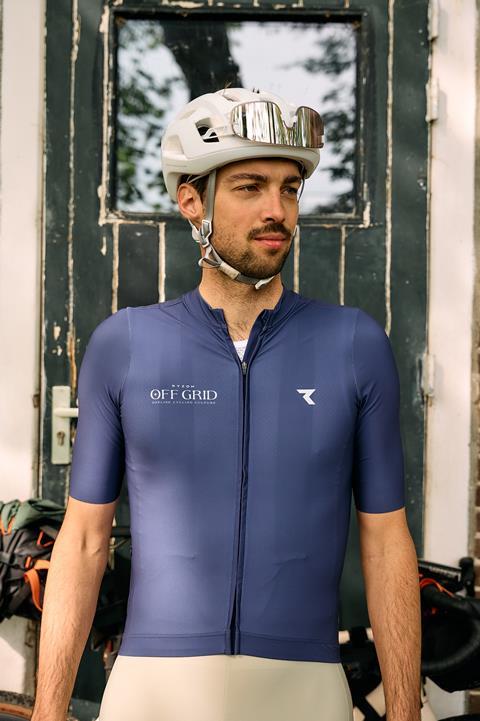
In an industry where collections change ever more rapidly and trends often set the pace, Ryzon embraces understatement. Clean lines, minimalist colors, and a timeless design language define the brand. The women’s collection also follows this principle. Instead of the classic “pink it and shrink it” approach, Ryzon focuses on distinctive color palettes – such as soft lilac, sand, or yellow tones – and products that are consistently developed from the perspective of female athletes.
This philosophy is even reflected in the name. Ryzon is a combination of the English terms “Rise” and “Horizon” – a metaphor for new beginnings, movement, and looking ahead. This aligns with the brand’s commitment to producing high-quality performance apparel in Europe whenever possible and to developing durable products rather than chasing every short-term trend. The result is a brand identity that runs consistently from the very first jersey all the way to the store.
In a nutshell
Design is more than just aesthetics. It makes a brand’s ethos visible.
Trail. Error. Repeat.
Many companies spend months developing strategies. At Ryzon, strategy often begins with an experiment.
Whether it’s pop-up stores, TV commercials, major influencers, or entering the U.S. market – hardly anything is rolled out on a large scale right away. Instead, the team first tests new ideas on a small scale. Only when they work do they invest. “We don’t really believe in big strategic bets; instead, we try things out. And if it works, we’re very quick to roll it out on a larger scale,” says Mario Konrad.
Perhaps that’s exactly why the company has found so many growth drivers in recent years. Not because it had the perfect plan, but because it was willing to learn from many small experiments.
In a nutshell
Not every good idea needs a business plan. Sometimes it just needs an initial test – and the courage to learn from it.
Source link