The engineer who helped bring FaceID to millions of iPhones is now turning AI toward the human brain. Gidi Littwin, a former Apple hardware veteran, has emerged from stealth with Hemispheric, a startup building what he calls a ‘frontier AI model’ for diagnosing neurological and psychiatric conditions. The goal? Make brain scans for depression, PTSD, and Parkinson’s as routine and affordable as a blood test, according to Wired.
Gidi Littwin spent years at Apple perfecting the technology that lets millions unlock their phones with a glance. Now he’s applying that same obsession with precision to something far more complex – the human brain. His new venture, Hemispheric, just broke cover with an ambitious mission to transform how we diagnose mental health and neurological conditions.
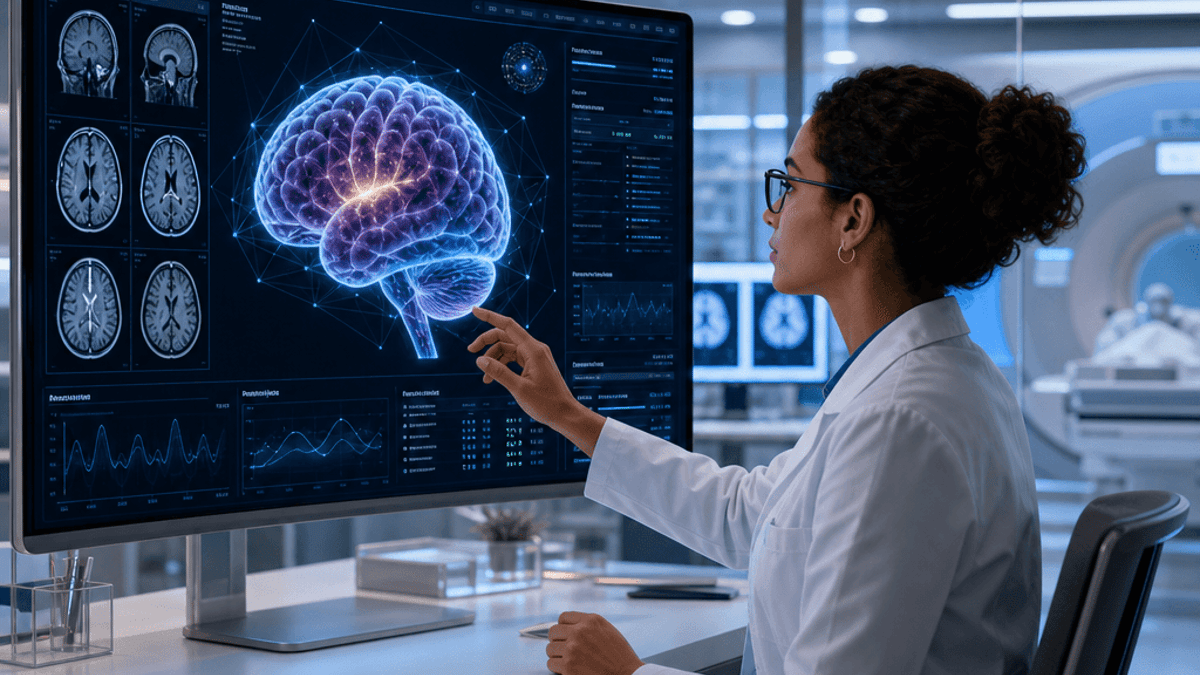
The startup is building what Littwin describes as a frontier AI model trained on brain imaging data, designed to detect patterns that human clinicians might miss. The initial focus targets depression, post-traumatic stress disorder, and Parkinson’s disease – conditions that affect hundreds of millions globally but often rely on subjective symptom checklists rather than objective biomarkers. Littwin told Wired he wants the technology to become as accessible and affordable as routine blood work.
It’s a bold pivot from consumer electronics to medical diagnostics, but Littwin’s pedigree lends credibility. At Apple, he was part of the team that shipped FaceID in 2017, a system that had to work flawlessly across billions of faces in wildly varying conditions. That experience – building reliable, scalable biometric systems – directly informs Hemispheric’s approach to brain imaging. Both challenges require training AI models on massive datasets while maintaining precision at the individual level.
The mental health diagnostics market desperately needs innovation. Current methods for diagnosing depression or PTSD lean heavily on patient self-reporting and clinical interviews, which can miss early warning signs or lead to misdiagnosis. Brain imaging technologies like fMRI and PET scans exist but remain prohibitively expensive and typically reserved for severe cases or research settings. Hemispheric’s pitch is to compress that capability into something clinics can deploy routinely, potentially catching conditions earlier when treatment is most effective.
Littwin isn’t the first tech veteran to take aim at healthcare AI. Former Google executives have launched diagnostic imaging startups, while OpenAI has explored medical applications for large language models. But brain diagnostics present unique challenges – the organ’s complexity means training data is harder to source, and regulatory pathways through the FDA are notoriously rigorous. Unlike a chatbot that can afford occasional errors, medical diagnostic tools need near-perfect accuracy to gain clinical adoption.
The timing feels deliberate. AI models have made significant leaps in pattern recognition over the past two years, particularly in visual data analysis. Techniques that power facial recognition or autonomous vehicles – identifying subtle variations across massive datasets – translate naturally to analyzing brain scans for diagnostic markers. Hemispheric appears positioned to ride that wave, applying proven computer vision techniques to medical imaging at scale.
What remains unclear is how far along Hemispheric’s technology actually is. The Wired profile doesn’t mention clinical trials, regulatory submissions, or published validation studies – the usual benchmarks for medical AI credibility. The company also hasn’t disclosed funding details, team size, or partnerships with hospitals or imaging centers. For a stealth startup, that opacity is typical, but investors and clinicians will eventually demand proof the AI actually works before it touches patients.
The ‘affordable as a blood test’ promise also raises questions. Brain imaging inherently requires expensive equipment – MRI machines, trained technicians, controlled environments. Even with AI automating the diagnostic interpretation, the infrastructure costs don’t vanish. Hemispheric will need to either develop dramatically cheaper scanning hardware, partner with existing imaging networks, or find ways to extract diagnostic insights from lower-resolution, more accessible brain data.
Still, Littwin’s track record commands attention. Shipping FaceID required coordinating hardware, algorithms, and user experience at a scale few engineers ever touch. If he can bring that same discipline to healthcare – navigating regulatory mazes, clinical validation, and insurance reimbursement – Hemispheric could genuinely move the needle on mental health diagnostics. The mental health crisis has only intensified since the pandemic, and traditional psychiatry has struggled to scale solutions.
Competitors are already circling the space. Startups like Mindstrong and Ksana Health have pursued smartphone-based mental health monitoring, while companies like Blackthorn Therapeutics focus on digital biomarkers for depression trials. But few are tackling brain imaging directly with frontier AI models, likely because the regulatory and technical hurdles are so steep. That makes Hemispheric’s approach either visionary or quixotic, depending on execution.
The healthcare AI landscape has seen plenty of hype cycles. IBM Watson Health famously stumbled despite massive investments, while blood-testing unicorn Theranos collapsed under scrutiny. The difference this time might be founders like Littwin who’ve actually shipped consumer products at scale, rather than pure researchers or pure businesspeople. That product sensibility – obsessing over reliability, user experience, and real-world deployment – could be what separates vaporware from breakthroughs.
For now, Hemispheric remains more promise than product. But the combination of a credentialed founder, a massive unmet medical need, and rapidly improving AI capabilities creates a narrative investors love. Whether that translates to actual clinical impact will depend on data, trials, and regulatory approvals – the unglamorous work that determines whether a startup changes healthcare or just changes pitch decks.
Hemispheric’s emergence marks another chapter in tech’s ongoing colonization of healthcare, this time targeting the notoriously difficult problem of mental health diagnostics. Littwin’s Apple credentials will open doors and attract capital, but the real test comes in clinical validation and regulatory approval – challenges that have humbled plenty of well-funded predecessors. If the technology delivers on its promise of affordable, objective brain diagnostics, it could reshape psychiatry and neurology. If it doesn’t, it becomes another cautionary tale about applying consumer tech playbooks to medical problems. The stakes are higher than unlocking phones – this time, the system needs to unlock better outcomes for millions struggling with invisible conditions.