This story was originally published on Grocery Dive. To receive daily news and insights, subscribe to our free daily Grocery Dive newsletter.
Dive Brief:
-
Instacart has acquired Arpalus, a startup that has developed an artificial intelligence system that lets workers record product levels in stores using a smartphone app, the grocery technology company announced Thursday. Terms of the deal were not disclosed.
-
Arpalus’ system uses computer vision to show real-time inventory on store shelves, which Instacart said will allow workers to fulfill e-commerce orders more accurately.
-
Instacart plans to combine data generated by Arpalus’ technology with other information its workers collect in stores to track product availability and improve customer service.
Dive Insight:
Instacart noted that unnoticed out-of-stocks and missing details about product availability are among the top reasons online grocery customers are dissatisfied with their experiences, adding that it aims to plug those gaps by putting Arpalus’ system in the hands of its workers who visit stores to assemble orders.
Arpalus’ technology can identify specific items on shelves with 95% accuracy, on average, according to Instacart. The company’s system employs computer vision models that are optimized for grocery stores, where products are often tightly clustered, lighting can be uneven and data connections are sometimes unreliable.
Instacart said the capabilities it is gaining from Arpalus will blend easily with the app it already uses to handle orders. The e-commerce company said its approximately 600,000 workers visit large-format retail locations more than 15 times per day, on average, and deliver more than 10 million bits of data about items on store shelves.
Arpalus has offices in Netanya, Israel, and Tenafly, New Jersey, according to its website.
Instacart said the improved efficiency it expects to gain by integrating Arpalus’ technology into its existing operations will provide better experiences for online grocery customers, boost its workers’ earnings potential, and give food suppliers and retailers a clearer sense of inventory levels.
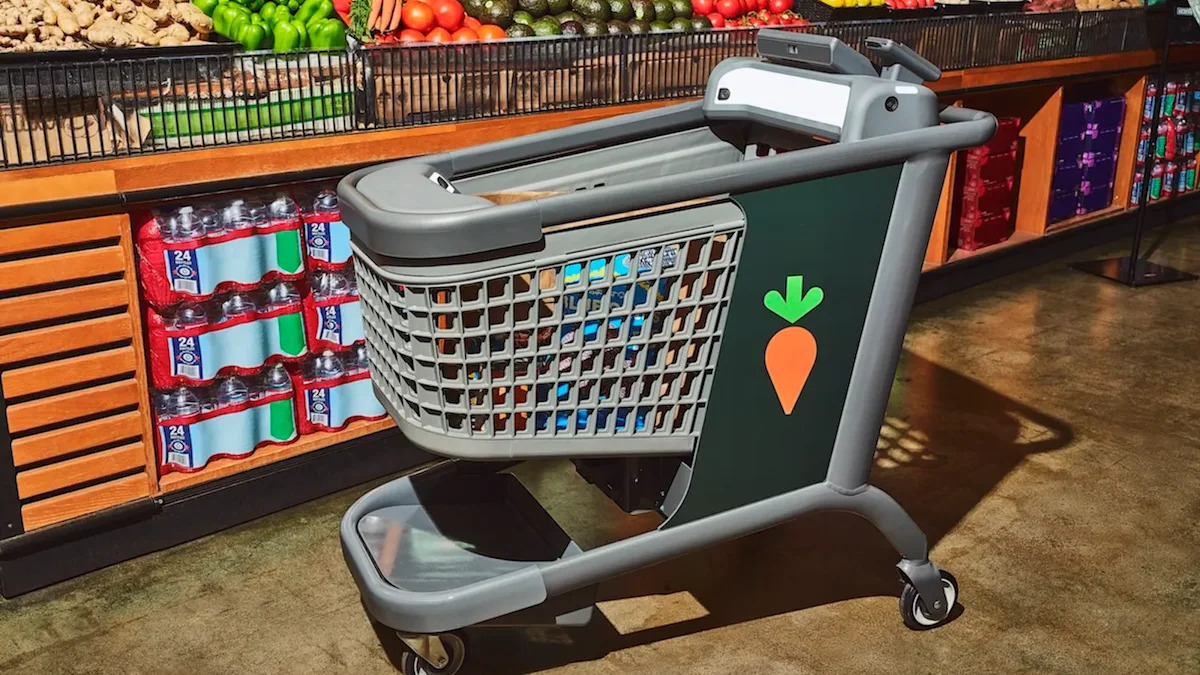
In addition to functioning on mobile devices, Arpalus’ system works with Instacart’s Caper Cart smart carts, Instacart said. Caper Carts equipped with external cameras will be able to feed images of items as people move them around stores, offering another source of information about in-store conditions.
The acquisition of Arpalus puts Instacart in the same space as Simbe Robotics, which also provides computer vision technology that scans store shelves to track inventory. A key difference, however, is that Simbe’s solution employs cameras mounted on robots that traverse aisles autonomously, while Arpalus relies on humans to move its gear around stores.
Recommended Reading