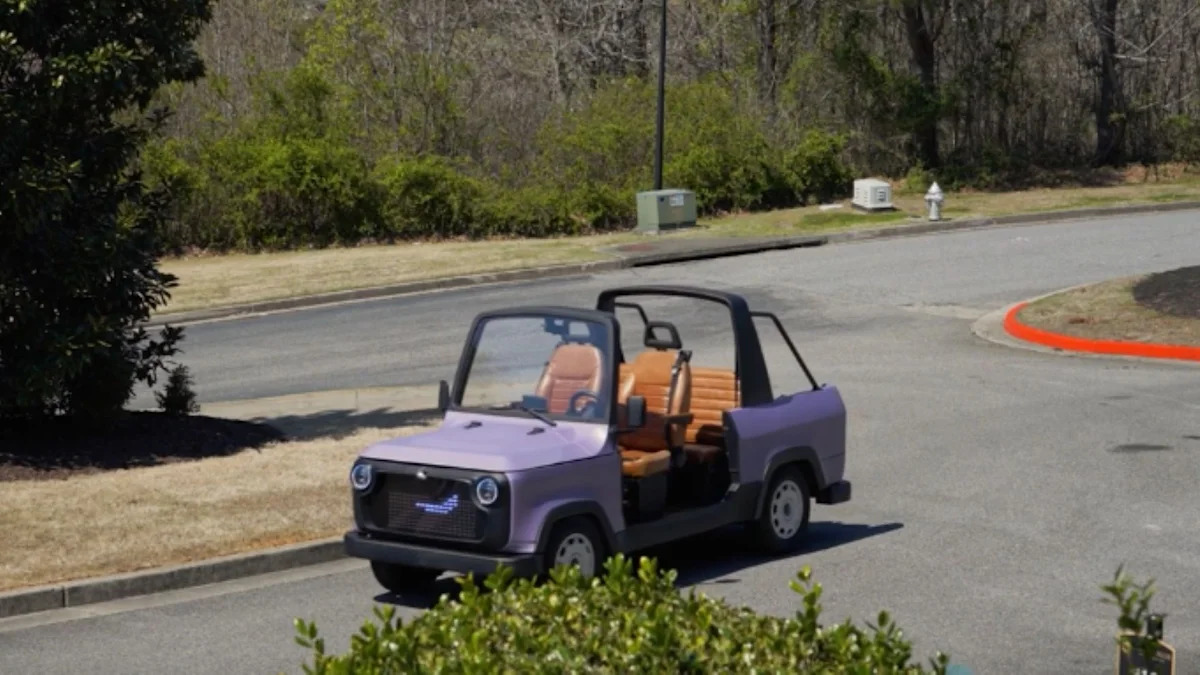
A slump in U.S. electric vehicle sales following the loss of the $7,500 federal tax credit has created an opening for smaller, cheaper EVs designed for short daily trips. One startup betting on that idea is Miami-based Chip Motors, which has opened reservations for a low-speed electric vehicle that resembles a golf cart more than a conventional sedan, according to Forbes.
What happened?
Starting at $15,000, Chip’s budget-friendly vehicle costs far less than most new EVs.
The model is designed for shopping trips, school drop-offs, and short commutes instead of freeway driving, and it is sold in both four-seat and six-seat versions. Its top speed is 25 mph.
Advertisement
Advertisement
But this isn’t just a run-of-the-mill golf cart. Chip’s founders, Jameson Detweiler and Ilan Penn, are positioning it as “a life utility vehicle.” Features include higher ground clearance, a roll bar, and a lithium iron phosphate battery pack mounted in the floor, Forbes reported. The vehicle also uses cameras and radar to monitor traffic.
A regular 110-volt outlet works for charging, though moving up to 240 volts cuts the recharge time by more than half. Chip says the battery provides 100 miles of range per charge.
Why does it matter?
For many households, the average daily drive is far shorter than the range offered by most EVs. That creates an opening for lower-cost electric vehicles that can handle local errands while helping drivers spend less on gas.
EVs can also lower routine ownership costs because they generally require less maintenance than gas-powered vehicles — no oil changes, fewer moving parts, and often less brake wear.
Advertisement
Advertisement
For families considering a second car, a neighborhood-focused EV could offer a practical way to cut transportation expenses. A top speed of 25 miles per hour sharply limits where this kind of vehicle can be used, however, making it more of a niche option for certain suburban, coastal, campus, or retirement communities than a full replacement for a standard car.
“I want this so bad just because it’s cool. But it would be a waste because I live in the city. The speed isn’t fast enough,” one social media user remarked.
What can I do?
As the market adjusts to the discontinuation of federal EV incentives, startups like Chip are pitching a simpler idea: Not every trip requires a fast, pricey EV.
For drivers considering an EV, the charging setup matters almost as much as sticker price. Charging at home often costs about half as much as relying on public chargers, but basic Level 1 charging from a standard outlet is usually slow. Qmerit provides free, instant installation estimates for faster Level 2 home charger installations.
Advertisement
Advertisement
Get TCD’s free newsletters for easy tips, smart advice, and a chance to earn $5,000 toward home upgrades. To see more stories like this one, change your Google preferences here.