Kairos Health, an AI-powered health startup that helps healthcare clinics automate administrative workflows, has been selected as one of the top startups through America250. Since its founding, the company has helped more than 3,000 patients access care and received more than $70,000 in non-dilutive funding.
The startup specializes in dental and orthodontic practices, where it handles patient communication, scheduling, insurance verification, and follow-up so that routine administrative tasks do not fall through the cracks.
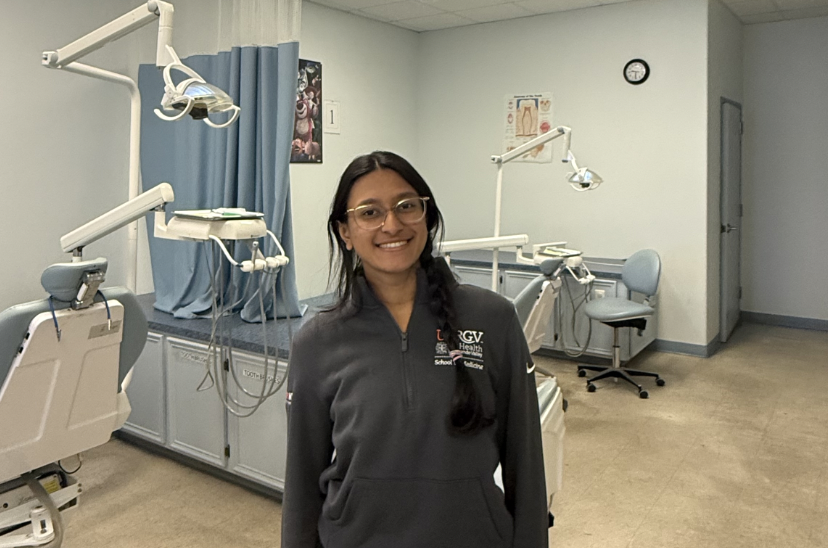
Adhira Tippur, a biochemistry and finance student at Rice University, co-founded Kairos Health and spoke with The American Bazaar about her journey building the company.
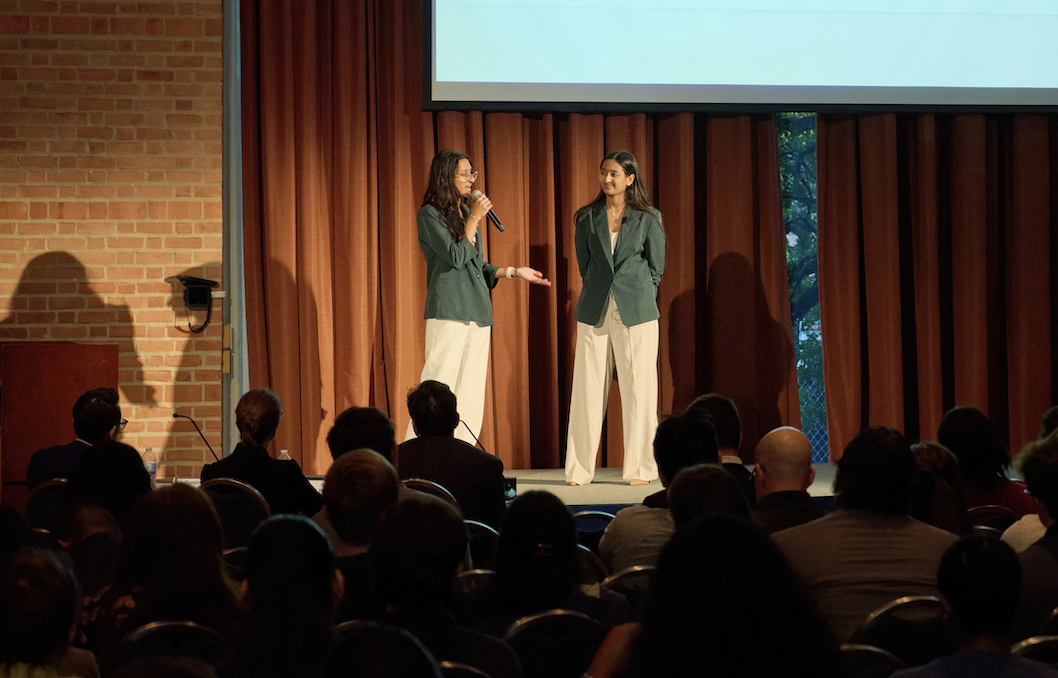
Tippur said the idea for Kairos came from observing the daily operations of her mother’s dental clinic, where she saw the challenges caused by missed calls, insurance delays, scheduling issues, and other administrative burdens.
“When we started Kairos, I assumed that firsthand exposure would make the path relatively straightforward. In reality, every clinic operates differently. The same workflow that saves one office several hours may create friction in another. We had to learn to listen more carefully, question our assumptions, and build around the realities of healthcare rather than around our own idea of what an AI product should look like,” Tippur told The American Bazaar.
Kairos can communicate with patients over the phone and by text, answer routine questions, schedule appointments, collect intake information, verify insurance eligibility, send reminders, and conduct follow-ups. Tippur said that “the technology matters, but the purpose behind it matters more.”
“Kairos is designed to make the clinic more accessible outside the limitations of a traditional front desk. A patient can receive help even when staff members are busy, the office is closed, or the call comes in late at night,” she added.
READ: Indian national Innovaccer CEO announces fresh AI-driven layoffs across startup (May 17, 2026)
She also emphasized that the company does not view AI as a replacement for the human relationships at the center of healthcare.
“In fact, our goal is the opposite. When staff members spend less time on repetitive administrative work, they have more time for conversations that require empathy, judgment, and personal attention. The most meaningful use of AI, in my view, is not making healthcare less human. It is removing the work that prevents people from being fully human with one another,” she said.
Tippur described several challenges she faced while building Kairos, particularly earning the trust of healthcare providers.
“Healthcare providers are responsible for deeply personal information and important patient relationships, so their caution toward new technology is justified. We could not simply tell clinics that our technology worked. We had to demonstrate that it was dependable, thoughtful, and capable of fitting into the way their staff already worked,” she told The American Bazaar.
She also said balancing the demands of building a startup while being a full-time student was difficult.
“That experience has taught me that resilience is less about being endlessly confident and more about continuing to move forward even when confidence is temporarily absent.”
Tippur noted that Kairos received more than $70,000 in non-dilutive funding and awards after applying to competitions, accelerators, and entrepreneurship programs “often while the product and our own understanding of the business were still evolving.”
Tippur said her experience growing up in an Indian immigrant family played a significant role in shaping her entrepreneurial journey.
READ: Indian American AI startup Noon acquires Bengaluru FinalRun (June 30, 2026)
“Like many children of Indian immigrants, I grew up with a strong awareness of sacrifice. My parents had left behind familiarity, family, and community to build a life in the United States. Their journey created opportunities for me that they did not take for granted, and as a result, I did not take them for granted either. Education was never framed simply as personal achievement. It was something made possible by the work of the people who came before me. That perspective shaped my ambition, but it also shaped my sense of obligation,” Tippur said.
She said she first learned about entrepreneurship at her mother’s clinic, where she watched her mother “care for patients, manage employees, solve problems, and continue showing up when the work was difficult.”
“As an immigrant and a healthcare provider, she was constantly navigating systems that were not always designed with people like her or communities like ours in mind,” she said.
Tippur also said she grew up in the Rio Grande Valley, a region that added another dimension to her experience because it has “extraordinary culture and resilience, but also meaningful barriers to healthcare access.”
“Kairos grew from the intersection of those experiences: being the daughter of Indian immigrants, being raised in an underserved community, and spending my childhood inside a small healthcare business. My background did not simply inspire me to become an entrepreneur. It influenced the kinds of problems I believe are worth solving and the people I hope technology will ultimately serve,” Tippur said.