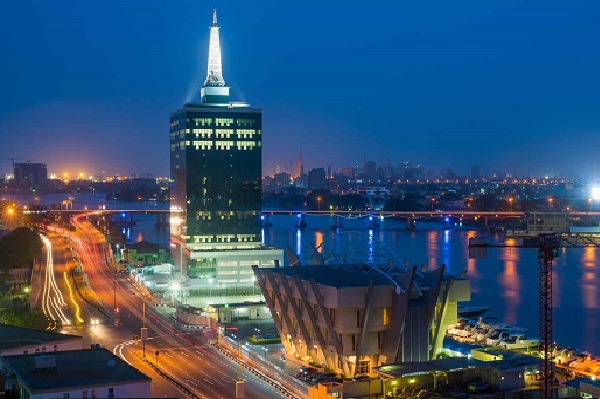
Lagos, Nigeria’s commercial nerve centre, is rapidly positioning itself as one of the most dynamic start-up ecosystems on the planet, drawing comparisons with global innovation hubs from Bangalore to São Paulo and even Silicon Valley. Lagos is no longer competing only within Africa. It is now measured against global start-up capitals.
The city has moved beyond regional start-up ambition to become one of the most intensely watched innovation ecosystems in the world, driven by a rare mix of demographic scale, infrastructural pressure, and relentless entrepreneurial adaptation.
As of October 2024, more than 2,000 startups are based in Lagos, which accounts for 80–90% of Nigeria’s entire startup landscape.
From fintech platforms solving payment bottlenecks in a largely cash-dependent economy, to logistics startups navigating near-impossible delivery routes across the city, what sets Lagos apart is not just the number of startups, but the urgency behind them.
In the global race for technological dominance, where cities compete not just on size but on speed of innovation, Lagos is emerging as one of the most disruptive entrants on the world stage.
What was once viewed as a difficult business environment is now being reframed by investors, founders, and policymakers as something more powerful: a high-pressure innovation lab producing some of the fastest-scaling startups outside Asia.
From fintech giants reshaping African payment systems to logistics startups navigating one of the world’s most complex urban environments, Lagos is no longer asking for recognition—it is demanding recalibration of how global startup success is defined.
Startups that scale in Lagos tend to share one trait: extreme operational efficiency. Waste is not an option. Speed is not a strategy—it is a necessity.
Thirty-eight percent of Lagos residents shop online weekly, internet penetration stands at 72%, and mobile ownership reaches 94%. Innovations such as the integrated transport payment card, developed by engineers in their 20s, now serve over 6.5 million Lagosians across rail, waterways, buses, and taxis.
Lagos’s crowning as the world’s fastest-growing tech ecosystem in 2025 marked more than a statistical achievement. It has come to represent a fundamental shift in where innovation happens, who builds it, and what problems matter.
At the heart of this transformation lies Yaba, now widely dubbed “Yabacon Valley”—a dense cluster of startups, developers, and venture capital interest that has become symbolic of Lagos’ tech awakening.
Within a few square kilometres, co-working spaces, accelerators, and startup hubs sit alongside universities and creative studios. It is here that some of Africa’s most prominent technology companies were either born or nurtured.
Unsurprisingly, global venture capital has taken notice. Over the past decade, Lagos has attracted billions in startup funding across various sectors, with fintech leading the charge. However, the investment landscape remains highly selective.
The Lagos State government has increasingly recognised the economic potential of the startup economy, introducing policies aimed at digital inclusion, innovation support, and infrastructure upgrades.
Reacting to the city’s rising start-up profile, Lagos State governor, Babajide Sanwo-Olu, noted that “Lagos is not just Nigeria’s economic nerve centre; it is Africa’s innovation capital in motion.”
He said his administration’s goal is to make Lagos Africa’s leading digital economy hub.
“The talent is already here. Now we are strengthening the infrastructure to sustain the growth”, he said.
“That is why we are deliberately building the infrastructure for a 21st-century digital economy—fibre, talent pipelines, and innovation funding are central to this vision”, he added.
Sanwo-Olu further revealed that his government has intensified efforts to formalise the innovation economy through digital policy reforms, infrastructure upgrades, and startup-friendly initiatives.
As a result of this, Sanwo-Olu said that the city has produced five unicorns – Interswitch, Flutterwave, Jumia, OPay, and Moniepoint – with unicorn creation tripling since 2019.
“Between 2019 and 2024, Lagos attracted over $6 billion in direct foreign tech investment, accounting for more than 70% of Nigeria’s total tech inflows”, the governor noted.
Global venture capital continues to flow into Lagos, although investors describe the ecosystem as highly selective and performance-driven.
The city now accounts for a dominant share of Nigeria’s tech funding inflows, with fintech leading the charge due to its scalability and market demand.
Lagos’ transformation from a regional business hub into a globally recognised innovation ecosystem did not happen overnight. It has been driven by a combination of youthful creativity, technological adoption, investment inflows, government reforms, private sector partnerships and the sheer necessity of solving Africa’s unique challenges.
Today, Lagos stands alongside emerging technology centres such as Nairobi, Cape Town, Dubai and Bangalore as a city where ideas are rapidly becoming companies, and where local solutions are attracting global attention.
The rise of Lagos as a start-up capital is closely linked to the city’s population, diversity and entrepreneurial culture. With more than 20 million residents in its metropolitan area, Lagos represents one of the largest consumer markets in Africa.
The city has always been a place where people create opportunities from challenges. From informal traders building successful businesses to corporate giants dominating regional markets, entrepreneurship has long been part of Lagos’ DNA.
However, the digital revolution transformed this entrepreneurial spirit into a technology-driven movement.,
The expansion of internet access, increased smartphone adoption and a growing community of young technology professionals created the foundation for a new generation of businesses.
Young Nigerians began developing solutions to address everyday challenges — how people pay for goods, access financial services, receive medical care, move around cities, learn new skills and connect with businesses.
The result was the emergence of a vibrant start-up ecosystem capable of producing companies with international relevance.
A major factor behind Lagos’ start-up rise is the increasing flow of venture capital into Nigerian technology companies. International investors have recognised that Lagos-based start-ups are not only serving Nigeria’s huge market but are developing solutions applicable across Africa and other emerging economies.
Over the past decade, Nigerian start-ups have attracted billions of dollars in funding, making the country one of Africa’s leading destinations for venture investment.
Lagos has become a preferred destination for global investors because it combines market size, entrepreneurial energy and technological creativity.
The future of Lagos as a start-up capital appears increasingly promising. As Africa’s largest economy continues its digital transformation, the demand for innovative solutions will continue to grow.
The city’s entrepreneurs are already looking beyond Nigeria, expanding into other African markets and competing internationally.
With continued investment in infrastructure, education, digital skills and business-friendly policies, Lagos has the potential to become one of the world’s leading innovation centres.
•Ogunbiyi is of Ministry of Information & Strategy, Alausa, Ikeja.
![Funding and acquisitions in Indian startup this week [Feb 23 - Feb 28]](https://newsx.io/wp-content/uploads/2026/02/Funding-and-acquisitions-in-Indian-startup-this-week-Feb-23.png)