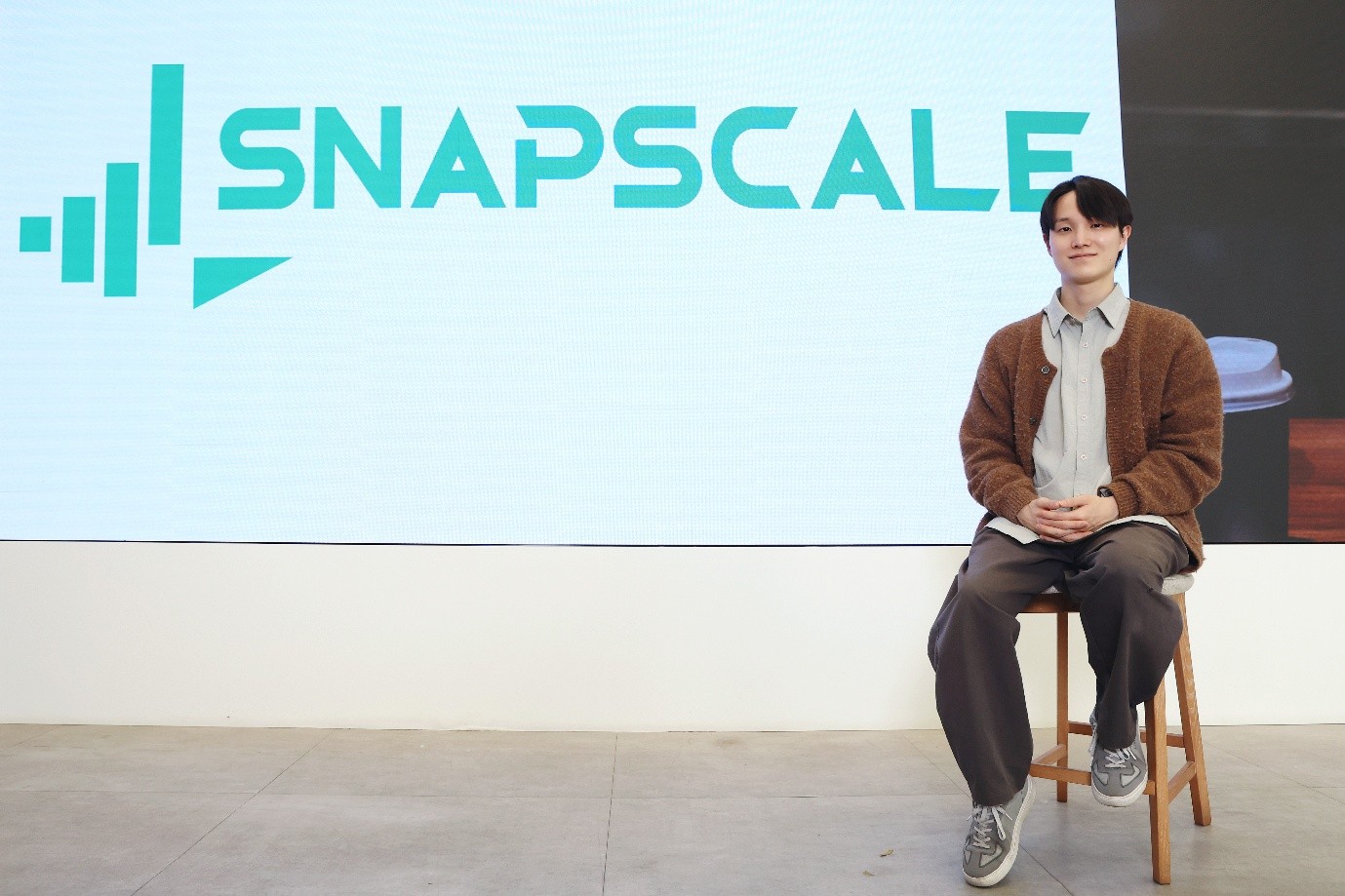

SnapScale, a tech startup automating design workflows in the plant and EPC (engineering, procurement, and construction) industry, announced on July 23 that it has closed a seed round.
The round attracted KAIST Venture Investment Holdings, POSTECH Holdings, and Bass Ventures. The investment recognizes SnapScale’s technical capabilities, market potential, and commercialization track record—demonstrated by signing paying customers from the earliest stages.
Founded by engineers from POSTECH, Seoul National University, and Korea University, SnapScale is developing AutoFlow, a manufacturing-focused generative AI solution that automates the labor-intensive manual tasks of plant design. The team is supported by a senior advisory panel with extensive experience at global engineering firms, contributing to product development and business strategy.
How AutoFlow Works
AutoFlow operates by adding a prompt interface on top of the CAD environment engineers already use. Without requiring a separate system migration, the AI handles the creation, modification, and review of design documents. Built on in-depth interviews with seventy-five field engineers in Korea and abroad, AutoFlow is closely aligned with actual workflows. All data is processed within the customer’s own infrastructure, ensuring security concerns do not hinder adoption.
SnapScale won the grand prize in the preliminary startup track at the 2025 Chung Ju-yung Startup Competition, the country’s largest private startup contest hosted by Asan Nanum Foundation, recognizing the venture’s technological innovation and market viability.
Customers and Plans
SnapScale has secured four customers and is conducting proof-of-concept (PoC) trials with several more. The startup is working with a diverse range of clients across the value chain—including EPC contractors, vendors, and public institutions—and is refining its product to automate not only design but also procurement and construction, ultimately covering the entire EPC lifecycle.
With the new funding, SnapScale will expand its R&D team, convert ongoing PoCs into full deployments, and build industry references.
“Plant design, which can take years depending on scale, has been the bottleneck that determines the pace of the entire industry—a problem no one has properly solved until now,” said CEO Sang-yoon Kim. “We’re solving it with AI that runs directly on the tools field engineers use every day, delivering productivity gains customers can feel from day one.”
“The approach of structuring senior engineers’ tacit knowledge in the closed world of plant design into an AI-understandable ontology is itself a unique moat in this domain, and we expect SnapScale to grow beyond the domestic EPC sector into a leader in the global plant design automation market,” said Junhyun Ahn, director of KAIST Venture Investment Holdings.
CEO Kim, who began as a student entrepreneur, has led the company through incorporation, initial revenue generation, and this funding milestone. SnapScale’s mission is to solve long-standing inefficiencies in the plant industry with AI. The startup also focuses on a broader vision: the commercialization of climate-critical technologies such as carbon capture, utilization, and storage (CCUS), hydrogen, and next-generation batteries is currently held back by the slow pace and high cost of plant design. By automating and optimizing design, SnapScale aims to address the climate crisis and remove a major bottleneck in the commercialization of advanced technologies.
AI-Powered Manufacturing Automation Gains Momentum
In the AI-driven manufacturing automation space, CarbonSix recently raised a $40 million Series A to scale its Physical AI platform for global manufacturing, while Xylo Labs secured a $133K seed round to prevent industrial equipment failures with AI-powered predictive maintenance. A growing number of automation and optimization solutions across diverse manufacturing settings are attracting investor attention.
Source link