Stripe has a new fintech playbook for the AI era.
Following the company’s January purchase of the usage-based billing startup Metronome, the purchase of OpenRouter makes it clear that Stripe believes it can apply its payments-infrastructure approach to developer infrastructure.
“Stripe acquiring OpenRouter is less about buying a product and more about buying position,” said Jeremy Jonker, managing partner at the fintech-focused firm Infinity Ventures. “For fintech more broadly, this is a signal that the next competitive battleground is around monetizing AI usage. The companies that win will be the ones sitting at the choke point between AI consumption and the invoice.”
OpenRouter, which is backed by Andreessen Horowitz and Sequoia, reportedly sold for around $8 billion, though a formal purchase price was not disclosed.
The company is essentially an evolution of the business Stripe has already been running.
-
Instead of issuing cards or holding deposits, Stripe sits between businesses and the banks that do, taking a small percentage of each transaction.
-
OpenRouter is the same trade applied to inference. Sitting between developers and model providers, the startup connects the two, offering access to LLMs based on price, speed, and availability, charging a fraction of the inference spend it facilitates.
Sign up for The Daily Pitch newsletter Subscribe
In a letter to investors obtained by Axios, Stripe acknowledged the parallels.
“It turns out that optimizing for developers, as Stripe has from the outset, is in many ways the same thing as optimizing for coding harnesses and for agents,” the letter reads. “It’s become evident to us that building economic infrastructure for the internet is mostly the same thing as building the economic infrastructure for AI.”
Stripe isn’t the only fintech making an AI infrastructure play. Ramp, a corporate expense management startup, just began offering Ramp Router, its own service that connects developers to major AI models.
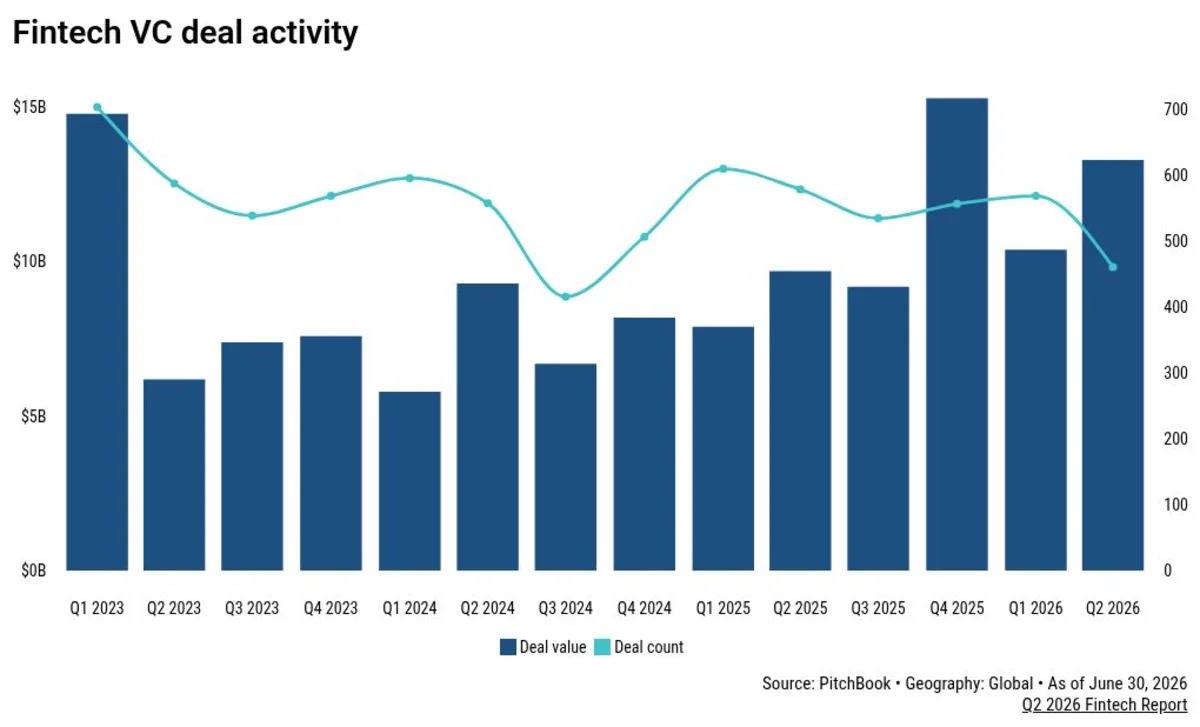
Fintech dealmaking has remained healthy despite AI disruption, according to PitchBook data. Q2 deal value rose 28% from the previous quarter, hitting $13.3 billion netted from 461 deals.

For now, VCs see Stripe’s AI infrastructure as the opening shot in a new battle to help developers manage AI spend. Those who don’t adapt risk getting left behind.
“This should be a wake-up call,” said Chris Sugden, managing partner at the growth equity firm Edison Partners. “Fintechs sometimes pigeonhole themselves into being just a payments company. This is a whole new way to think about fintech because this is not today’s world we’re going to be dealing with down the road.”
This article originally appeared on PitchBook News