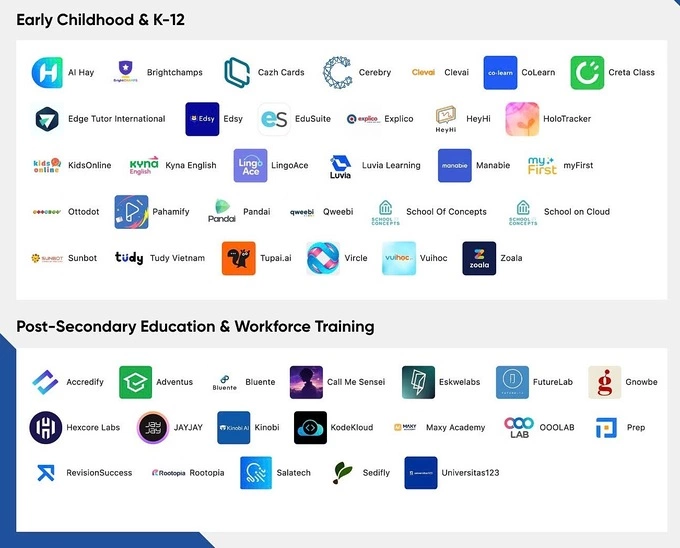
Global education market intelligence platform HolonIQ recently unveiled its 2026 Southeast Asia EdTech 50, spotlighting 50 fast-growing, innovative startups transforming how people learn, teach, and build skills across the region.
Singapore remains the undisputed center of Southeast Asia’s EdTech ecosystem, accounting for half of all featured companies. Vietnam was second with an 18% share, and Indonesia was down at 12% from 38% in 2020.
|
|
HolonIQ’s 2026 ranking of Southeast Asia’s 50 standout EdTech startups features nine companies based in Vietnam. Screenshot |
HolonIQ tracks global education dynamics, emerging enterprises, and venture capital flows. To qualify for the annual index, a startup must be under 10 years old, be headquartered in or primarily serve the regional market, and operate as an early-stage venture or fast-growing scale-up without having been bought out, taken public, or placed under majority control by an investment syndicate.
The platform assesses applicants across five core benchmarks: market opportunity, product quality, team capability, capital reserves, and overall momentum.
Industry analysts note that Southeast Asia’s EdTech sector is pivoting decisively toward primary and secondary education (K-12).
Startups operating in this segment make up over half the list after rising by 20 percentage points since 2020.
The learning support sub-sector, covering private tutoring, competency testing, and AI-assisted study tools, has emerged as the single largest category, accounting for 35% of all recognized firms.
Vietnam’s representation dipped from 26% last year to 18%, leaving it with nine companies on the roster.
But prominent local names like AI Hay, KidsOnline, and Tudy managed to hold onto their spots.
Its startups span varied niches, with Vuihoc driving momentum within K-12 learning support and KidsOnline focusing on early childhood care.
Within the learning support category, Vietnam’s AI Hay and Singapore’s Cerebry stand out as leading examples of a broader regional shift toward pairing artificial intelligence directly with personal student assistance, a movement fast becoming one of the most significant growth drivers in Southeast Asia.
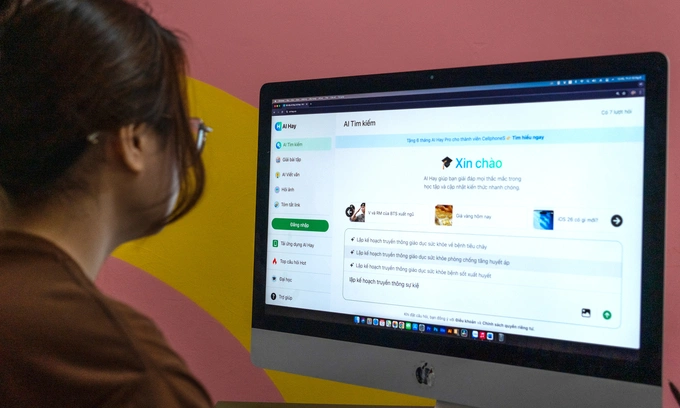
AI Hay operates an AI-powered question-and-answer platform, tailoring its features to meet the day-to-day study routines of Vietnamese learners.
In August, the company became one of only two Vietnamese ventures featured in Dealroom’s East & Southeast Asia AI Startup Map, a directory monitoring the region’s most active and noteworthy artificial intelligence players.
According to the company, a key priority is keeping pace with frequent revisions to school curriculums, ministry guidelines, and education policy so that the platform can deliver contextual and accurate help.
“Tracking shifts across the education system helps us fine-tune our data and platform features around what students genuinely need in class,” the AI Hay spokesperson said.
“That remains one of the toughest challenges for AI in education, given that syllabuses, national exams, university admissions, and school regulations can change every academic year.”
|
|
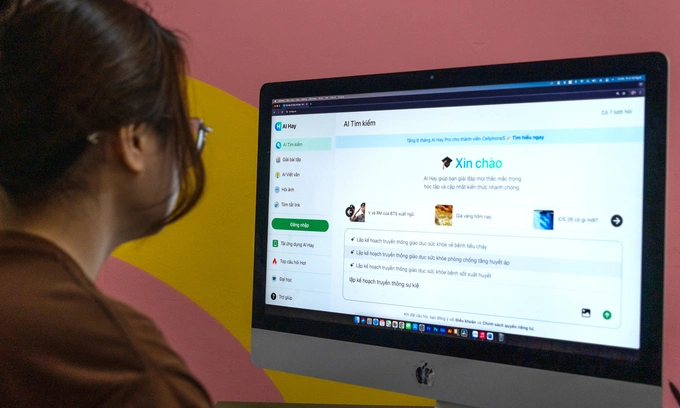
A user navigates the AI Hay website on a computer. Photo by Nhut Nam |
Beyond changes in product offerings, the 2026 rankings also point to a maturing Southeast Asian EdTech landscape.
Startups under three years old accounted for just 6%, down from 26% in 2020.
Nearly 80% of the recognized businesses have been operating for four to eight years—the crucial transition window where companies move from testing product prototypes to scaling up operations and capturing wider markets.
Source link