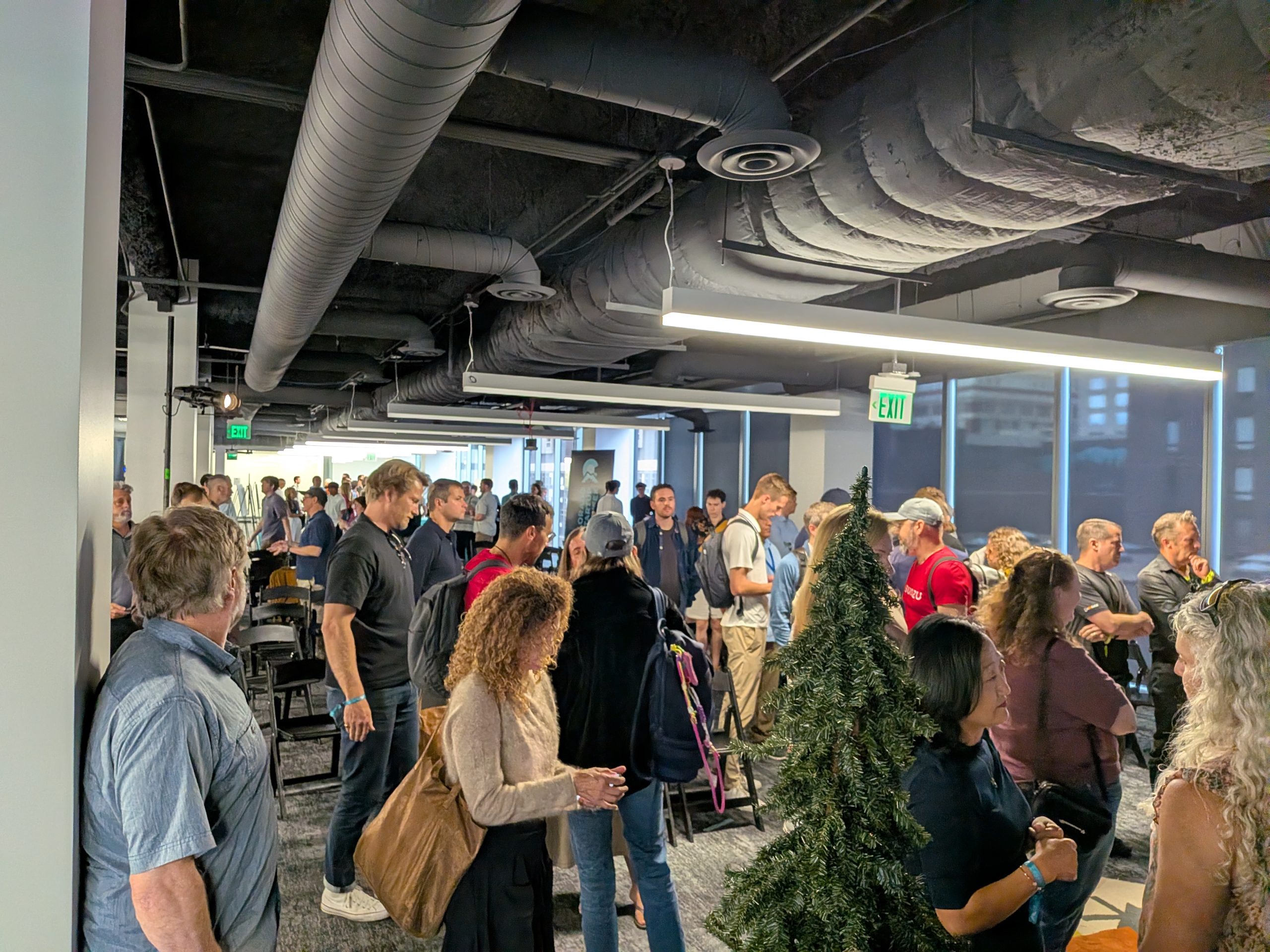
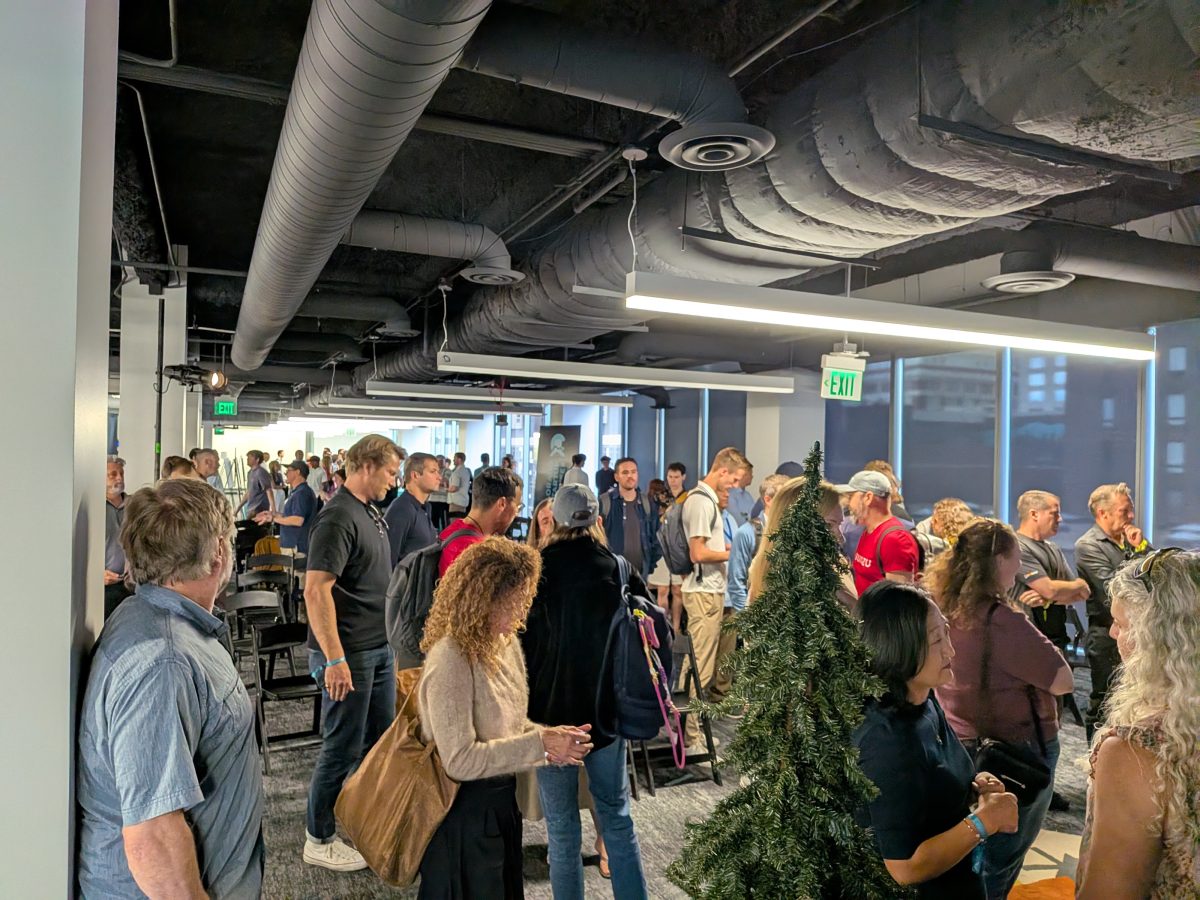
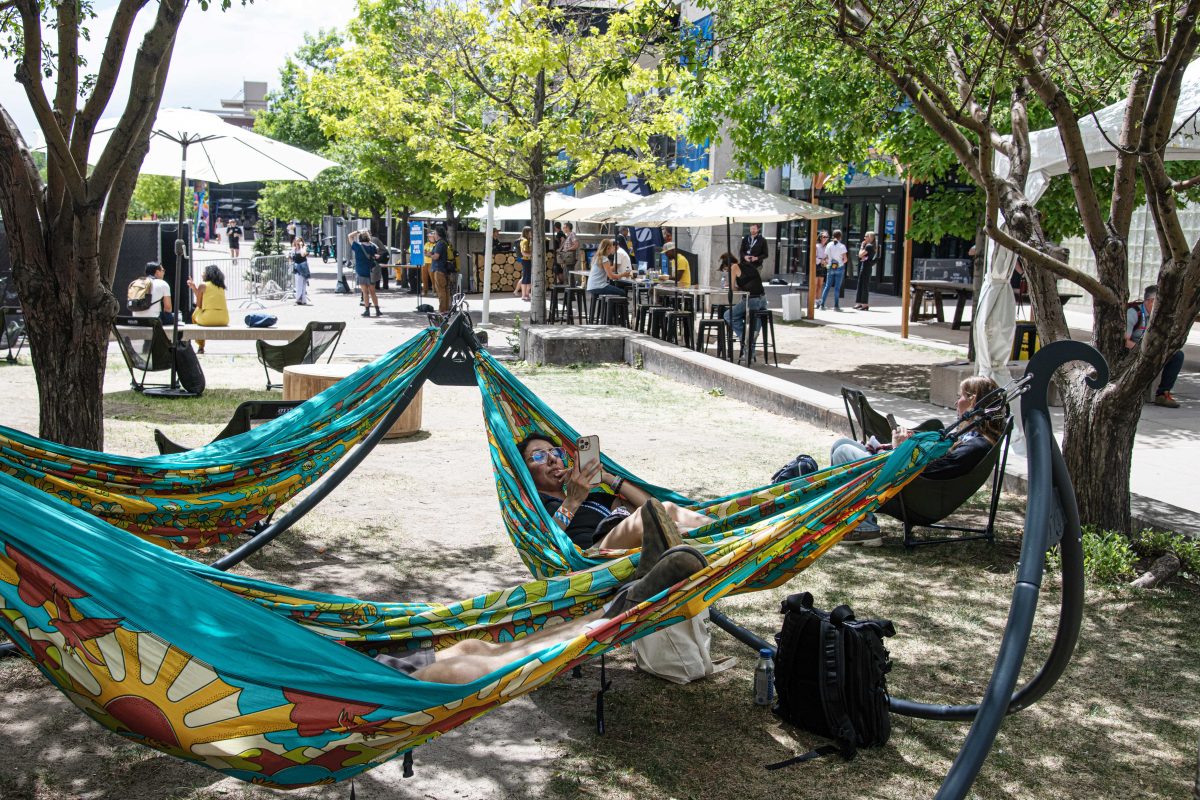

Artificial intelligence slipped into nearly every hour of this week’s Colorado Startup Week, which wraps up Friday. But one prevailing theme that seemed almost anti-AI was also very present: people meeting in person.
Thousands, in fact. More than 10,000 people were expected to stop by the event headquarters this week at the old but renovated CenturyLink building on 15th Street in Denver. The annual event, now in its 15th year, was geared toward people with a business idea or company seeking help, mentors, investment or just other founders to talk shop and learn from.
“We did not allow an online option,” event organizer and cofounder Erik Mitisek said. “The whole point of Colorado Startup Week is to get people together.”
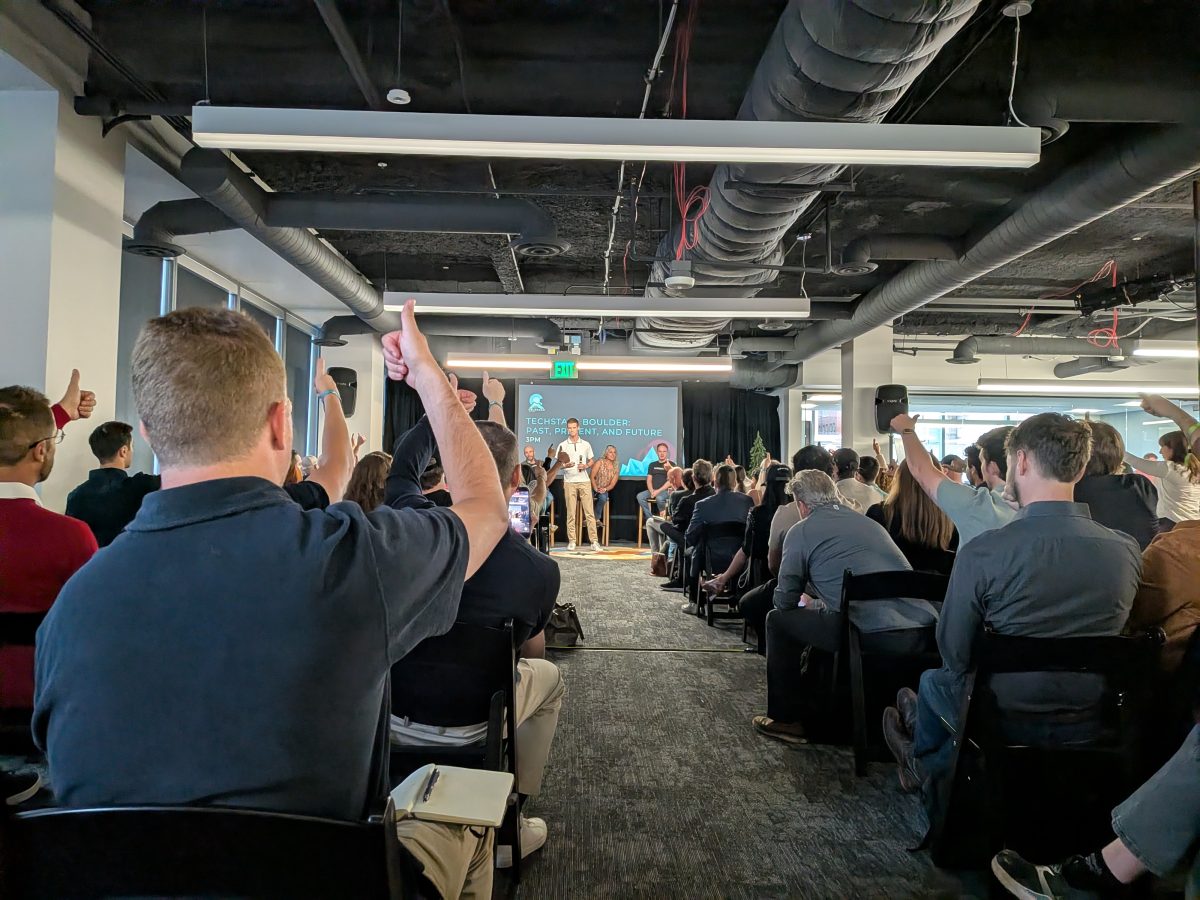
Michael Zeisser, a partner with Denver investment firm FMZ Ventures, even had a name for it — plus an hour-long session Wednesday that encouraged founders to lean into what he calls the “Experience Economy.” It’s a throwback to an earlier era of humanity when people got together to learn, be entertained or have analog experiences together. That still happens, of course, but in a world of smartphones and screens and algorithms influencing what humans decide to do.
“Arguably today, there really isn’t an Amazon of experiences. There isn’t a Nike of experiences, or a Warner Brothers of experiences,” Zeisser said during the session. “If people want experiences, these kinds of companies will be created. And the contention is they could be created in Colorado.”
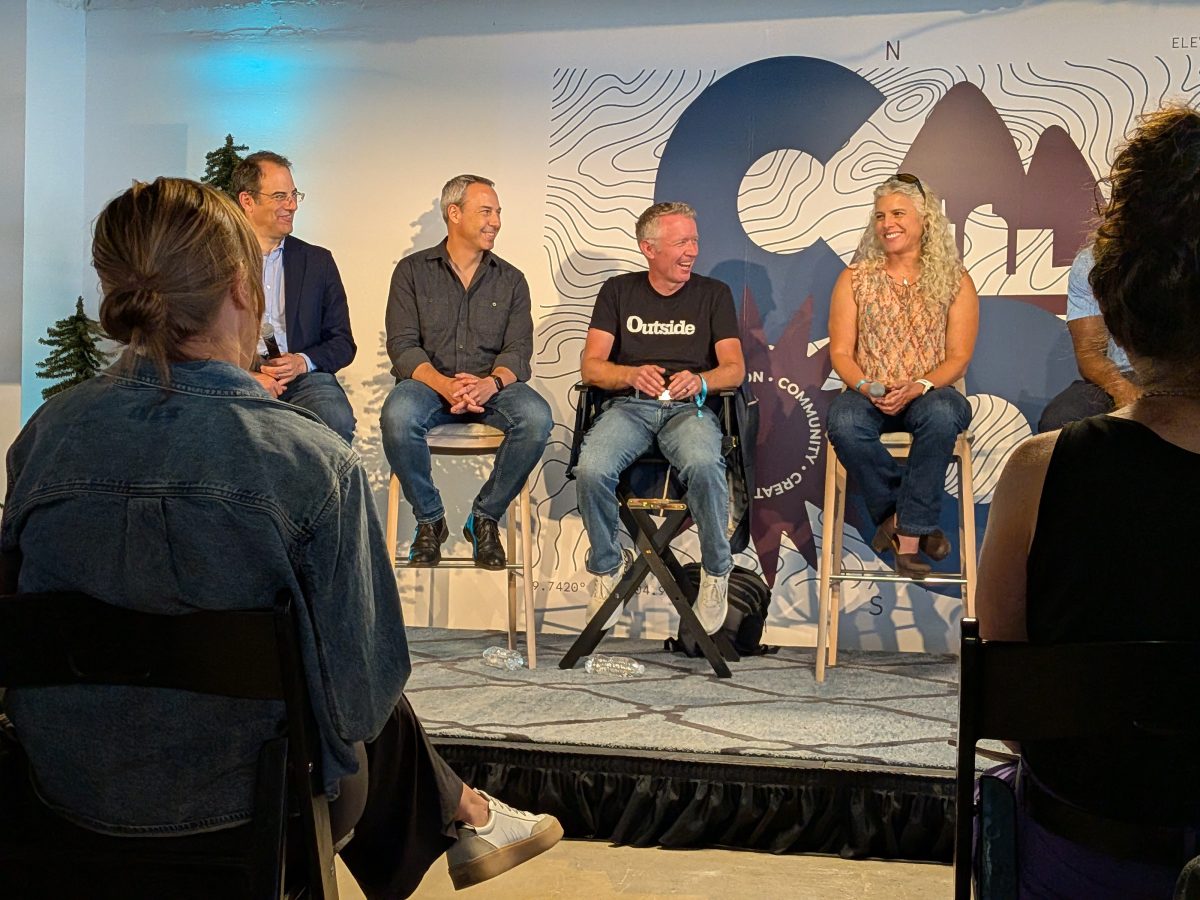
On the panel, a former Denver Broncos player and Colorado’s current attorney general were joined by leaders from the new Denver Summit Football Club, the Outside Days festival and mental health therapy company Sondermind.
“We have sports, we have outdoor, we also have psychotherapies because experiences are actually very broad,” Zeisser said. “The big idea is really that I deeply believe we are in the early innings of a big transformation and the emergence of what I will argue is a new economic sector: the experience economy.”
Entering the experience economy
It’s part of the progression of humans and the economy, Zeisser theorized. The farming economy dominated 200 years ago followed by the industrial economy. At some point, the 20th century became the service economy, which morphed into the recent information economy. And now, experiences.
There’s been a change in consumer spending post coronavirus and discretionary income has fueled the travel industry, spectator sports, concerts and more of those experiences,
“It’s very, very clear that spending has shifted,” Zeisser said. “All of us as consumers are allocating more of our resources and time and dollars to experiences over things.”
It’s already happening in Colorado. Outside Days bubbled up a few years ago from Robin Thurston, a former professional cyclist, tech entrepreneur and founder of the Outside Interactive empire, which includes Outside magazine.
“You’ve got to create ways for people to walk outdoors and connect with nature in real time to create that experience,” Thurston said. “We launched this festival downtown called Outside Days and we had 45,000 people in May. And we expect, you know my team won’t let me say this, but I’m expecting 60,000 next year. It’s really about these moments that people get to go connect. I think with all of this technology, all of the things that we have around all the connectivity, frankly, I think we’re all burned out.”
He’s also still disturbed by an old quote from the founder of Netflix who once said the video-streaming service’s biggest competitor is sleep.
“I thought to myself that is so disturbing that that is the fundamental, if you think about it, incentive structures from major companies,” Thurston said. “Their incentive structures are set up on how much time you are consuming things. I’m sorry but community on digital is not community. It’s not experienced in the same way. I just fundamentally believe that we all need nature. We all need to find those moments during the day, like take a walk with a colleague. If you have a chance to go skiing on a Friday, go skiing on a Friday.”
Panelist Phil Weiser, Colorado attorney general who is also running for governor, mentioned the state’s recent $615 million settlement with Meta, the parent company of Facebook and Instagram, which elicited applause from the audience. Meta also agreed to work with state AGs to set standards to better protect children from social media addiction.
“That’s only the start because how do we take what we know is broken and repair it,” Weiser said. “People need consciousness, whether they’re conscious of it or not. … One of these things about these outdoor experiences — skiing is one that I experience — is you have to focus on what you’re doing. You have to be present in the moment and too few of us are present. We can do better.”
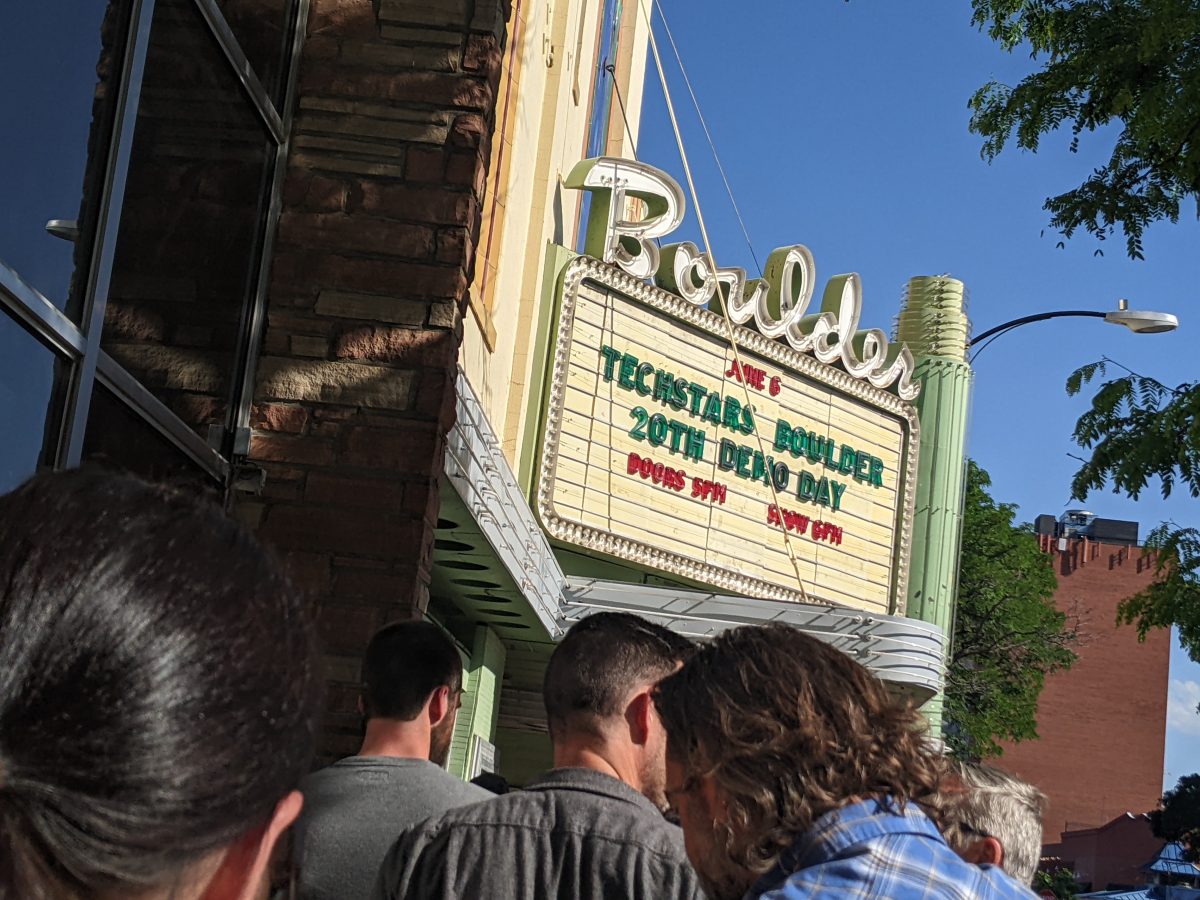
While experiences aren’t new, coming together is more challenging. Over at the revamped Techstars Boulder, cofounder Nicole Glaros said the in-person mentoring and community experience is what the organization can provide tech startups.
“If they were left to their own devices, they’d be in front of their computers all day,” she said. “Now, we smush them in a room with people so that they can experience each other, which is a very powerful network for them.”
Glaros is also one of the cofounders behind the grassroots effort to launch a women’s professional soccer club in Denver. The first game was in March.
“We knew it was going to be an amazing thing here in Colorado, and we’ve just blown the doors of what we thought was going to happen,” she said. “Sixty-four thousand people attended that first game. People want to come together. They want to experience things together.”
Lower financial return? Yes, but …
But a challenge for investors, Glaros said, is that experiences don’t have the same financial return that tech investors and the software industry is used to.
“Experiences tend to not have amazing gross margins because they tend to be stuff that’s largely driven by people,” she said. “We’re in this world of AI where AI is eating software and the tech investor community is going, ‘Uh oh, what do we do?’ And so there might be a very beautiful way for the tech investor sector to start looking at the new experience economy and try to figure it out.”
Thurston agreed. He said his media business runs at 84% gross margins while the software services are at 90%. But the big festival Outside Days is closer to 35%, he said.
“It doesn’t look great on paper. But over the last three years, we’ve had $100 million of impact on the cities of Denver and the state of Colorado,” he said. “I would stretch everybody thinking about building companies to think about how do you bundle them together because even though Outside Days brings down our gross margin a little bit, it also is a very big brand moment for us. … We had 3.4 billion impressions created out of Outside Days that are all organic. We didn’t pay for those.”
And it’s not just for the tech companies, Weiser said. He pointed to restaurant operators he has heard from on the campaign trail. Margins are very thin, but they keep at it.
“Those who run restaurants, their ‘why?’ is to delight their customers,” he said. “Another part of the experience economy is people who say my why is to delight customers (or) I want to build community and be part of making people’s lives better. … There’s something intangible about that that may appeal to some investors and to some founders.”
Source link