Although the robotics industry is still in its early stage, market players are widely embarking on the path of vertical integration.
Companies like Unitree are striving to bring the key links of the robotics value chain under their control.
Recently, Unitree launched its new-generation dexterous hand Dex5-S, which has 22 degrees of freedom for a single hand, a 1:1 size of a real human palm, and a starting price of 39,900 yuan.
What is more notable than the product itself is the way Unitree is promoting this initiative.

All 22 motors of the Dex5-S are independently developed, supporting direct drive, backdrivability and dual-encoding control. Each joint is equipped with a built-in limit impact torque protection structure, and the maximum control frequency can reach 1000Hz under Gigabit Ethernet configuration. More critically, this dexterous hand has been embedded with the ecosystem of Unitree’s self-developed UnifoLM-WLA-1.0 foundational model since its launch, with the model open-source, the hardware independently developed, and a single model coordinating 64 tasks.
From the “brain” to the “palm”, Unitree is trying to grasp the entire industrial chain in its own hands.
Lingxin Qiaoshou, a leading domestic supplier of dexterous hands, recently invested in the algorithm firm Zhixing Embodied Intelligence, and jointly established a technology company with Qianwei Yangchu. HC Tech has expanded its business from joint modules to complete machines, building a full-link product matrix covering “motors – joints – complete machines”.
Complete machine manufacturers are moving upstream, and component suppliers are also moving upstream. This choice seems familiar.
01 Lessons from the Battery Industry
Five years ago, China’s new energy vehicle industry was at the starting point of explosive growth, but all automakers faced the same anxiety: batteries.
At that time, the domestic power battery market was highly concentrated, with leading suppliers occupying more than half of the market share. Automakers could decide the appearance, intelligent cockpit and marketing rhetoric of a vehicle, but the core variables that determine whether the vehicle can be manufactured, what the cost is, and how fast the delivery can be are all controlled by other parties.
An executive of an automaker once stated that power batteries once accounted for 40% to 60% of the cost of new energy vehicles, meaning that automakers were all working for battery manufacturers.
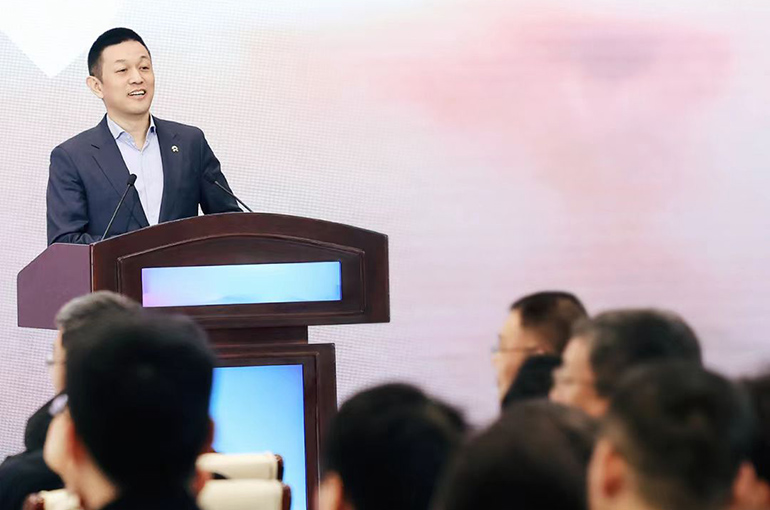
In 2022, the price of lithium carbonate soared to 600,000 yuan per ton, and the proportion of battery cost in the total vehicle cost rose from 30% to more than 40%. The profits of automakers were squeezed by both upstream parties. Li Bin, founder of NIO, once publicly stated that the rise in lithium carbonate prices brought a cost pressure of tens of thousands of yuan per vehicle.
The result was that starting from 2022, leading automakers have successively entered the field of independent battery R&D. GAC established E-Cell Battery with an investment of 20 billion yuan; NIO set up a battery technology company; Li Auto and Xin Wanda jointly built a factory; Great Wall incubated Honeycomb Energy. By 2026, the market share of leading battery suppliers has dropped by more than 10 percentage points from its peak.
Although the batteries independently developed by automakers may not fully surpass professional battery manufacturers in terms of performance, they have at least achieved one thing: avoiding being constrained by others in core links.
The cost of this lesson is extremely high. But today, the robotics industry is experiencing a highly similar structural moment.
02 The “Battery Moment” of the Robotics Industry
In the BOM cost of humanoid robots, joint modules account for more than 50%. Among them, core components such as planetary roller screws, harmonic reducers, and frameless torque motors have long been partially dependent on imports. The price of dexterous hands has dropped from the million-yuan level in the early years to the range of 10,000 to 50,000 yuan, but it is still one of the biggest difficulties in cost reduction.
This is exactly the same situation that automakers faced five years ago: the most expensive components are not produced by themselves, and there are only a few suppliers that produce such components.
The choices of leading complete machine manufacturers are highly consistent with the response paths of automakers back then.
Unitree is the most typical case. Starting from quadruped robots, Unitree has taken a route of independent R&D of core components — all motors, reducers and controllers are independently developed and produced. For the Dex5-S dexterous hand, this route has extended from the main body to the end effector, forming a closed loop with the self-developed embodied foundational model. The prospectus shows that it plans to raise 4.2 billion yuan, 85% of which will be invested in key technology projects such as embodied model and robot body R&D, and the remaining funds will be used for the construction of manufacturing bases.
Tesla has taken an even more extreme approach. All 28 body actuators of Optimus Gen3 are independently developed and customized. Musk’s goal is clear: to use the large-scale mass production experience at the automotive level to reduce component costs, and lower the unit cost from 20,000 to 30,000 US dollars to 2,000 US dollars.
Leading domestic enterprises such as Fourier Intelligence and Galaxy Universal are also extending upstream through different methods. According to industry statistics, leading complete machine manufacturers have realized independent R&D or deep binding of more than 80% of core components through investment, mergers and acquisitions, or direct independent R&D.
Component suppliers are also carrying out reverse integration. Lingxin Qiaoshou has not stayed at the stage of “selling hands”, but invested in algorithm companies, trying to combine hardware capabilities with operation intelligence. HC Tech started from servo motors and encoders, and extended all the way to complete machine solutions. All the micro servo electric cylinders and integrated joints of In-Time Robotics are independently developed, with an annual production capacity of more than 50,000 units.
Complete machine manufacturers are expanding their business to upstream links, and component suppliers are also moving upstream. The entire industry is doing the same thing: bringing the key links of the value chain under their control.
The underlying logic is exactly the same as that of automakers independently developing batteries back then: when the most expensive components are not in your own hands, you are always working for others.
03 But “Independent R&D” Is Not a Universal Panacea
However, a key difference cannot be ignored.
Batteries are industrial products with an extremely high degree of standardization. The chemical system, packaging form and interface protocol of battery cells all have mature industry standards. For automakers to independently develop batteries, the core challenges lie in engineering capabilities and scale effects.
However, the core components of robots are far from reaching the stage of standardization. In the dexterous hand field, the design of degrees of freedom ranges from 11 to 42, and there are multiple parallel driving solutions including motor direct drive, tendon transmission, and pneumatic artificial muscle, while tactile perception has not yet converged to a unified path. The technical routes of joint modules are also in the state of multiple parallel solutions, and have not been finalized as a few mature configurations.
This means that when robotics companies independently develop core components, they not only need to solve the problem of “whether to develop it”, but also need to answer the question of “which technical route to choose”. A wrong route choice may bring greater costs than relying on external suppliers: not only the R&D expenses are wasted, but the company is also locked into a wrong technical path.
Another reality is that not all companies have the resource endowments of Unitree and Tesla. Tesla can amortize the R&D cost of Optimus into the AI and manufacturing system of the entire group; Unitree’s cumulative R&D investment has exceeded 240 million yuan, and it plans to raise 4.2 billion yuan. But for a large number of small and medium-sized robotics companies, independently developing dexterous hands, joint modules and large algorithm models at the same time is a bet far exceeding their financial capacity.
The deeper problem is that vertical integration reduces dependence on suppliers, but it also means that all risks are concentrated on the company itself. If the shipment volume of complete machines fails to meet expectations, the fixed cost of independently developed components will instead become a heavy burden.
This is exactly the pitfall that some automakers stepped into when they independently developed batteries back then: the production capacity was built, but the battery performance could not keep up; or the batteries were produced, but the sales of complete vehicles did not increase accordingly, leading to insufficient production line utilization and higher unit cost than outsourcing.
In the first half of 2026, the global shipment of humanoid robots is about 19,100 units, of which Chinese manufacturers account for 97%. JPMorgan Chase predicts that the global shipment is expected to exceed 1.75 million units by 2030. But under the current shipment scale, the “scale effect” of independently developed components is far from coming.
The choice of companies like Unitree is correct: without mastering core components, you will never have pricing power.
Five years ago, automakers gave a phased answer with tens of billions of yuan in tuition fees: keep operating at a loss and wait for the scale to expand. Today, it is the turn of robotics companies to make the same choice. The difference is that the story of the battery industry has at least reached the chapter with a clear answer, while the story of the robotics industry has not even had its chapters finalized.
This article is from the WeChat Official Account “Alpha Workshop Research Institute”, author: Si Che, published with authorization from 36Kr.