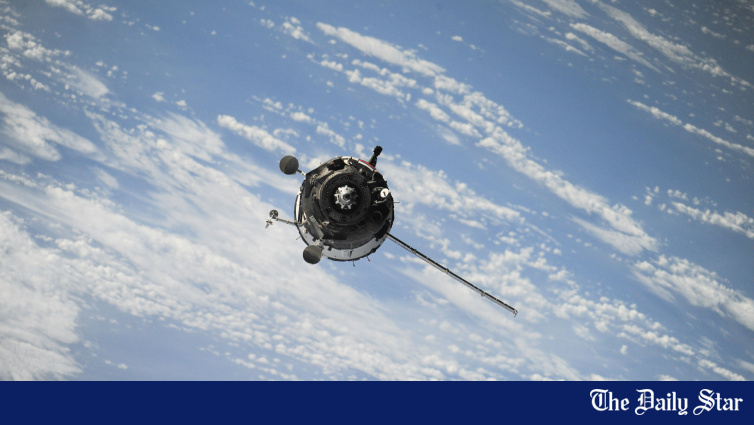
Google is preparing its first orbital test of AI computing hardware as part of Project Suncatcher, an experimental programme examining whether large-scale machine-learning infrastructure could eventually operate in space.
The company said on September 24 that a prototype satellite carrying Google Tensor Processing Units, or TPUs, was scheduled for launch as an early test of the technology. The mission is intended to examine whether specialised AI chips can survive and operate under the radiation, temperature extremes, and physical forces associated with low Earth orbit.
Google has described Project Suncatcher as a long-term research effort rather than an imminent commercial data-centre service. One attraction is the near-continuous sunlight available to satellites in orbit, potentially providing abundant solar energy for electricity-intensive AI computing.
The experiment will also study cooling. Conventional airflow cannot cool processors in the vacuum of space, so Google plans to test an approach involving heat pipes and radiators.
The first mission is designed to collect engineering data and identify potential failures rather than operate as a functioning orbital data centre.
Google is also planning further tests involving high-bandwidth optical links between satellites as it explores whether multiple spacecraft could eventually operate together as an interconnected AI computing cluster.
Substantial obstacles remain, including launch costs, radiation exposure, thermal management, and the complexity of producing and maintaining computing infrastructure in orbit.