Pakistani startup KangarooCare AI is developing intelligent, AI-enabled medical devices that are utilising the latest technologies to improve healthcare outcomes, with a particular focus on neonatal care.
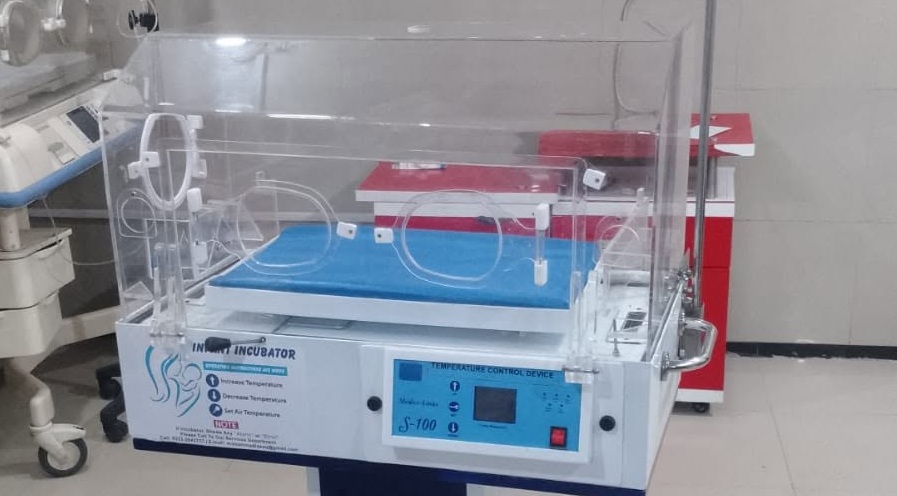
Founded by Islam Un Nisa in 2018, KangarooCare has built out a product portfolio that includes neonatal incubators, infant warmers, phototherapy solutions, and AI-enabled monitoring technologies.
“We are also developing intelligent features such as AI-assisted phototherapy, baby-cry detection and real-time monitoring, with the aim of supporting clinicians and improving the quality and efficiency of neonatal care,” Nisa told Disrupt Africa.
“Our vision is to make advanced healthcare technology accessible to hospitals that may not have the resources to purchase expensive imported systems.”
Iterating its own products
What is unique about KangarooCare is that it is not simply importing and reselling equipment – but rather iterating and developing its own products, assembling them locally, testing them, and providing after-sales support.
“Our long-term objective is to build a healthcare technology platform that combines medical devices, AI, data and clinical intelligence to address real-world healthcare challenges in emerging markets,” said Nisa.
The startup was founded in a bid to address the lack of affordable, reliable and technologically-advanced medical equipment designed around the realities of emerging healthcare markets.
“Hospitals in countries such as Pakistan often face a difficult choice – purchase expensive imported equipment with high upfront and lifecycle costs, or compromise on functionality by purchasing lower-cost alternatives,” said Nisa.
She said she believes there is a significant middle ground, with KangarooCare aiming to provide advanced functionality at an accessible price, while also providing local technical support and easier maintenance.
“We don’t want to compete purely on price. Our competitive advantage is the combination of affordability, intelligent technology,local engineering and serviceability, and understanding of emerging-market healthcare needs,” said Nisa.
“We believe that understanding the actual operating environment of hospitals is just as important as developing the technology itself.”
Strong demand
The uptake has been “very encouraging”. The company has sold approximately 1,600 equipment units, which Nisa said demonstrated it had moved beyond the prototype stage and achieved genuine commercial adoption.
“This traction has been extremely valuable because healthcare technology cannot be validated only in a laboratory. The real test is whether hospitals are willing to purchase, deploy and continue using the technology. Our customers and users have also provided valuable feedback, allowing us to continuously improve our products,” Nisa said.
“The next phase for us is therefore not simply about selling more units. It is about scaling the business sustainably, increasing production capacity, expanding our product portfolio and entering new markets.”
With that in mind, the previously bootstrapped KangarooCare is on the lookout for funding, and recently participated in the Standard Chartered Foundation’s Women in Tech Accelerator, locally implemented by INNOVentures Global, with support from Village Capital.
Participation came with a US$5,000 grant, but Nisa said a major additional benefit was the opportunity to become part of a broader entrepreneurial ecosystem.
“For a technology company, particularly one operating in healthcare hardware, it is easy to become too focused on the engineering side of the business. The programme helped us think beyond the product itself and focus more on market positioning, customers, scalability, partnerships and business growth,” she said.
“It also helped us gain greater confidence in presenting KangarooCare not simply as a medical-equipment company, but as a technology-driven healthcare company with international potential.”
An international plan
International potential indeed, but where specifically?
“We see significant opportunities in other emerging healthcare markets where hospitals face similar challenges around affordability, access to technology, maintenance and technical support,” Nisa said.
“Our expansion strategy is focused on markets across South Asia, the Middle East, Africa, and other emerging healthcare economies. We believe products developed around the realities of emerging markets can have a significant international opportunity because many healthcare systems face similar constraints.”
Clearly, the startup’s core business model is B2B, selling medical equipment directly to hospitals, healthcare institutions and other healthcare organisations.
“We are also investing in higher-value products and AI-enabled solutions, which we believe can create additional recurring and technology-driven revenue streams in the future,” said Nisa.
“Our ambition goes beyond manufacturing and selling medical equipment. Our mission is to democratise access to advanced healthcare technology. We believe that a hospital in an emerging market should not have to choose between affordability and innovation.”