


India is young, big and vast. It has the third-most unicorn corporations in the world after the United States and China, and the median age of its 1.4 billion people is 28 to 29. While 1.3 billion people are low-credit, low-income residents without bank accounts or cards, IT talent from the Indian Institutes of Technology, which are said to be harder to enter than Harvard or MIT in the U.S., are “devouring” Silicon Valley.
Seen per person, it is a low-income country with low GNP, yet thanks to a massive domestic market, the total national economy ranks fifth globally. A Korean startup that entered the Indian market and, after 12 years of trial and error, grew into a national app. Targeting 1.3 billion Indian residents who use back-alley private finance, the so-called mass niche (the invisible majority), the K-fintech corporations Afinit designed their credit.
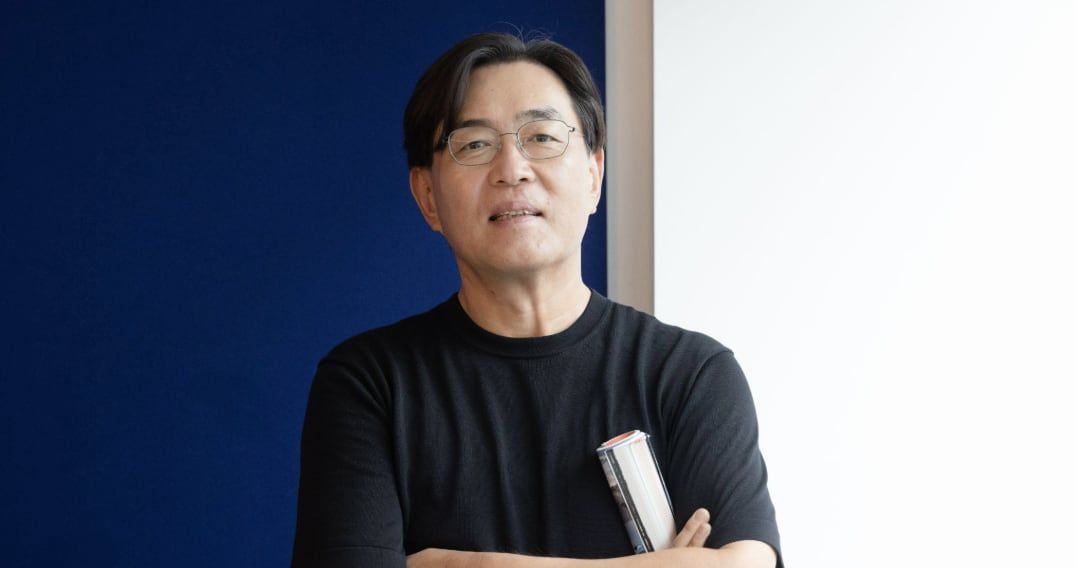
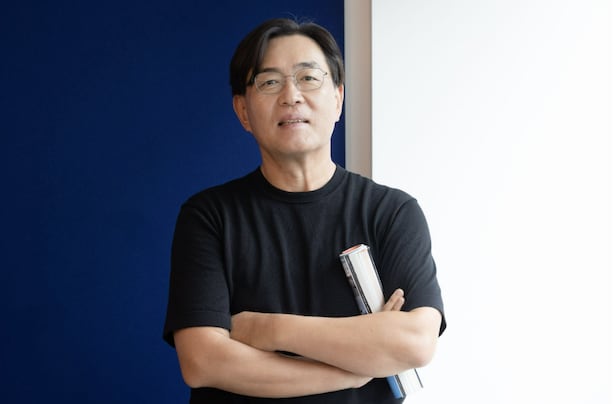
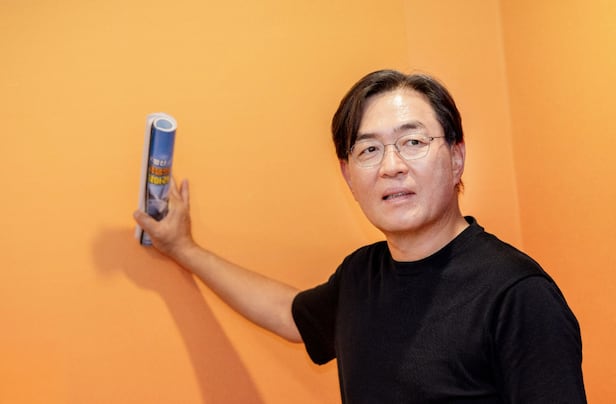
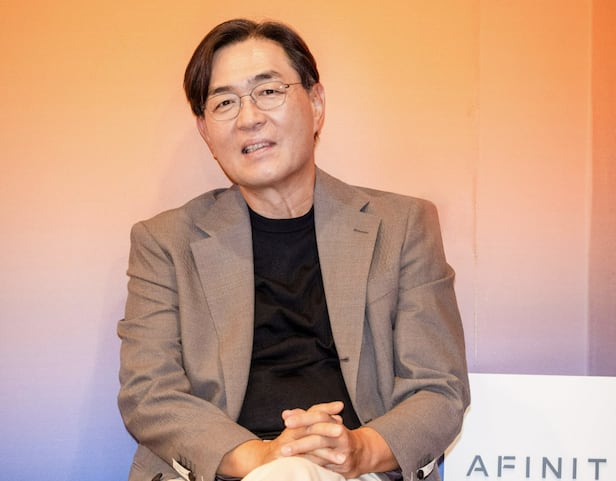
Reading Mass Niche Survival, a book that chronicles the brilliant trials and errors before the loan app True Balance, created by Afinit, took root and became a smash hit in the Indian market, we interviewed its protagonist, CEO Lee Cheol-won. Let’s hear the gritty story of how they turned 1.3 billion Indians who had neither accounts nor cards into mainstream customers, and how they visualized previously unrecorded, unidentified “credit” as data.
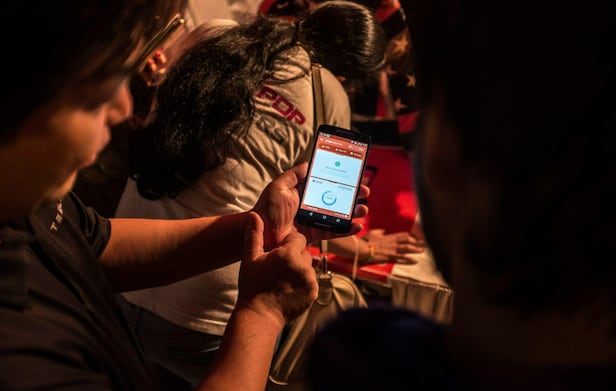
Lee Cheol-won, as a business team leader at SKT subsidiary WiderThan, roamed the markets of India, Indonesia and the Philippines. He founded the mobile value-added service B2B corporations Access Mobile in 2006 and made it a success, but went through severe burnout. In 2014, when the telecom-centered ecosystem was being reorganized around smartphones, he launched the True Balance app, a prepaid mobile balance check service, in the Indian market. The service was launched after seeing how most Indians habitually check how much credit remains on their mobile phone plans.
In 2017, the True Balance app evolved into a loan app where money is “deposited” within five minutes of application using proprietary alternative credit scoring technology, and it emerged as a national app in India by making a hit of ultra-short-term living-expense loans of around 150,000 won per case. True Balance has now surpassed 120 million cumulative downloads, and tens of thousands borrow money through the app every day. The cumulative loan amount comes to 2 trillion won.
-Why India?
“Since 2002, I have gone in and out of India once a month to sell services to telecom companies. From then on, I heard this saying. ‘India is like an elephant. It takes time to get running, but once it starts, the speed is unstoppable.’
Until about 10 years ago, I was half in doubt, asking, ‘So when are you going to run?’ but now it has really started to run. Since Prime Minister Modi took office, the country’s business infrastructure has completely changed.
I also didn’t know I would do finance in India. I started a startup after 40, and what our first investor said to us was ‘the desperation of a midlife venture.’ That desperation was an asset in India. This is a country where opportunities exist for those who endure.”
-Why fintech in particular?
“In developed countries, Fintech is about conveniences like easy transfers, but in developing countries, Fintech is on a different level. It is the best market for making something from zero to one. A person who couldn’t go to a bank because there were no records being able to borrow money in a few minutes on a phone is not convenience; it is a change of existence.
Fortunately, Prime Minister Modi cleverly designed government agencies’ regulations and permissions, and actively supported Fintech corporations as partners of inclusive finance.”
-How is the India we know different from the real India?
“India’s per capita national income is about 200,000 won per month on average. That’s about 1/20 of Korea’s. People in Korea look down on India as a poor and crowded country, but Indians look down on Korea instead. They think a small country is acting cocky because it has some money. The pride of Indians is far greater than you think. We think of China, Japan and Korea as the center of Asia, but from a Western perspective, China, Japan and Korea are the Far East and the mainstream of Asia is India.
It is a ‘great nation’ with a vast civilization and the birthplace of religions stretching back thousands of years, with an overwhelming population and sharp minds. If you look closely, Christianity, Judaism and Islam came from Israel, and Buddhism, Hinduism and Jainism came from India. Religion is the most complex human creation, and it cannot emerge unless people are extraordinarily intelligent. That’s how smart the peoples of Israel and India are.”
-Out of India’s 1.4 billion people, only a little over 100 million have credit cards. Who are the remaining 1.3 billion?
“There’s a quiz I often give to Indians. What is the best-selling smartphone in India? Everyone says Samsung, but it isn’t. It’s a 100,000-won Chinese phone. The best-selling car is a tiny compact, and the most used mobile plan is a 150-won prepaid plan. I never met an Indian who got all three right. The India they were looking at was the top 1.2% of India.
The 1.3 billion are the people who live on the answer side of that quiz. They earn about 150,000 won a month, get paid weekly in cash, have no bank accounts or don’t use them even if they do, and they use two SIMs and switch to whichever carrier is cheaper. They look like a minority, but in reality they are the majority. I called them the mass niche, the ‘majority that looks like a minority.'”
-How did you figure out they would become customers of the True Balance app? How did you analyze the user traits of Indians who obsessively check their balances and worry their calls will be cut off?
“There were two ways we figured it out. First, the numbers. Ninety percent of Indian mobile users are prepaid, 70% are dual-SIM, and the most common recharge interval was weekly. We went into the alleys to see the people the numbers pointed to. The numbers told us who they were, and the alleys told us how they lived.
Indians would dial the balance check code like a reflex when bored. Several times a day. We didn’t find an entry point from a flash of inspiration but from what people unconsciously do every day. We analyzed on two layers. One was data. Looking at the usage records of 20,000 users in New Delhi, we saw 90% prepaid, 70% dual-SIM, weekly recharges most common, and 15–20% were loyal customers.
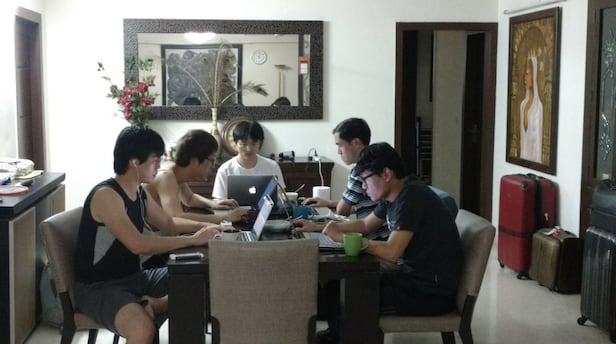
The other was people. Korean staff bunked together in an apartment in Gurgaon, pushed app updates every two weeks, and directly watched where users got stuck. Visas were for three months, so we’d fly back to Korea to eat Kimchi-jjigae (Kimchi stew) and then return.
There’s something we learned there. For them, balance wasn’t a telecom fee; it was the money they could use that day. When the balance runs out, calls are cut off, and when calls are cut off, work dries up. So an app that showed the balance became an app that showed money, and then recharges and loans naturally followed. That’s how we launched the mobile balance check app True Balance in Jan. 2015.”
-Your effort to find core users was really analog yet exquisite. You just rushed to university areas where networks explode. How effective was the ‘I’ll give you 150 won if you bring a friend’ marketing?
“It wasn’t exquisite; it was desperate. We had no money for Facebook ads. Tracking core users from the New Delhi data, 80% lived near university districts, especially near engineering schools. So we went. The 10-rupee campaign gave 10 rupees each—about 150 won—to the referrer and the newcomer.
In a week, 100,000 people came in. The expense to bring in one person was one-tenth that of Facebook ads. What surprised us more than the effect was that people became sales agents on their own. Neighborhood shop owners, YouTubers and students spread it as a ‘money-making app,’ and some earned tuition with it, bought air conditioners and fixed their homes.
There were side effects. Cheaters appeared on factory outskirts, gathering teens to create fake accounts. To catch them, we built a ‘life fingerprint’ that filtered people using call records, and that later became the seed of credit scoring. We didn’t know it then.”
-Through what process did you gain locals’ trust and elicit repeat behavior?
“We divided India’s 1.4 billion people into three groups: India One, Two and Three. India One is 50 million to 100 million people with cards and accounts. The Two and Three groups mostly get paid weekly in cash and go to agents to remit money. That’s the mass niche I mentioned earlier. Where we were first very wrong was here. We thought they would move from balance check to recharge, and from recharge to payments, but these people had no online payment capability at all.
So the conclusion was ‘someone has to do it for them,’ and that someone was the local kirana shop owners and YouTubers. Earning trust was simple. Pay rewards immediately, allow them to accept cash and recharge on behalf of customers, and build a dedicated app for them. A customer map within a few kilometers, an accounts receivable ledger, a calendar showing each customer’s next due date. Once a customer came in, retention was very high.
We didn’t create repeat behavior. We aligned ourselves to a rhythm that already existed—the rhythm of recharging every week. And what customers trusted wasn’t the app; it was the uncle next door. What we did was make sure that uncle wouldn’t take a loss.”
-Before loan apps existed, how did back-alley finance work in India?
“Every kirana shop counter in the neighborhood had moneylenders’ business cards. A cigarette shop owner borrowed 3,000 rupees and repaid 100 rupees daily for 35 days; on an annual rate, that was 160%. A food-truck youth borrowed 10,000 rupees and repaid 100 rupees daily for 120 days. I met three collectors in their 20s who ran 90 loans, and the repayment rate was very high.
There were three principles. The person you see every day lends you money, so you can’t run away. You repay a little every day, matching the weekly pay rhythm. The guarantor is neighborhood reputation; if you stiff them, you can’t walk the alley. It was expensive, but close and fast finance.
What we did was move those three into an app. In place of the person you meet every day, an app you open every day; in place of paying a little each day, small amounts and short maturities; in place of neighborhood reputation, data. The interest we charged was a fraction of theirs. What we said to ourselves then was, ‘Isn’t it obvious.'”
-The idea of a life fingerprint was fascinating. You say it can be an indicator of credit even without an account. For example, recharge habits: those who recharge regularly versus those who hold out until empty; data usage instead of a pay stub; GPS paths instead of employment verification. Can you really determine who will repay with such data? What is the arrears rate?
“We can, and it gets more accurate every year. The principle is this. See people the bank cannot see with data the bank does not have. Recharge habits instead of passbook balances; data usage instead of pay stubs. Why do recharge habits become credit? Because those who recharge regularly and those who hold out until empty have different cash flows. That is the person’s fingerprint.
And in India, every financial transaction comes by text. Salary comes in—text; you pay an installment—text. Our AI reads the company name, salary and balance from that single line of text. The technology that extracted balances from carrier texts in the balance-check app era is now the core of our credit scoring.
The arrears rate has fallen to about one-third to one-quarter of when we first started lending, and it’s getting lower every year. And there is something more important than filtering. Start small, then raise the limit for those who repay. Judgment is needed only for the first loan; after that, records do the judging.”
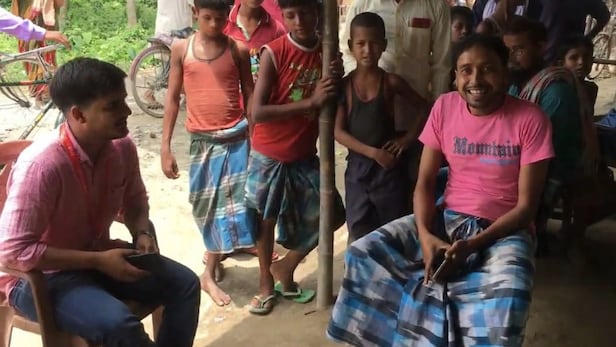
-Many Indians appear in the book Mass Niche Survival: boys who roam neighborhoods doing recharge services, college students, taxi drivers, homemakers, and one-person agents checking ledgers for 300 customers. What kind of people did you meet on the ground, and how do their lives roll along?
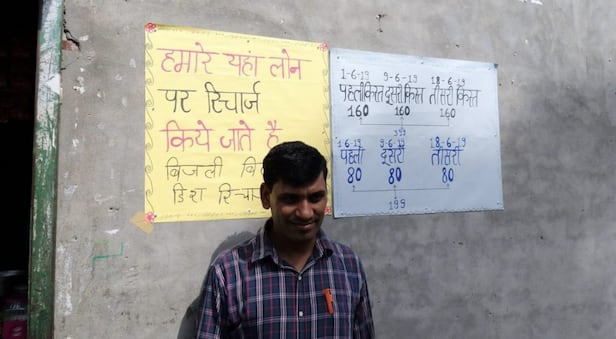
“Three people come to mind. An agent in Bihar state made a hand-lettered ad on a 1-meter sheet in pink and black. He even drew a floral border and a repayment schedule. It was more intuitive than materials our MBA graduates produced.
An agent in Hyderabad had difficulty walking due to a disability but sold telecom products online and earned 30,000 won a month. He called the rewards he received ‘Lucky Coins’ and shared the proverb, ‘Drop by drop makes an ocean.’ And a plumber who couldn’t get a loan because he didn’t know what a checkbox was. He used Google Lens to translate the screen character by character and applied for a loan.
They are diligent, quick at math and value face. In surveys they say they like English, but when asked to read English sentences, more than half got them wrong. And they don’t keep interview appointments with us ‘because it rained.'”
-You say Indians’ ‘no problem’ means ‘not my business.’ What was the hardest part of doing business? The 22 languages? Cultural differences between the India team and the Korea team?
“Harder than language and culture was admitting I was wrong. That you can go from balance check to recharge but not from recharge to payments; that a super app wouldn’t work. The numbers spoke first, but I kept my eyes closed.
The second was time. A few years for a license; a few years to build one partnership. In negotiations, the initial price could be cut by as much as 70%. If you rush in Korean style, that becomes a weakness. Negotiations aren’t finished in one go; they’re a long game where you build points little by little.
‘No problem,’ as I saw it, didn’t mean not my business. It was closer to don’t force an answer right now, here. The problem was that we tried to get an answer on the spot. ‘Yes, noted’—whether that meant agreement, confirmation or just heard it, we only knew after it ended. So we learned not to speak in circles and to say it 10 times if once didn’t work.
The 22 languages were actually not that hard to solve. We kept buttons in English and the explanations in local languages. Young people read Hinglish best—Hindi written in the English alphabet.”
-Are there differences in attitudes toward money between Indians and Koreans? Who is more persistent, more trusting, more ambitious or more desperate?
“It varies by person, and what differs are the rules of the game. I saw three. First, money moves in small units in India. If you recharge 200 rupees at once, the carrier adds more data, but because they lack money, they split it into 30-rupee recharges. Budgets are on a daily basis. Second, credit is attached not to a name but to the neighborhood. Even loans from daily collectors have very high repayment rates because the guarantor is neighborhood reputation. Third, negotiation is a sport. The first price is a starting point, and the side that rushes loses.
Desperation appeared more on the Indian side. Hospital bills, a younger sibling’s wedding, next month’s phone bill. Koreans make plans, while Indian customers live day to day. That’s not laziness but an income structure. If you get paid weekly, you can’t make a monthly plan. Trust rested more in relationships than contracts. I chose to trust the structure instead of trusting people.”
-Did small short-term loans sell well? Did these loans improve Indians’ lives?
“Small short-term loans sold well. Our first ultra-micro credit product surpassed 10,000 cases a day just 20 days after launch. The amounts are as in the book. Cash Loan is around 150,000 won for a few months; Level-Up Loan is tens of thousands of won for a week. When we asked about use, it was all living expenses: a younger sibling’s wedding, a wife’s childbirth, a mother’s hospital, next month’s phone bill.
I want to answer honestly whether it improved lives. 150,000 won doesn’t change a life. What it changes is that night. It helps you get through the night when you can’t pay the hospital bill, and that accumulates into a record, and with a record, you can borrow more later at a lower cost. In the past, all they had were pawnshops and neighborhood loan sharks.
So we don’t say we improved their lives; we say we gave them their first experience inside formal finance. After that, their records improve their lives.”
-As the organization grew, you made several decisions. You followed your partner J’s judgment to focus solely on lending and declared a vision of ‘finance for everyone.’ Did the vision declaration serve as a compass?
“Co-founder J quietly said in 2018, ‘I don’t think this is it. We should focus on lending.’ I said, with the market opening, what focus? I accepted that a year later. The price of that year came back as losses of tens of billions of won.
The sense of direction the vision gave was not what to do but what not to do. We changed an organization divided into lending, products, payments and infrastructure into Lending 1, Lending 2, Lending 3 and Lending 4. Employees asked whether we shouldn’t become a super app. I said the numbers were already speaking.
‘Finance for everyone’ is not the number of products or a list; it’s the target. The 1.3 billion without cards. Once we set that, decisions became easier. Does this reach those people’s first finance? If yes, we did it; if not, we didn’t, no matter how good it looked.”
-What did the super app you modeled look like—WeChat, Alipay in China?
“Right. WeChat, Alipay, Gojek, Grab. On top of balance check, we layered recharge, payments, loans, insurance and commerce. The plan was beautiful. Reality was different. There was one reason we were wrong. Those companies grew in markets where payments came first. Super apps work only for customers who can pay. But our customers had no payment capability. They liked the app but couldn’t open their wallets. That year, revenue was 11 billion won and operating loss was 32 billion won.
What we do now is not a super app. We build credit first and then add products one by one on top. We lend directly, and we also connect those who pass our screening to other financial companies. More than which company to model after, we first looked at what our customers can do and what they need.”
-You seem more attached to Level-Up Loan, with a minimum loan of 1,800 won and one-week repayment, than to Cash Loan with an average loan of 150,000 won. You call it a credit ladder, a credit school. Did users cross the game-like ladder design, where if they repay 1,800 won on time, the amount steps up?
“I’m more attached to the small Level-Up Loan because it best shows what kind of company we are. Lending a small amount for a week is less a loan than a test. A test that creates a first record for someone with no record. Repay and the next is a bit more; repay again and a bit more. We didn’t invent this rule; it was a rule they had already learned from the recharge app.
If you ask whether they crossed it well, those who cleared the first step showed little difference from long-time customers thereafter. Most who drop off do so on the first step. So making the first loan small is for them and for us.
We call it a credit school because there is graduation. Those who build a record here move on to larger loans and, after passing our screening, to other financial companies’ products. We no longer have one-week products; six months is now the minimum term. But many users still repay within a week.”
-On the other hand, it was a bit scary that you can see who someone called and what texts they receive. While the app is installed, logged in and an ID is photographed and sent, AI reviews and money lands in five minutes. When you first turned a profit in Dec. 2021, seven years after founding, what realization came?
“I understand when people say it’s scary. So we have three principles. We only look at data the user consents to share. We look only within the scope allowed by the Reserve Bank of India’s digital lending guidelines. And we use that data for approval, not rejection. Banks reject when there are no records; we look for substitutes for records.
We learned two things at the time of turning a profit. One is that profit doesn’t come from revenue but from the point where two curves meet: the curve where users increase and fixed costs spread, and the curve where screening becomes more precise and charge-offs decrease. If a human reviews a 200,000-won loan, nothing is left. So the system had to review, and the precision of that system turned into profit.”
-Your investors include SoftBank and Krafton Chairman Jang Byung-gyu. What did they value about Afinit?
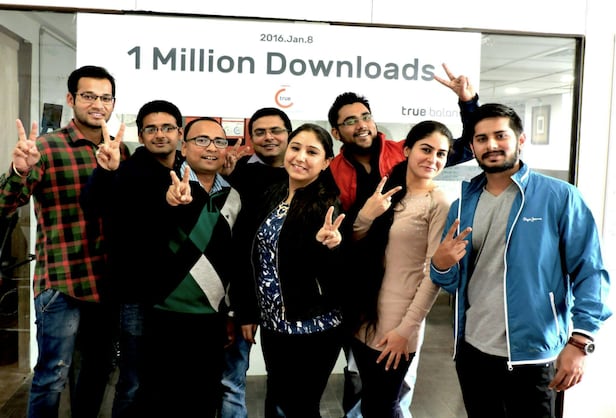
“Chairman Jang Byung-gyu put in the first 800 million won at the end of 2014, and SoftBank Ventures put in 3 billion won in early 2016. Chairman Jang had three reasons for investing in us then. First, the market called India; second, the business called Fintech that is repeatable and predictable; third, the ‘desperation of a midlife venture.’
In an office frequented by founders in their 20s and 30s, burly middle-aged men came in saying it was the last chance of their lives, and that’s what he thought. SoftBank saw the numbers with a million downloads in sight. Chairman Jang advised that since it’s a global business, it’s better to receive global investment.
Looking back, neither of them invested for the technology. We didn’t have technology then. They invested in the market and desperation. What we did afterward was turn those two things into technology.”
-How did you scout the high-priced Indian Institutes of Technology (IIT) graduates?
“At the Indian Institutes of Technology (IIT), 1.4 million apply each year and 10,000 pass, and their first-year salaries after graduation are similar to those at domestic corporations. They’re not easy for startups to hire. So if there was someone we wanted, we kept emailing. Why it had to be you, what you could do here. People don’t come for money alone; they come when they hear why they’re needed. We still do that.
We learned a lot, too. Even sitting in on one meeting becomes experience on a resume, and because they move on on average every two to three years, the key interview skill was filtering whether the reason for changing jobs was real. When you ask IIT graduates why they’re moving, they talk about an organization culture that puts team ahead of the individual.
We tied the Korean and Indian organizations into one team, set a practice of working through documents, and put an Indian leader up front, which delivered results. Last year, we brought in a head of AI from Uber. India’s talent market is deep. The question was whether we could build an organization in which those people could work.”
-Koreans’ perfectionism and Indians’ rough-and-ready ways, Koreans’ modesty and Indians’ confidence—how did you harmonize those differences? Has your dancing improved a lot living with them?
“Korea and India had different priorities. The Korea team looked first at completeness, and the India team looked first at speed and responsiveness. When we said, ‘Make it intuitive,’ sometimes they’d only change button colors, which wasn’t a lack of sincerity but a different interpretation of the same words.
Rather than harmonize, we changed methods. We put things in documents instead of words, didn’t beat around the bush, and put an Indian leader out front instead of a Korean managing the India team. As for modesty and confidence, we learned from them. Korean-style modesty reads as lack of confidence in front of investors. Seeing Indian colleagues speak confidently with numbers changed how we present.
My dancing hasn’t improved. When I see Indian employees dance at Diwali parties, I know I’m not there yet. But I played the janggu in a folk music club in college. The janggu surprisingly fits Indian rhythms.”
-This kind of revolution—someone without financial data getting a loan in five minutes—seems needed in Korea, too.
“Korea is different. The credit record infrastructure is dense, so almost everyone has a score. I’ve heard that in a population just over 50 million, the number of credit cards is close to 300 million. In India, out of 1.47 billion people, the number of credit cards is about 120 million. What we did was build an alternative credit scoring model for the remaining people who lack credit data but do have credit.
So our next market is not Korea but developing countries like Vietnam. We are now preparing to validate our credit scoring within a government sandbox. We are at the stage of moving a method verified on hundreds of millions of Indians to the next country.”
-Fifty years ago, Professor Muhammad Yunus proved at Bangladesh’s Grameen Bank that ‘the poor can repay well if they jointly guarantee credit,’ and he won the Nobel Peace Prize. At its base were love for humanity and a spirit of relief. What about you? With what heart did you do business?
“To be honest, I didn’t go for relief; I went to do business. It was after my first company collapsed, and my first feelings were the desperation that it was my last chance and the excitement that I had seen a big problem. It’s embarrassing to place myself alongside Professor Yunus. If there is an overlap, it’s one thing: the belief that the poor also repay. He proved it through joint guarantees, and we confirmed it with data.
We looked at recharge habits and text records left on smartphones instead of neighbors’ glances. And doing it as a business makes it last. Charity stops when the money runs out, but a structure that lends again to those who repaid keeps turning. The heart came later. People in slums who took a loan for a newborn’s hospital bill and were grateful, an agent who, despite a disability, collected 150-won rewards to feed a family. Only after meeting such people did I understand what this was.”
-Was this success achieved by data or by shoe leather?
“I don’t use the word success yet. We survived. In order, shoe leather created data. Behavior we saw in the alleys—checking balances several times a day and splitting recharges into 30 rupees—later became screening variables. Data scaled what we confirmed with shoe leather to 100 million people. And when data looks odd, we go back to the alleys. Shoe leather, data, then shoe leather again.”
-From whom did you learn the most?
“I learned the most from customers. They told me every time my hypotheses were wrong. That they couldn’t move to payments, that they didn’t need a super app but a bit of money, that they like English but can’t read it—all of it, customers taught through behavior.”
-What are the company’s results now?
“After posting our first monthly profit in Dec. 2021, we have stayed profitable. True Balance has been downloaded by 120 million people and grows every year.”
-Lastly, please offer advice to startup leaders who aim to enter unfamiliar markets and reach unfamiliar consumers.
“First, look at the size of the problem, not the size of the market. The number 1.4 billion for India is meaningless. You have to see who faces what problems every day within it. Second, look at fingers, not surveys. What people say they like and what they actually do are different. I learned that difference at the cost of tens of billions of won.
Third, check three conditions before you go. Is there someone who will live on the ground; do you have money to endure for years; are you prepared to observe in the alleys, not at a desk. If you have these three, there’s no opportunity as big as India; without them, there’s no market as hard as India.”
Source link