

Author | QIU Xiaofen
Editor | YUAN Silai
36Kr has learned that Waiwu Zhiqu, a children’s AI hardware company, recently completed an angel round of financing of tens of millions of RMB, with investors including Bolea Capital, angel investor Professor Gao Bingqiang and Gaofeng Patient Capital.
This round of financing will be mainly used for product R&D, AI experience construction and core team expansion. It is reported that Waiwu Zhiqu will continue to promote subsequent financing, with Palm Capital acting as the financial advisor.
Founded in February 2026, the core members of Waiwu Zhiqu’s team all come from Li Auto, with rich experience in C-end product R&D, as well as capabilities of polishing software experience and mass production delivery of hardware.
Wang Ziwei, the founder of the company, was successively in charge of product and brand strategy, Li Auto’s Li Tongxue AI product, and smart glasses Livis during his tenure at Li Auto, and has fully led the product innovation and implementation of multiple software and hardware products from 0 to 1. In December 2025, the Li Auto glasses he was responsible for went on sale, and the 30,000 units of inventory in the first sales period were sold out within 48 hours.
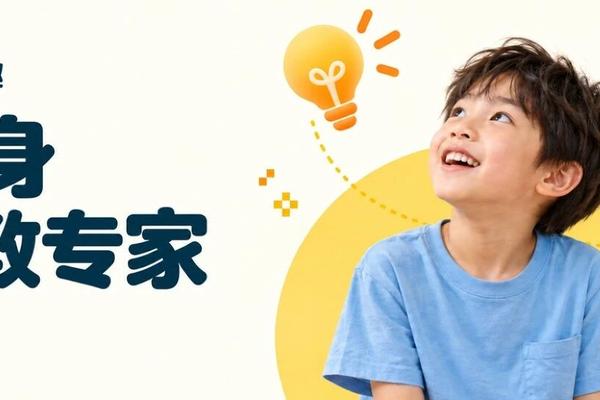
Wang Ziwei said that the positioning of Waiwu Zhiqu’s first product is to create a “portable early education expert” for children.
In terms of product form, the first hardware product of Waiwu Zhiqu is a lightweight and minimalist wearable hardware. To achieve this vision, behind the hardware, they designed an active multimodal Agent architecture, which allows AI to record and understand the real life of children anytime and anywhere — through communication with children and understanding of daily family interactions, it helps children to follow their curiosity and exploration, and helps parents to carry out growth enlightenment for children.
Wang Ziwei told 36Kr that their entrepreneurial origin comes from the observation and thinking on the real education dilemma of young children.
The reason for choosing the age of 3 as the starting point is that children at this stage begin to be able to express their ideas more completely, and enter a period when they are particularly eager to ask “why” and take the initiative to explore the world; at the same time, children start kindergarten, expand their activity radius, and often get out of the sight of their parents.
The reason for taking 8 years old as the upper age limit of the first stage is that the period before 8 years old is the key period for children’s development and enlightenment. “WHO defines 0–8 years old as the early childhood development stage; UNICEF data shows that children’s brains reach about 80% of adult volume at the age of 3, and about 90% at the age of 5, and the window of opportunity for rapid development gradually narrows around the age of 7.”
In his view, scientific parenting is not to shape children with a set of standards, but to protect children’s natural curiosity, desire for exploration and creativity on the basis of understanding the law of child development. Children’s curiosity does not occur according to the curriculum, early education often occurs in the interaction in daily life, but most dual-working parents are often difficult to be present all the time.
On the other hand, when real problems come, parents also lack effective coping methods, for example, when children suddenly break down and cry, which requires systematic learning and understanding.
At the same time, adults’ perceptual abilities have been closed in daily life: when taking children for a walk, they can’t hear the chirping of insects and birds, and can’t describe green trees and red flowers in detail.
He shared a real example around him: when adults show their children the Chinese-style picture book *The Story of Peach Blossom Spring* by Cai Gao, they want to use it to give children aesthetic enlightenment, but if the parents themselves do not have the corresponding appreciation ability, they can only talk about “green trees and red flowers” superficially. The boundary of parents’ language often determines the cognitive boundary of children.
Therefore, they hope to rely on the continuous evolution of AI capabilities to create an AI hardware that more families can afford and can be present at any time — this hardware is like an early education expert, which can provide early education support according to the family environment, the development stage of the child, and the issues that parents care about at the moment.
To realize this product idea, under the hardware “shell”, Waiwu Zhiqu has created a set of Agent system specially adapted to the characteristics of children’s interaction, which specifically includes three major aspects: interaction, memory and evaluation.
“You measure this Agent the way you measure an early childhood teacher,” Wang Ziwei said, “We are essentially benchmarking the capabilities of an early education expert.”
Waiwu Zhiqu
After the first product, Waiwu Zhiqu will continue to expand the product matrix around the children’s growth companion scenario, covering more scenarios and a wider age group, and providing more professional capabilities.
The following is the edited record of the conversation between 36Kr and Wang Ziwei
36Kr: How do you summarize your product direction in one sentence? What is the user profile of your target users?
Wang Ziwei: The direction we have recently converged to is “early education assistant living in daily life”. The first generation of products targets the domestic market, and the users are families with children aged 3–8.
In many families, parents are not at home during the day, and it is often grandparents and nannies who accompany children for a long time. Of course, grandparents and nannies provide very important emotional companionship, but there are huge differences between different families in terms of knowledge breadth, answering complex questions, reading picture books together, and some new educational concepts and communication methods.
The advantages of Agent lie in more systematic analysis of massive information, wider access to knowledge, more stable response, and the ability to continuously adjust its expression according to the child’s age and family education goals. From these dimensions, the capability of Agent is most likely higher than the average level of human beings, but it can never and should not replace parents. Our positioning is to provide cognitive companionship when parents are not around, and play an auxiliary role when parents are around.
36Kr: What is hidden under the hardware is your core system, how does it function specifically?
Wang Ziwei: It mainly consists of interaction system, memory system and evaluation system.
Interaction system: The first threshold for children’s AI is to let the child finish speaking, truly understand what he wants to express, and solve the problem of keeping the conversation going. Children’s expression is different from adults’: their pronunciation and articulation are not clear, they use inverted sentences, speak while thinking, use a lot of references like “this” and “that”, and will no longer want to speak once they get frustrated a little.
Memory system: Memory serves the goal. People with the same capability but different goals have different processing logic for memory.
Our goal is to build an early education Agent, which needs to understand a child around his real day: what he passively hears or sees, what he actively asks or records, what he pays attention to repeatedly recently, and find connections between these seemingly scattered pieces of information. More importantly, children are changing rapidly. Many preferences of adults will not change for several years, but the language ability, interests and way of understanding of a 4-year-old child may be completely different after a few months. Therefore, memory needs to be continuously updated as the child develops.
Evaluation system: Evaluation is to build a closed loop of feedback, to evaluate whether the interaction between the Agent and the child is effective, whether the suggestions given to parents are targeted, whether the suggestions have really entered the family life, and to continuously observe the changes of children and families in the follow-up period.
In summary, for children’s Agent, we will not only look at its interaction capability, but also see whether it can grow up with the child, and truly share the pressure of continuous observation, understanding and judgment for parents.
36Kr: There are many children’s companion products on the market now, the biggest problem is the low retention rate, children prefer to chat with smart speakers or Doubao, what do you think is the crux of the problem?
Wang Ziwei: First of all, real people are always better than all products. The reason for poor retention may be the insufficient capability of the products.
Children’s companionship cannot be solved by roles or IP images.
Many products start with role-playing, or make the expression very childish, but when you really start chatting, the answers are very long and verbose. Generally, children can’t listen to more than 50 words, and the interruption rate is extremely high. Children are actually very direct. Whether he is willing to continue chatting depends first on whether the AI can understand him, respond fast enough, speak in a way he can understand, and can catch the next round of conversation. Children are willing to chat with Doubao because of its strong capability.
I think the ranking of children’s chat partners is real people (parents > grandparents) > Doubao > others. This is essentially a capability ranking.
36Kr: Many investors may be concerned that the current decline in birth rate will affect the children’s market?
Wang Ziwei: I can give two judgments. First, no matter how much the number of newborns drops, the minimum number of newborns per year is at least 6 to 7 million, which is still a rare large single market in the world.
Second, the children’s market can not only look at the number of children, but also look at how much a single family is willing to invest in one child. The other side of low fertility is that family resources are increasingly concentrated on fewer children. The unit price of customers in the high-end segmented market aged 0–3 rises significantly every year. In the past, people bought bottles casually, but now they will definitely buy a certain brand. People who are willing to have children are also willing to raise them, which is “6 pockets raising one child”. After people’s education level rises, their purchasing power rises directly, and the trend of high-end brands is obvious.
Homepage image source | Photo provided by the enterprise
Typesetting | SHEN Qi
Welcome to communicate
Source link