
Incorporating indigenous medicinal herbs into foot care products.
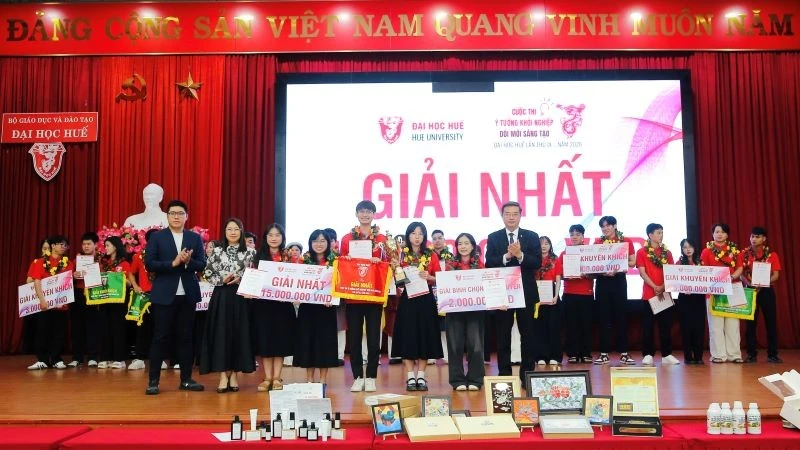
Winning first prize and the “Most Popular Project” title at the 9th Hue University Innovation Startup Ideas Competition in 2026, the “An Tuc Herbal Gel Socks” project by a group of students from the University of Medicine and Pharmacy, Hue University, attracted attention with its idea of developing a foot care product from natural ingredients. Behind the project is the desire to bring traditional Hue medicinal herbs into modern life, while also contributing to enhancing the value of local raw materials.
Nguyen Huu Nhat Hoang, a fifth-year pharmacy student at Hue University of Medicine and Pharmacy, representing the project team, said the idea originated from recognizing the potential of abundant medicinal plants in the mountainous areas of Hue city, including Nam Dong commune. Many medicinal plants are used by local people in traditional medicine, but there is still room for development into products with higher practical applications.
Notably, the product is the Centella asiatica plant (a perennial plant belonging to the Araceae family, also known as *Dioscorea opposita*, *Dioscorea japonica*, or *Dioscorea auricularia*). Recognizing the potential of this medicinal herb, a group of students from Hue University of Medicine and Pharmacy chose Centella asiatica as one of the key ingredients to develop a foot care product. The “An Tuc Herbal Gel Socks” are designed as silicone socks with an inner layer of herbal gel, combining four ingredients: Centella asiatica, Gac fruit seeds, aloe vera, and ginger essential oil.
According to the authors, the selection of ingredients was based on inheriting the experience of using medicinal herbs in traditional and folk medicine, while also aiming for convenience in at-home foot care. The group focused on the use of *Centella asiatica* and gac fruit seeds based on their experience in some folk remedies; aloe vera was added to moisturize and soften the skin, while ginger essential oil contributed to a warming sensation during use.
What’s noteworthy about An Tuc’s approach isn’t just the combination of ingredients, but also the way they approach a startup idea from the professional perspective of pharmacy students. Instead of simply showcasing the value of medicinal herbs, the student group aims to develop a specific product that can be further refined in terms of formula, design, user experience, and commercialization potential.
At the final round of the Hue University Innovation Startup Idea Competition 2026, “An Tuc Herbal Gel Socks” beat seven other projects to win first prize worth 15 million VND. This project also received the “Most Popular Startup Project” award with 3,027 votes. This result provides further motivation for the student team to continue refining their product and aim for larger-scale startup competitions.
However, the journey from a highly regarded idea to a marketable product still requires many further steps. For “An Tuc Herbal Gel Tights,” perfecting the formula, evaluating quality and safety, verifying user experience, determining production costs, and developing a business plan will be crucial for long-term growth. This is also the process by which an idea originating from a university setting gradually meets the practical demands of the market.
From competitions to incubation ecosystems and investment networking.
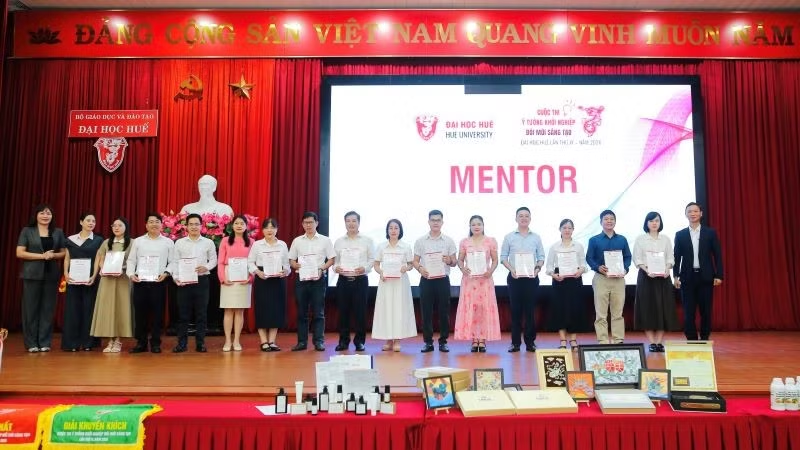
A highlight of this year’s competition is the organization of the semi-final round as a three-month incubation program, providing support for product refinement, business model validation, marketing plan development, and connection with startup mentors, for 29 project teams.
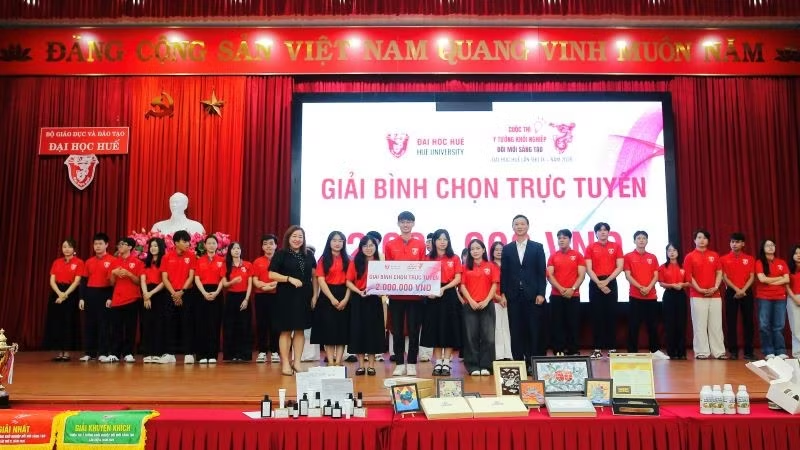
According to the competition organizers’ summary, approximately half of the teams have completed their products; some projects have initially generated revenue or seen their first uses from actual customers. These results demonstrate that the value of the competition lies not only in rankings or prizes, but more importantly in the process of helping learners move from idea to experimentation, user engagement, and identifying problems to solve before bringing the product to market.
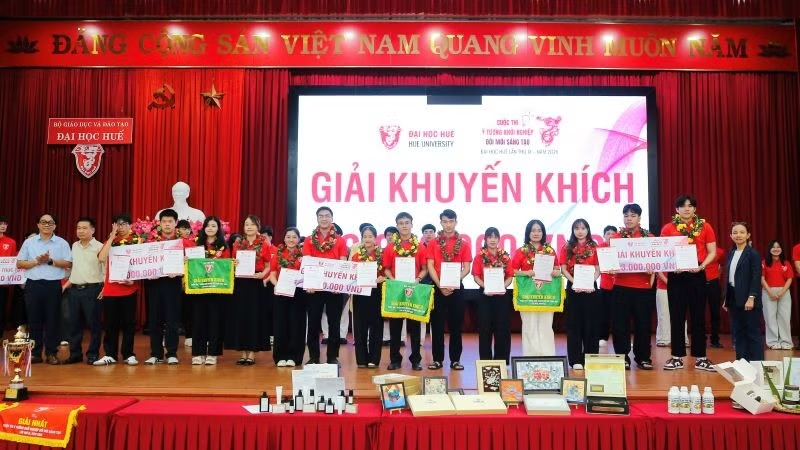
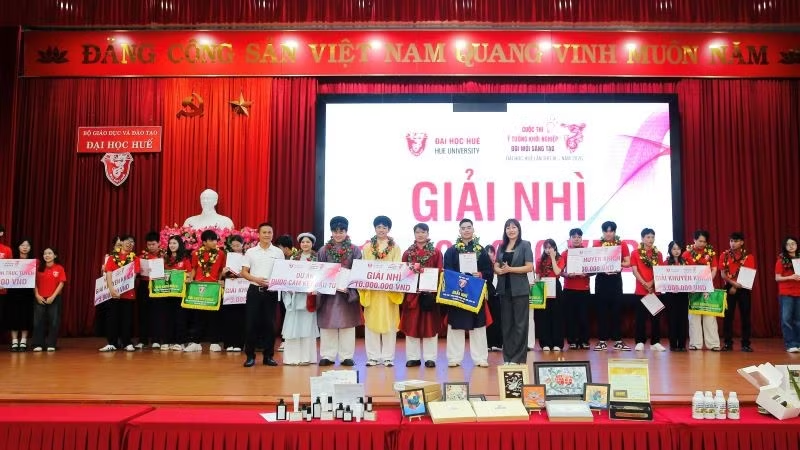
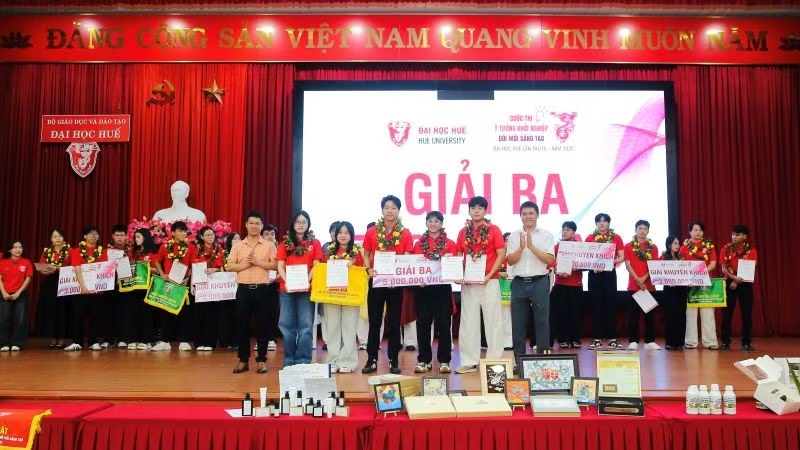
The final round of the Innovative Startup Ideas Competition brought together 8 projects from various fields: education, culture, agriculture , medicine, and technology. Besides the “An Tuc Herbal Gel Socks,” the second prize went to the “Oh! Hue Turmeric” project from Hue University of Science; and the third prize went to the “Organic Fertilizer from Shrimp By-products” project from Hue University of Agriculture and Forestry.
The projects also address practical challenges, ranging from supporting children and promoting Hue’s cultural values to utilizing agricultural by-products and developing tools for foreign language learning. Through these projects, students have the opportunity to apply their specialized knowledge, work interdisciplinaryly, hone their business thinking, and better understand the requirements of innovative entrepreneurship.
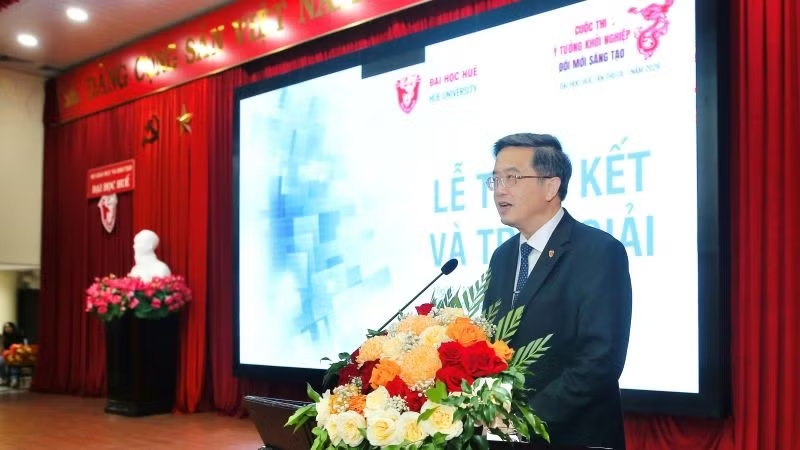
Speaking at the closing ceremony, Professor, Dr. Nguyen Vu Quoc Huy, Acting Director of Hue University, highly appreciated the results of the incubation program, considering it a foundation for students to accumulate experience and practical approaches in innovative entrepreneurship.
“According to the direction set by Hue University, the incubation program will be gradually transferred to member universities and affiliated units; at the same time, it will strengthen the connection between projects that have gone through incubation and investors and startup support funds,” Professor, Dr. Nguyen Vu Quoc Huy emphasized.
Following the competition, promising projects will continue to receive support from Hue University for further development, investment connections, and participation in the National Innovation and Entrepreneurship Festival (Techfest 2026) and the Student Startup Idea Competition (SV_STARTUP) in 2027.
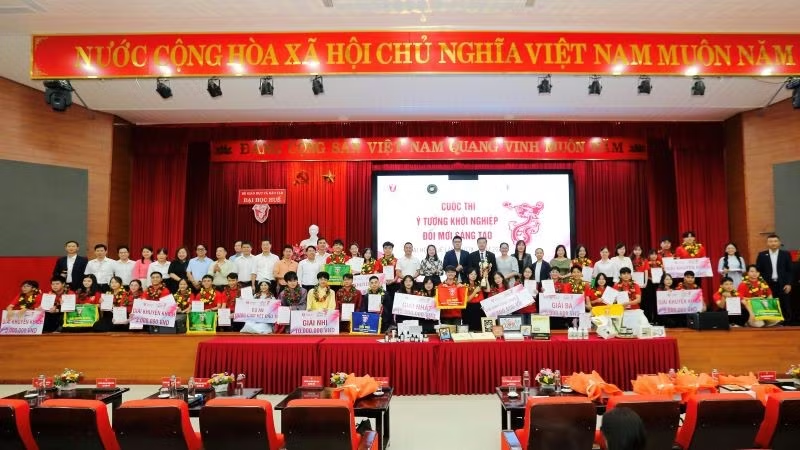
The Innovative Startup Ideas Competition can become a practical link in the startup ecosystem of Hue University, contributing to bringing knowledge from the classroom closer to life and the needs of local socio-economic development.