UK startup Allye (pronounced like ally), has put spent batteries from electric vehicles (EV) back into use and built a 400 kW fast charger from them. The approach lets sites deliver fast charging to cars without requiring a grid upgrade to accommodate new charger installations.
The EV industry is delivering on its promise of longer-range cars and a charging infrastructure owners can rely on. However, there is a bigger problem that we will soon face, one where a large number of EV batteries will come to their end of life. These spent batteries may not be suitable for a car but definitely have enough juice in them that does not warrant them being destroyed.
London-based Allye has found the right solution to this problem. Using spent EV batteries to charge other EVs. The biggest advantage of this approach is that such chargers can be installed in any location and use their existing electricity supply to offer charging services. This avoid high upfront costs for a connection upgrade to the grid to install a new EV charging service.
Short of power
The rollout for EV charging for large fleets is painstakingly slow. The common hurdle in the process is lack of grid capacity that can handle a large number of chargers at once. Allye, however, argues that what charging stations lack is not energy but power to deliver it.
Once range anxiety was addressed, users also wanted their EVs to be quick to refuel like their gasoline-powered counterparts. It is perfectly okay if the car needs the whole night to charge at home, but when you are on the road, chargers can’t take hours to get your vehicle ready. Charging must happen in minutes, and this is where spent batteries can help.
Even in their second life, EV batteries work sufficiently well to charge over slow connections. When an EV comes in, a battery pack can quickly transfer its charge to a drained battery and resume charging. This is exactly what Allye is doing with its battery-buffered chargers and does so in two different forms.
MAX300 and MEV
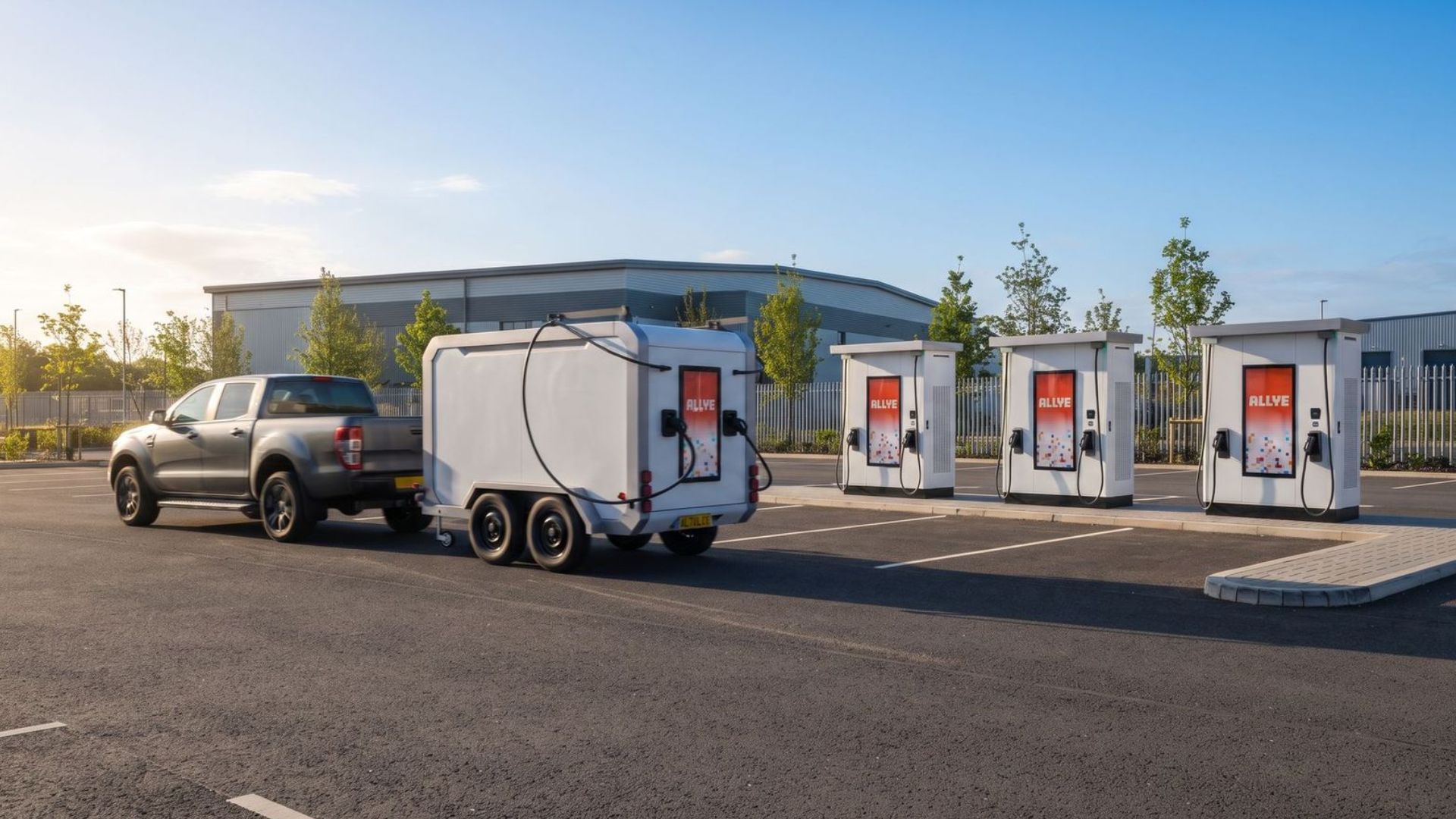
Allye built the MAX300 from repurposed batteries to charge vehicles directly where they are. This is much like a mobile diesel generator, which takes energy to the place where it is needed the most.
The company has more than 20 installations of this portable charger that can be moved around by a pickup truck and delivers 400 kW of fast charging with its integrated charger.
Mobility is not the main use case for EV chargers. Allye also built a fixed charger on the same concept. Called MEV, the charger is designed to charge two vehicles at once and can have a larger storage capacity, much like an underground fuel tank at a pumping station.
Allye’s biggest challenge is that the batteries it uses are not at the same level. To overcome this, the startup gives power control and battery management to each pack, so that even batteries of different chemistries or ages are working together, they work as one unit.
The MEV is available in two variants, not based on the capacity of the battery pack but on the power outlet available at the site. Reusing old batteries saves anywhere between 15 and 24 tonnes of CO2 per MEV, when compared to new cells. However, using existing power outlets can save the facility hundreds of pounds by deferring an upgrade to the grid.
Deliveries of the MEV are expected in Q2 2027.