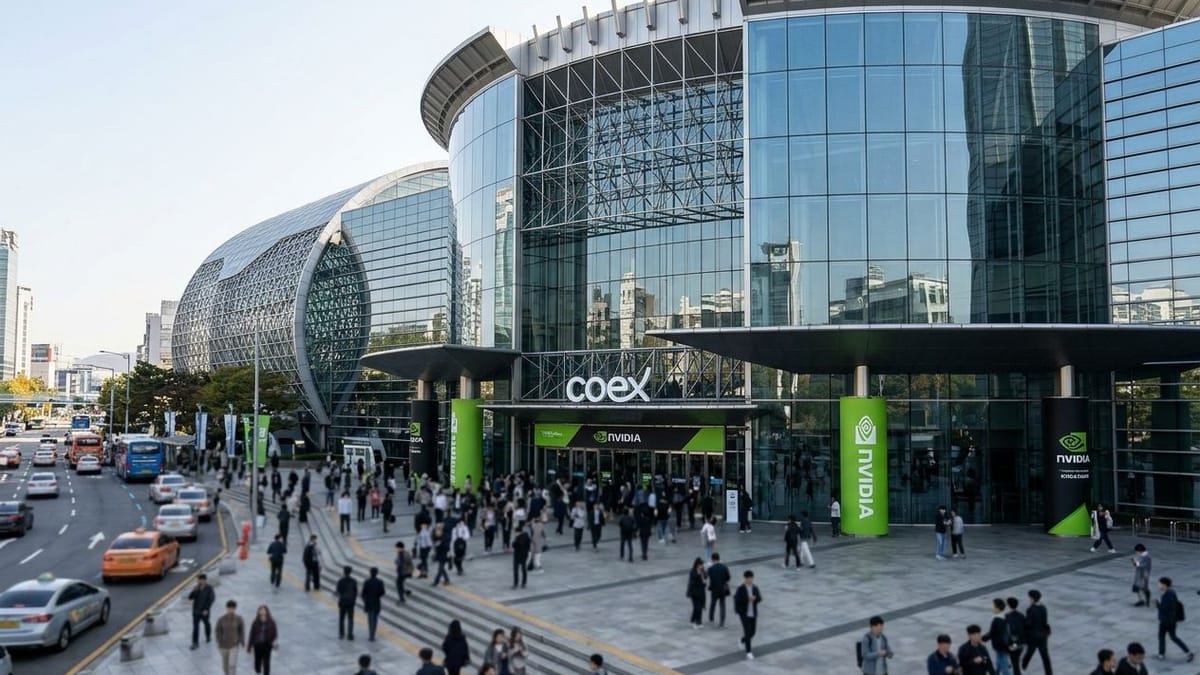
Nvidia just made its latest bet on Korea’s AI ecosystem, announcing an investment in startup Point2 during a high-profile partnership forum with the country’s Ministry of Science and ICT. The MSIT-NVIDIA AI Startup Partnership Forum at COEX in Seoul brought together more than 20 Korean startups spanning foundation models, physical AI, AI infrastructure, and semiconductors, signaling the chipmaker’s deepening commitment to the region even as it navigates mounting scrutiny over Chinese intelligence ties back home.
Nvidia is doubling down on Korea’s AI startup scene with a fresh investment in Point2, announced during a partnership forum that brought the chipmaker face-to-face with the country’s most promising AI companies. The MSIT-NVIDIA AI Startup Partnership Forum at COEX in Seoul drew Vice Minister of Science and ICT Ryu Je-myung alongside Nvidia executives, creating a rare direct line between Silicon Valley’s AI infrastructure kingpin and Korea’s emerging startup ecosystem.
The event convened more than 20 Korean startups working across four critical AI domains: foundation models, physical AI, infrastructure, and semiconductors. It’s a strategic spread that mirrors Nvidia’s own product roadmap and hints at where the company sees Korea fitting into the global AI supply chain. Point2, the recipient of Nvidia’s investment, operates in a space the chipmaker clearly views as strategically important, though financial terms weren’t disclosed.
The timing is notable. Just hours before the Seoul event, Nvidia’s board launched an investigation into CEO Jensen Huang over his relationship with a tech executive allegedly recruited by Chinese intelligence. The Korea push suggests Nvidia is working to diversify its Asian partnerships beyond China, where export controls have already forced the company to navigate a complex regulatory minefield.
Korea has emerged as a key theater in that strategy. Earlier this week, Nvidia announced it was pushing physical AI into Korea’s manufacturing core through partnerships with Samsung and other Korean firms focused on factory-floor AI deployment. That followed a separate deal to partner with Rebellions and SK Telecom on sovereign AI infrastructure, opening Nvidia’s NVLink platform to Korean companies.
The MSIT partnership adds a venture dimension to what’s becoming a multi-layered Korea strategy. By investing directly in startups like Point2, Nvidia isn’t just selling chips or licensing technology but embedding itself in the country’s AI innovation pipeline from the ground up. It’s a playbook the company has run successfully in other markets, using early-stage investments to shape ecosystems around its CUDA platform and GPU architecture.
Foundation models, one of the four focus areas at the forum, represent a particularly interesting bet. Korea has been working to develop sovereign large language models as an alternative to US-dominated options from OpenAI, Google, and others. Nvidia’s involvement in that effort through startup partnerships could give it influence over how those models are built and what hardware they run on.
Physical AI, another forum focus, aligns directly with Nvidia’s recent product launches. The company has been pushing hard into robotics and autonomous systems, areas where Korean manufacturers like Samsung and Hyundai have deep expertise. Startups working on physical AI applications could become integration partners or even acquisition targets as Nvidia builds out its Omniverse platform for industrial simulation.
The AI infrastructure and semiconductor startups at the event represent the picks-and-shovels layer of Korea’s AI ambitions. As the country works to reduce dependence on foreign chip technology, homegrown semiconductor startups could become critical suppliers or partners for Nvidia’s own manufacturing needs. The company has already demonstrated willingness to work with regional chip designers through its Rebellions partnership.
What’s less clear is how the Point2 investment fits into Nvidia’s broader capital allocation strategy. The company has been relatively selective with direct startup investments compared to corporate venture arms at Microsoft or Google, preferring to let its Inception program provide technical support and market access rather than cash. A direct investment suggests Point2 is working on something Nvidia views as strategically essential, not just promising.
The government’s involvement through MSIT adds another dimension. Korea has been aggressively courting AI investment as part of a national strategy to become a global AI hub, offering tax incentives, regulatory sandboxes, and direct funding to promising startups. The ministry’s co-hosting of the Nvidia forum signals official backing for deeper US-Korea AI collaboration, even as geopolitical tensions with China create pressure to pick sides.
For the 20+ startups that attended, the forum represents a potential fast track to Nvidia’s ecosystem. Access to the company’s technical resources, customer relationships, and distribution channels can be transformative for early-stage AI companies. But it also creates dependence on Nvidia’s platform choices and strategic priorities, a trade-off Korean policymakers will need to navigate carefully as they build sovereign AI capabilities.
The Seoul event comes as Nvidia faces mounting challenges on multiple fronts. Beyond the board investigation into Huang, the company is dealing with revelations that its H200 chips reached China through a ghost company with empty offices, raising questions about export control compliance. Korea partnerships offer a way to maintain Asian market presence while staying on the right side of US regulators.
Nvidia’s Korea moves also contrast with its approach in other markets. While the company has focused on large-scale infrastructure deals in the Middle East and enterprise partnerships in Europe, Korea is getting a startup-focused strategy that could yield longer-term ecosystem benefits. It’s a recognition that Korea’s combination of advanced manufacturing, government support, and technical talent creates unique opportunities for early-stage collaboration.
Nvidia’s Point2 investment and MSIT forum participation mark a strategic shift toward deeper startup engagement in Korea, complementing recent manufacturing and infrastructure partnerships. As the chipmaker navigates investigations and export controls related to China, Korea is emerging as a critical alternative hub for AI collaboration in Asia. The success of this startup-focused approach could influence how Nvidia builds ecosystems in other markets, particularly as geopolitical pressures force more careful geographic diversification. Watch whether other Korean startups from the forum announce Nvidia investments or partnerships in coming weeks, and how the Point2 deal structures equity versus strategic collaboration.
