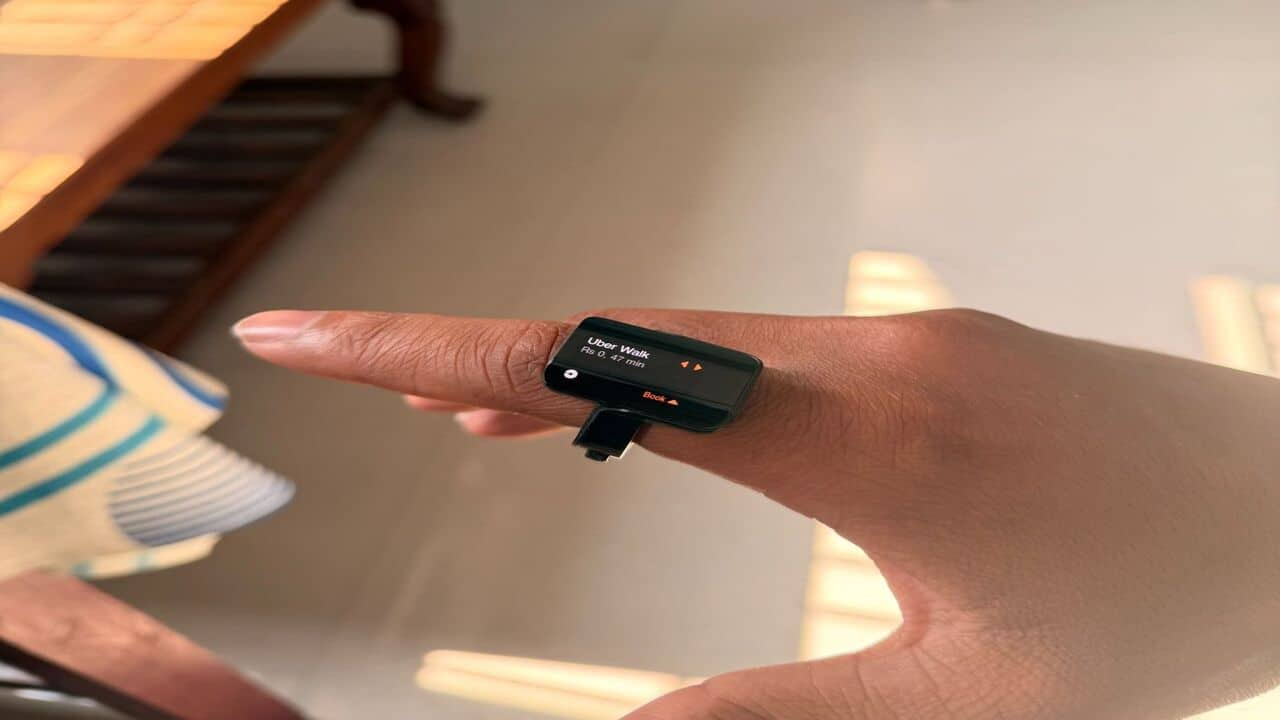
A wearable ring that can book cabs based on a user’s stock market profits and losses has caught the internet’s attention after a tech enthusiast shared an unusual experiment involving his Aina ring. The quirky use of artificial intelligence, which linked his Zerodha trading performance to his choice of commute, has sparked amusement and curiosity on social media.
In a viral LinkedIn post, techie Pankaj Sharma shared a picture of his Aina ring and revealed that he had configured it to suggest cab bookings based on his Zerodha portfolio’s profit and loss (P&L).
“I was bored, so I made my Aina ring book cabs based on my Zerodha P&L 🚨 Green = Uber Black, red = auto maybe? Today it’s suggested walking instead,” Sharma wrote.
Essentially, the experiment linked his stock market performance to his travel preferences. When his portfolio was in the green, the system would opt for a premium Uber Black ride. A red portfolio meant he might have to settle for an auto-rickshaw. However, on the day of his post, the ring apparently suggested walking instead.
What is the Aina ring?
Aina is a wearable device built around a context-aware operating system designed to understand a user’s routines, preferences and everyday activities. Rather than functioning like a conventional smart ring that primarily tracks health and fitness metrics, Aina aims to use context gathered from a user’s phone, applications, AI agents, Mac and calendar to anticipate what they might need.
Once it learns a user’s habits, the system is designed to surface relevant actions without requiring them to open multiple applications. For instance, it could help initiate a cab booking before a commute, allow someone to join an upcoming meeting with a simple gesture or approve a decision requested by an AI agent.
The device uses simple gestures to interact with its system. Users can flick to approve routine actions and hold the ring to speak when an instruction requires additional context.
Sharma’s experiment, however, prompted users to imagine both the possibilities and the limitations of such context-aware technology.
One user jokingly pointed out that the system would need certain safeguards to prevent its suggestions from becoming too extreme.
“Put limitations else someday it may suggest to take airplane and other day it may suggest to crawl,” the user commented.
Another user appreciated the experiment but felt that the technology could benefit from an additional feature, writing, “Loved the use case. But vibe keyboard is much needed on my fingers.”