
Draper, Utah — November 25, 2026
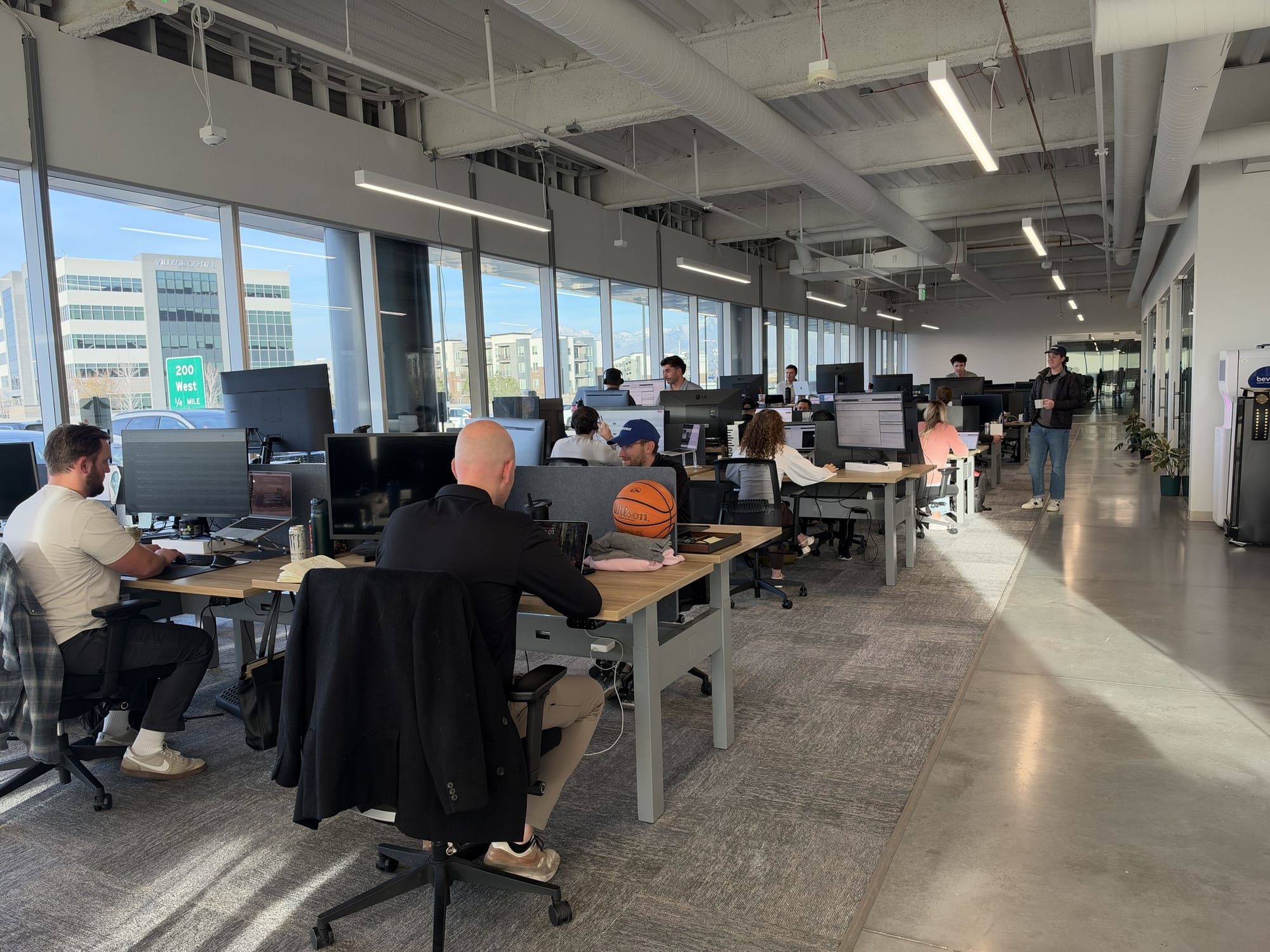
The Draper office has grown from about 22 employees to 50 in a year, giving the New York-based company a substantial operating center as it expands financial tools for contractors and other field-service businesses.
When Coast began building an operation in Utah, the company was looking for more than a lower-cost place to locate employees. It wanted access to a concentrated talent pool that could support a growing sales organization and provide experienced people capable of building and leading a second office.
Nearly three years after establishing its Utah presence, the New York-based financial technology company has made that office a significant part of its operations. Coast’s Draper team has grown from just over 20 employees to 50 in 2026, with five additional employees scheduled to start shortly after the company’s November interview with TechBuzz.
Christian Rennie, Coast’s vice president of sales and head of the Draper office, expects the office to continue expanding in 2027.
“I anticipate similar growth in 2027 as we experienced in 2026,” Rennie said.
The growth is taking place as Coast expands its financial platform for businesses in the physical economy, including electrical, plumbing, HVAC, landscaping and construction companies. The company started with a fuel card designed for businesses operating vehicle fleets and has broadened its offering to include corporate cards, expense management and bill payment.
Coast recently announced $35 million in new growth equity funding, led by Thomvest Ventures, a San Francisco-based venture capital firm, with participation from new investors Intuit Ventures, the corporate investment arm of Mountain View, California-based Intuit, and Small World Capital, a New York-based investment firm. The company said the capital will support customer growth and the development of a broader financial operating system for businesses in the physical economy.
For Utah, the expansion represents a growing technology employer whose local operation handles much more than sales calls. The Draper office includes Coast’s entire business development department, a substantial portion of its account executives, customer success teams, most of its customer support organization and selected operational functions.
Building a second operating center in Utah
Coast established its Utah presence with assistance from the Economic Development Corporation of Utah (EDCUtah), the nonprofit organization that works to attract and support business investment in the state. EDCUtah helped facilitate the company’s expansion into the Utah market, connecting Coast with the state’s business ecosystem and resources. The team initially worked from Kiln Gateway before moving to its current Draper location about 18 months ago.
The company is headquartered in New York, and Draper is its only other office. Rennie said Coast has approximately 100 employees in New York and 50 in Utah. The company operates with a four-day in-office schedule, and Rennie said it does not have remote employees.
Rennie joined Coast at the beginning of 2026, so he was not involved in the original decision to establish an office in Utah. But he said the company’s reasoning was discussed during his recruitment and after he joined.
“The first and most important” consideration was talent density, he said. Coast needed a market with enough experienced professionals to help lead a second office, along with a strong pipeline of people for sales and business development roles.
The region’s established financial technology sector was another consideration. Rennie spent much of his career at Utah fintech companies Divvy and Bill, and he sees the area’s experience in financial technology as an advantage for Coast.
The final consideration, he said, was whether the company’s CEO would enjoy traveling to the market regularly. Rennie did not identify the other metropolitan areas Coast evaluated before choosing Utah.
The talent pipeline has become a central part of the office’s growth. Coast’s entire business development representative department is based in Utah, and many of those employees are recent college graduates.
Rennie pointed to the concentration of universities along the Wasatch Front, including Weber State University, the University of Utah, Utah Valley University and Brigham Young University. Those institutions provide a steady source of candidates, while the region’s established technology workforce offers professionals with 10 to 15 years of experience.
Coast has also developed relationships with university sales programs and student organizations. Rennie specifically cited Weber State’s sales program and BYU’s Sales Society. The company has hired several Weber State graduates, he said, and has been pleased with their performance.
Sales-focused education, competitions and internships are important recruiting channels. Coast also looks for candidates with accounting and finance backgrounds.
“Being a fintech, we also like the accounting and finance backgrounds,” Rennie said. Many of the Utah positions are customer-facing, he explained, and employees benefit from understanding financial statements and being able to communicate with the accountants and office managers who work for Coast’s customers.
Financial tools designed around contractors
Coast describes itself as a financial platform for businesses that operate in the physical economy. Its customers include companies whose employees spend their days traveling between job sites, purchasing materials and supplies, maintaining vehicles and managing the costs associated with individual projects.
Those businesses have financial requirements that can differ substantially from those of a software company or another business with relatively straightforward office expenses.
An electrical contractor, for example, may operate a fleet of trucks, purchase fuel and equipment, maintain inventory, and assign expenses to multiple jobs. Managers need to know not only what employees are purchasing, but which vehicle or project the expense belongs to and whether the work is staying within budget.
Rennie said Coast was built around those operational details rather than adapting a general-purpose corporate card to a specialized customer.
“These are businesses that have often been overlooked in the past,” he said. He described legacy fuel-card offerings as outdated and said more general financial platforms do not always address the specific needs of contractors and field-service companies.
Coast’s core product is a payment card with controls intended to help businesses manage spending and reduce unauthorized purchases. Employees can use the card for fuel, supplies and other business expenses. Transactions can be categorized in real time and connected to the accounting tools and other systems a company already uses.
The company also offers bill payment for expenses that need to be paid by ACH or check. That can be important for contractors purchasing inventory or working with vendors that offer discounts for particular payment methods.
Coast does not provide payroll or human resources software. Its focus is on the payment and expense-management side of business operations.
One of the problems the platform is designed to address is the delay between an employee making a purchase and the business recording that expense against a job.
Rennie described a familiar process for companies using conventional credit cards: Employees complete work across several projects, accumulate receipts and turn them in later. Weeks into the following month, someone in the office must reconstruct which purchases belong to which jobs. Receipts may be missing, and project managers may not know how much a job is costing until the work is already complete.
With Coast, an employee receives a notification when a purchase is made and can immediately assign it to a job and upload the receipt through the app. That information is then available for the company’s accounting process.
“You have a real-time view of what each job is costing,” Rennie said.
That visibility can help managers identify expenses that are trending over budget while there is still time to respond. It also reduces the administrative work associated with collecting receipts and reconciling transactions after the fact.
Managing fleet expenses and fuel fraud
Fleet management creates another set of challenges for businesses with employees on the road. Fuel purchases are recurring expenses, but they can also create opportunities for misuse.
Rennie described an example in which an employee fills a company vehicle and then uses the same fuel-pump transaction to fill a second, personal vehicle. Coast integrates with telematics providers that track vehicle location and other information, allowing businesses to apply controls based on the vehicle and its fuel capacity.
The system can help prevent a vehicle from being fueled beyond its tank capacity or a company card from being used when the associated vehicle is not at the fuel location.
Coast also works with fleet technology providers such as Samsara and Fleetio. Those integrations are part of a broader effort to connect payment information with the operational systems contractors already use to manage vehicles and employees.
For a business with a large fleet, the value of that information is not limited to identifying suspicious fuel purchases. It can also give managers more control over spending policies and help them understand costs across vehicles, employees and jobs.
The company charges a per-user fee for its card offering and, according to Rennie, does not require customers to commit to long-term contracts. He said Coast’s revenue is tied to continued customer use and spending.
“We’re winning the business every day,” he said.
That model puts an emphasis on retaining customers by demonstrating ongoing value, rather than relying on a long-term contract to keep a customer in place.
Funding the next phase of growth
Coast’s $35 million funding announcement comes as the company seeks to expand beyond its original fuel-card product. The round was led by Thomvest Ventures, with new investment from Intuit Ventures and Small World Capital. Existing investors also participated.
The company said it plans to use the funding to expand its financial platform, invest in AI-powered expense automation, develop Bill Pay and Accounts Payable capabilities, and pursue embedded partnerships with fleet and field-service software platforms.
The broader strategy is to become a more comprehensive financial operating system for companies in industries such as construction, HVAC, plumbing, electrical services, landscaping, transportation and utilities.
The funding announcement also reflects growing investor interest in the businesses that support the physical economy. As investment in infrastructure and data centers drives demand for construction, electrical work, cooling systems and other services, the contractors performing that work face increasingly complex operating requirements.
Coast’s stated opportunity is to provide financial tools that account for those requirements, rather than treating contractors as another category of general business customer.
Rennie did not discuss the funding round’s specific allocation during the interview. Coast’s public announcement describes the company’s product and partnership priorities, but the company has not provided a specific breakdown of how the investment relates to its Utah hiring plans.
A growing role for the Draper office
Although Coast serves customers throughout the United States, Rennie said its customer base is relatively evenly distributed geographically. Utah customers were not a primary factor in the original decision to establish the office, he said, although the state has a higher concentration of Coast customers on a per-capita basis than its population might suggest.
The local team also gives Coast employees opportunities to meet customers in person. Rennie cited recent visits to an electrical contractor and a home builder in Utah.
The Draper office’s responsibilities have expanded well beyond a local sales presence. With business development, account executives, customer success, support and operational employees working from the location, it functions as a substantial part of Coast’s day-to-day business.
Rennie said the company expects continued hiring in revenue and operations roles during 2027, although he did not provide a specific headcount target.
For Coast, the Utah operation offers access to university graduates, experienced technology professionals and a regional fintech workforce. For the company, that talent base is helping support a platform aimed at an industry that has often relied on financial tools not designed around the realities of its work.
The next phase of Coast’s growth will test how far that specialized approach can extend—and how much of the company’s expanding operation Utah will help support.
Learn more at coastpay.com.
Share this article