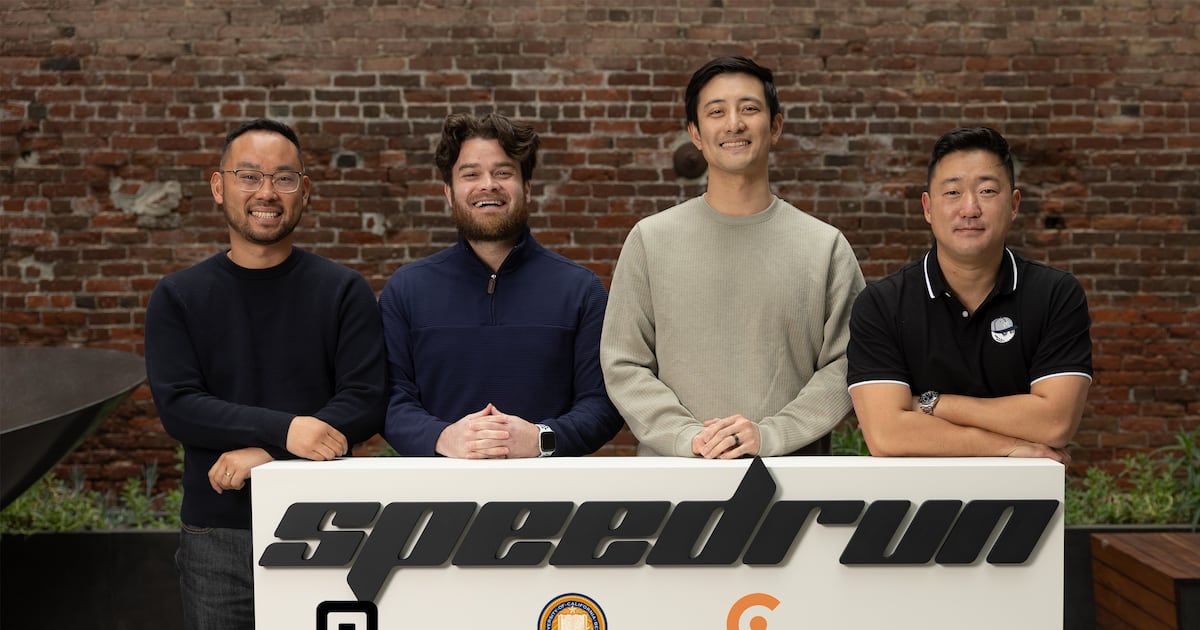
Entrepreneur Shawn Tsao, who co-founded and sold food delivery startup Caviar, has raised a $4.6M seed round for his new venture, sports intelligence firm Snapp AI. Investors include a16z Speedrun, Dorm Room Fund, Gold House Ventures, House Fund and Valia Ventures.
Snapp’s agentic AI has both consumer and enterprise applications, helping users answers questions, surface insights and making data-driven analysis more efficient. Fantasy players and bettors comprise the majority of individual users while Cal football is Snapp’s first team client.
“Our core is that we want to become the best sports intelligence company, whether that is consumer, whether that is teams — it’s the same AI that services both,” Tsao, Snapp’s CEO, explained. As for prioritizing one market or the other, he added, “It’ll probably dual track at the moment since we’re a young company and, honestly, with AI tooling for productivity, we are able to scale products for both sides very quickly.”
The original plan for Snapp was to use open-source large language models to do the work, but Tsao found the data quality and accuracy to be too poor for use at a sophisticated level. Instead, he said his team “Frankenstein’d together” Gemini, OpenAI and Claude to build a tool that he touted as 44% more accurate and 3.2 times faster than a general LLM.
Snapp seeks to take the fragmented sports data ecosystem — taking player stats, tracking data, betting lines and prediction market odds — to help analyze the action, build predictive models and even surface advantageous betting lines. (Tsao noted that sometimes the AI will even steer bettors away from poorly conceived parlays.)
The spark to investigate the use of AI for sports data was a conversation Tsao had with his CTO/Co-founder Alex Marshall about WNBA betting lines. Tsao likens Snapp to an AI agent like Muse, Dots or Duet but fully dedicated to sports. He described one use of a Cal football coach dictating into his AirPods a request for Snapp to pull as much available data as possible on a recruit and then added the player to his worksheet for later reference.
“For bettors, fantasy players and teams, the feedback that we’ve gotten is that stuff that used to take hours or things that they just didn’t want to get to, we got it done for them instantly,” Tsao said.
Tsao was one of five Cal Berkeley students to start Caviar, which they later sold to Square and then to DoorDash for $410M. As a student, Tsao had worked as a student manager for Cal football and was exposed to the inner workings of administering and operating a college program. He wanted to return to sports — which he called his passion, second only, perhaps, to eating — and, in conversation with the football staff, he learned how much gap there was for AI to help the coaches identify talent and recruit those prospects.

