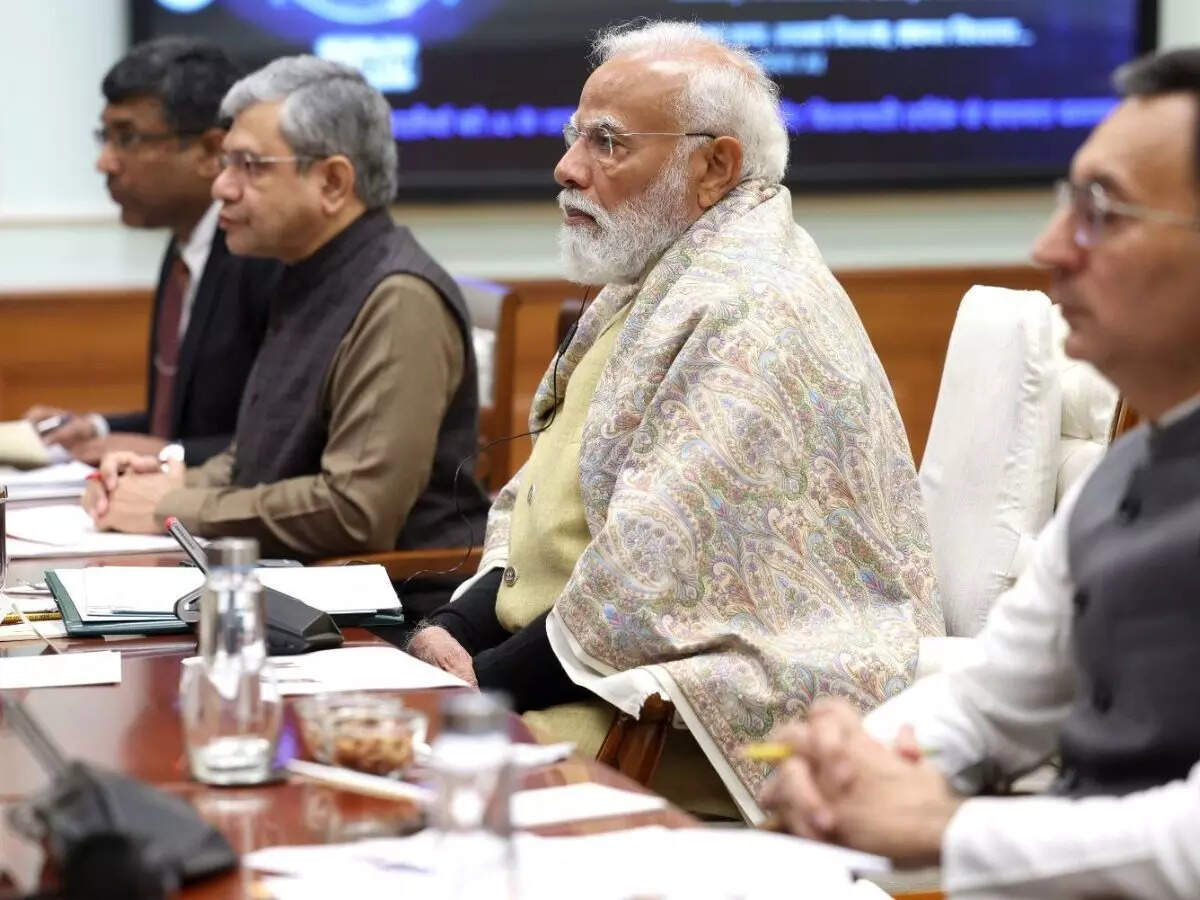
During a closed-door roundtable at his residence on January 8 with about a dozen founders from the IndiaAI Mission cohort, Modi emphasised putting their “best foot forward” by rolling out product demos and launches at the February event. He said India already has the talent to compete on the global stage.
The startups, which were selected under the government’s IndiaAI Mission and operate in sectors such as healthcare, materials science, ecommerce and Indian language models, are committed to capitalising on the summit’s international spotlight to demonstrate scalable AI solutions and use cases.
Founders present in the meeting described it as a strategic push to elevate India’s AI ecosystem beyond prototypes, with Modi highlighting the need for ambitious outcomes rather than basic tools. The meeting was also attended by Union IT minister Ashwini Vaishnaw and senior officials of the ministry of electronics and information technology (MeitY).
They added that Modi stressed the need for safe and authenticated AI, directing Indian founders to prioritise trust, transparency, and watermarking in their models to build user confidence and comply with evolving regulations.
“The prime minister said build in India, for India, but also for the globe. We have the talent density to compete on the global pedestal and contribute significantly to humanity’s AI-native future,” said Sravanth Aluru, cofounder and CEO of Avataar AI, who attended the meeting in Delhi.
“He noted India’s digital transformation has already been proven through success stories like UPI. India has helped US companies in retail, healthcare, manufacturing, B2B, supply chain, and logistics shift to digital-native models over the last two decades. AI now brings a new degree of freedom,” he added.
Founded in 2014 and based in Bengaluru, Avataar AI develops AI solutions and 3D visualisation tools primarily for retail, ecommerce, and enterprise digital transformation. “We will be showcasing real use cases and usable intelligence at the summit. PM Modi called for the IndiaAI Mission to be a collaborative effort,” Aluru said.
Ganesh Gopalan, cofounder and CEO of Gnani AI, said the prime minister pointed to India’s complexity with its many languages and diverse use cases, noting that if you succeed here, you’re ready to take on the world.
“India’s advantage lies in its heterogeneity. We work across 14 languages and multiple industries. Solving complex problems here prepares us for global markets. Recently, we expanded to the Philippines, Japan, and the US, where challenges with languages like Spanish and English are easier to deal with because we’ve already tackled similar multilingual issues in India,” Gopalan explained.
Gnani AI, a conversational AI platform that builds voice-first, agentic AI systems for omnichannel automation, will also showcase use cases of its technology and plans to launch a couple of products in February.
Ayush Gupta of small language model developer Genloop, another company in the IndiaAI cohort, told ET, “The formal strategy discussion followed by an informal conversation was a deep dive into how India doesn’t just participate in the AI revolution but leads it.”