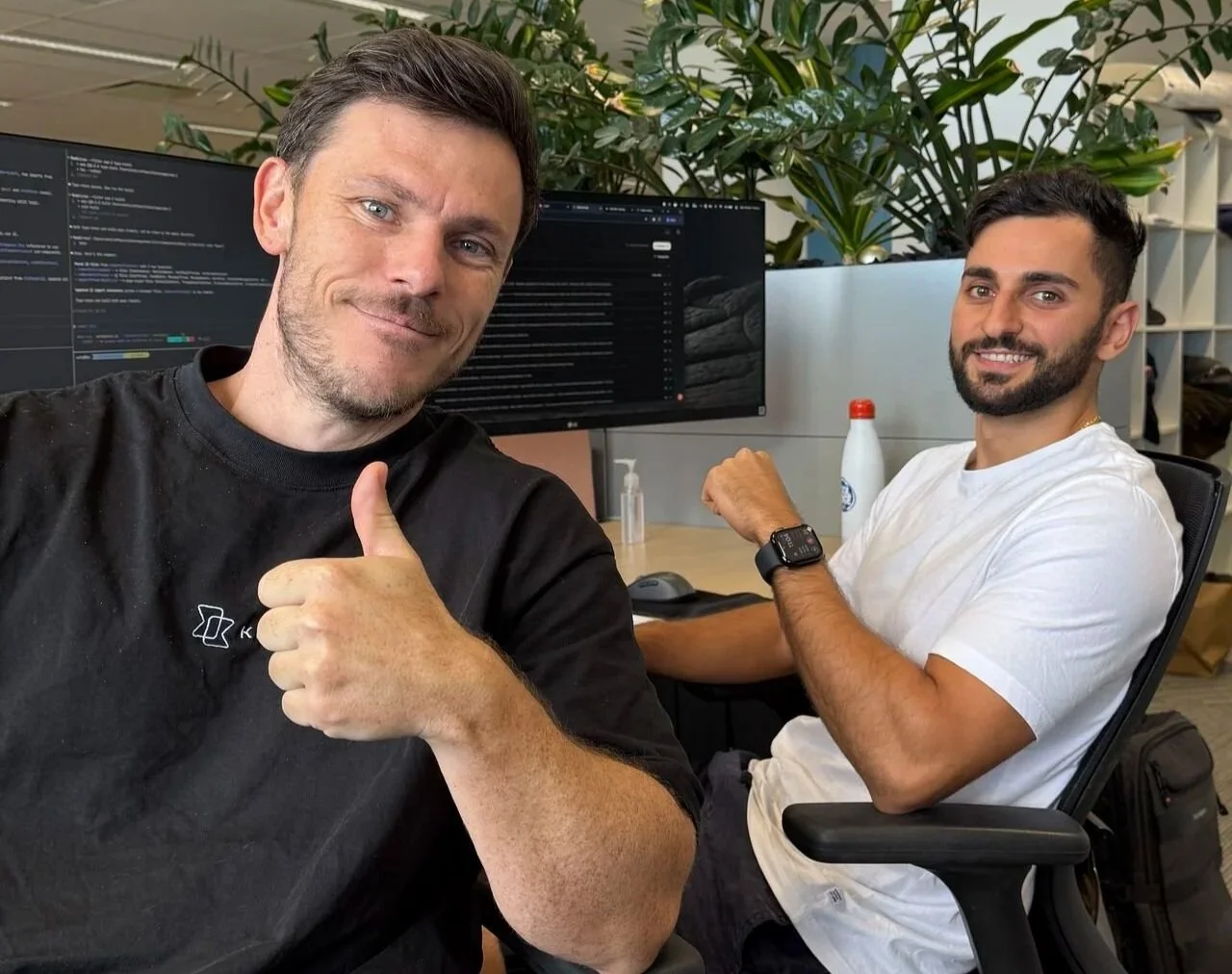
Anto Lepejian, a Founding Software Engineer at Canva, has left the company after five years to join AI startup Kinso. The move sees a senior developer from one of the world’s largest design platforms transition into an early-stage AI company building a unified inbox across email, messaging, and social platforms.
Lepejian confirmed on LinkedIn that his final day at Canva marked the end of what he described as an “unbelievable ride.”
Reflecting on his time there, he wrote, “When I first joined as an intern in 2020, I had no idea how rewarding the next 5 years would turn out to be. From flying all over the world representing Canva at conferences and workshops, to building and growing the Apps SDK and the Canva Developers Platform from 0 to 1000+ apps, it has been an unbelievable ride.”
Building Canva’s developer platform
Lepejian joined Canva as an intern in 2020 and later returned full time after pausing his studies. As he explained, “At the conclusion of my internship, I was so fired up by Canva’s mission, that I immediately put my studies on hold, and returned to the Ecosystem group as a full-time Grad.”
During his tenure in the Ecosystem group, he worked on integrating Smartmockups following its acquisition, helped build the Apps SDK and Canva Dev MCP, and later stepped into a leadership role within Developer Experience and SDKs. In his post, he also thanked senior figures across the organization, writing, “A huge thank you to my coaches over the years Miles Johnson, Michael Eselgroth, Yang Yang and Adrian Bourassa, as well as Ecosystem leadership Anwar Haneef and Martin Cronjé for investing so heavily in my growth, and making my time at Canva incredibly memorable.”
The reference to scaling the developer platform from zero to more than 1,000 apps underlines the growing importance of SDK-led ecosystems for design, productivity, and increasingly, AI-enabled workflows.
Joining Kinso as AI inbox competition grows
Lepejian confirmed he will now focus on early-stage AI development. “I’m pursuing my passion for early-stage startups, and will be diving straight in on Monday with Frank Greeff and Jacques Greeff 🦈 to build and launch Kinso AI,” he wrote.
Kinso positions itself as “The AI app for all your conversations, calendars and contacts.” The platform aggregates emails and messages into a single inbox, integrates with Gmail, LinkedIn, Slack, WhatsApp, and Instagram, and uses AI to draft replies that reflect a user’s tone and past conversations. It also offers contact-level summaries and voice interaction features, enabling users to access briefings and respond to messages through spoken prompts.
Jacques Greeff, Co-Founder at Kinso, referenced the speed of internal change following Lepejian’s arrival. In a LinkedIn post, he wrote, “Anto Lepejian from Canva just joined us last week and 3 days later we made some mass changes,” adding that “Having that outside eye on our code helped us see things that were blurry before.” Reflecting on startup culture, he noted, “When it comes to startups, the only thing consistent is change,” before concluding, “Welcome to the team Anto”.
Developer talent moves toward AI-native platforms
The move highlights a broader shift in the technology landscape. As AI-driven productivity tools compete to unify fragmented communication systems, experienced platform engineers with SDK and integration expertise are becoming central to early-stage growth strategies.
For EdTech and adjacent sectors, the signal is clear. The convergence of communication, AI automation, and workflow infrastructure increasingly intersects with education, skills development, and workforce productivity. Talent migration from scaled platforms to AI-native startups reflects where many engineers see the next phase of platform development taking shape.
ETIH Innovation Awards 2026
The ETIH Innovation Awards 2026 are now open and recognize education technology organizations delivering measurable impact across K–12, higher education, and lifelong learning. The awards are open to entries from the UK, the Americas, and internationally, with submissions assessed on evidence of outcomes and real-world application.