RevisionSuccess, a student-founded education technology startup from Thailand, has expanded into Singapore after securing a place in Singapore Management University’s Business Innovations Generator (BIG) incubation programme.
The move places the Bangkok-born venture inside one of Singapore’s long-running university-linked startup pipelines and signals a shift from building a local education platform to preparing for wider reach across Southeast Asia.
SMU’s Institute of Innovation and Entrepreneurship runs BIG. The latest intake drew more than 200 applications and selected 35 startups, based on cohort figures shared by the programme.
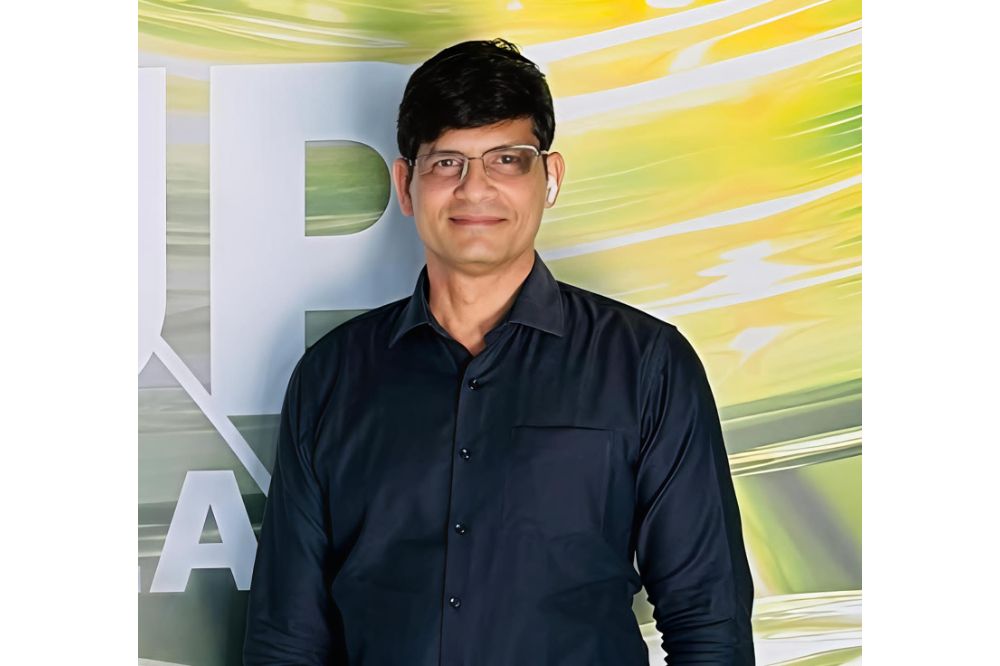
RevisionSuccess was represented at the orientation by Co-Founder and Chief Executive Officer Phonlawat Sirajindapirom, Co-Founder and Chief Marketing Officer Chotiwith Chotiheerunyasakaya, and Priyavaran Nantaya, Head of TuaTueng.
The company began as a student project in Bangkok. The founders experimented with study workflows after experiencing what they described as inefficiencies in traditional revision systems. It later developed into a commercial venture focused on software that personalises learning processes.
Incubation route
BIG offers structured advisory sessions and mentorship, along with introductions to investor networks. It also directs startups to grant pathways and potential institutional partnerships within Singapore’s innovation ecosystem.
RevisionSuccess is positioning itself around what it calls “AI-native” learning infrastructure. It distinguishes between products that add artificial intelligence features onto existing tools and systems designed with machine learning as a core design principle. The company says this enables a different approach to personalisation, adaptive workflows, and content structuring.
Phonlawat linked the business’s origins to student frustrations with revision habits and tools.
“We built RevisionSuccess because we were frustrated students,” he said. “We weren’t trying to build a startup at first. We were trying to fix our own revision systems. But as we improved the process, we realized we were not solving a small problem – we were uncovering structural gaps in how learning is delivered.”
He described acceptance into BIG as a sign that the startup’s approach can translate beyond its home market.
“Acceptance into SMU BIG is validation that our thinking resonates beyond Thailand,” he said. “It tells us that what we are building is not just relevant locally, but regionally. This is not about prestige. It is about positioning ourselves in the right ecosystem to execute long-term.”
Regional ambitions
The company views Singapore as a base for regional activity, not a replacement for its Thai operations. It expects the location to improve access to funders and cross-border networks.
“Thailand is our foundation,” Phonlawat said. “But if you are building infrastructure, you cannot think in single-country terms. Infrastructure, by definition, must scale. Singapore gives us proximity to investors, policy conversations, and regional partnerships that accelerate that scale.”
RevisionSuccess also positions its product differently from exam-preparation apps, which often emphasise content libraries and practice questions. Instead, it focuses on systems that structure and sequence study materials, track progress, and generate feedback loops-an approach the founders describe as orchestration rather than content volume.
“We are not retrofitting AI into old frameworks,” Phonlawat said. “We are designing systems where AI is the operating logic. That changes how content is delivered, how progress is measured, and how feedback loops are created.”
Chotiwith said the move from Thailand to Singapore raises expectations for the business.
“In Thailand, we were proving that the model works,” he said. “In Singapore, we are proving that the model scales. There is a difference. Scaling forces clarity-clarity in positioning, clarity in metrics, clarity in long-term strategy.”
He added that Singapore’s concentration of founders and investors pushes teams to sharpen their planning.
“When you enter a regional hub like Singapore, you are surrounded by founders thinking at cross-border level from day one,” he said. “That environment sharpens you. It forces you to elevate your standards.”
Youth-led teams
Priyavaran said the milestone carries symbolic value for student-led businesses from Thailand seeking regional visibility.
“We started as students building for students,” he said. “Being accepted into SMU BIG shows that youth-led startups from Thailand can compete in regional innovation ecosystems. It challenges the assumption that serious infrastructure companies must originate from more established markets.”
RevisionSuccess plans to use its time in BIG to test its approach across different education settings in Southeast Asia. The team will focus on regional product-market fit and on partnership discussions with institutions and other organisations.
“Our focus now is disciplined execution,” Phonlawat said. “Vision without execution is noise. This program gives us the structure to convert ambition into measurable progress.”
“Breaking beyond Thailand is not the finish line. It is the beginning. We are moving from local validation to regional ambition. Our responsibility now is to build systems worthy of that scale,” he said.