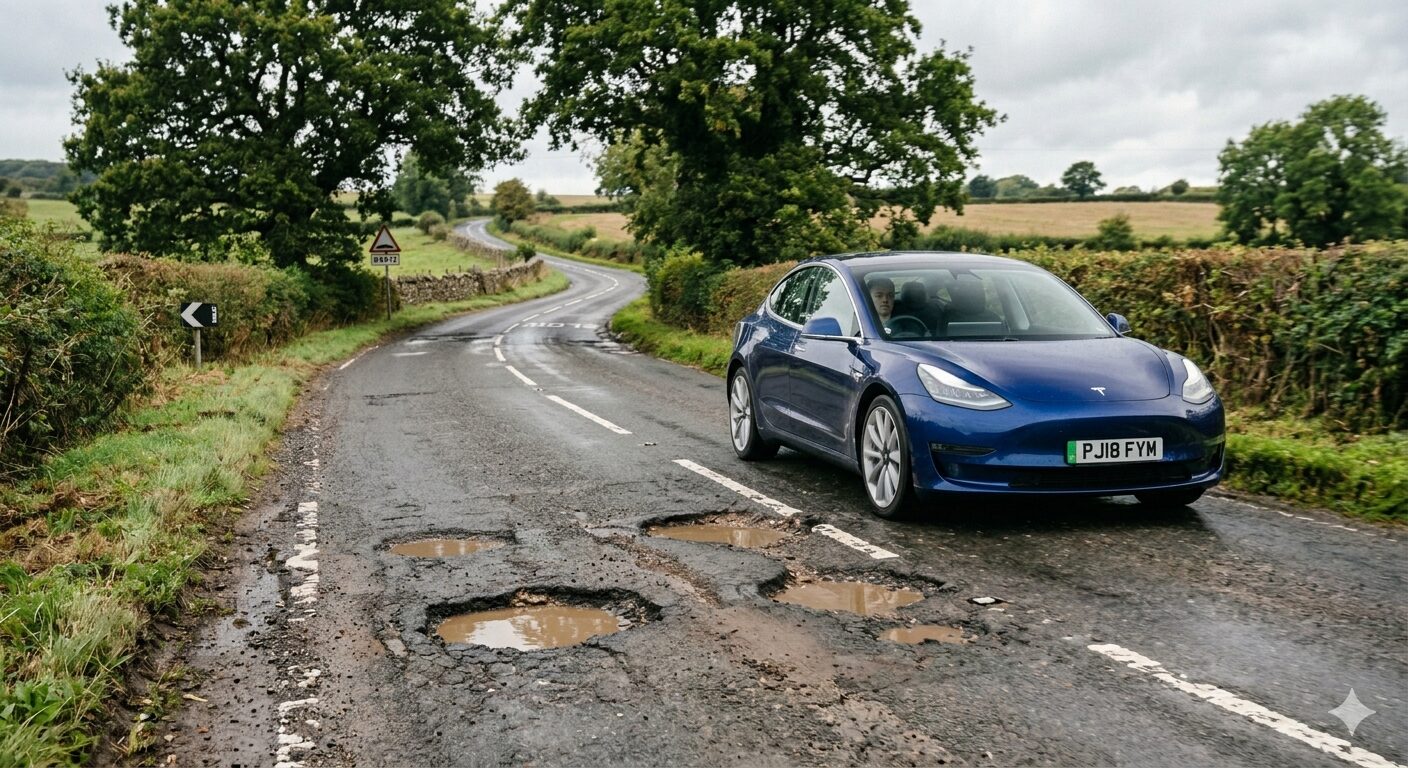
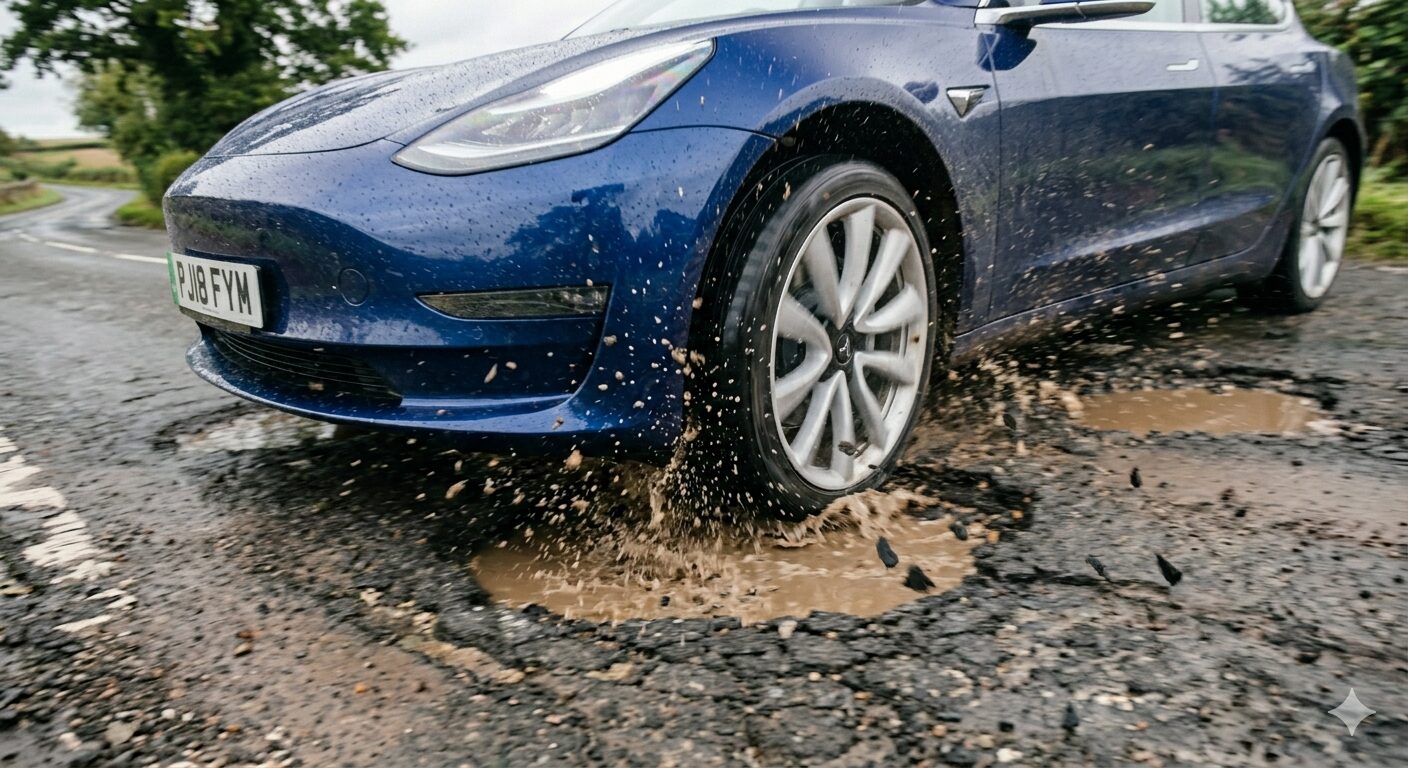
A UK-based cleantech startup has unveiled what it claims could be one of the most uniquely British innovations in electric vehicle efficiency: tyres that turn potholes into power.
The company, RoadHarvest Technologies, says its new “Kinetic Recovery Tyres” (KRT) are capable of converting the everyday misery of uneven road surfaces into usable electricity. In a country where dodging craters has become something of a national pastime, the firm believes it has found a way to make the problem part of the solution.
“We looked at potholes and saw opportunity”
Speaking at the launch event, CEO Alfonso Gulley described the thinking behind the idea. “Every time a vehicle hits a pothole, energy is lost as heat, vibration, and noise,” he said. “We asked a simple question: what if we could capture that energy instead?”
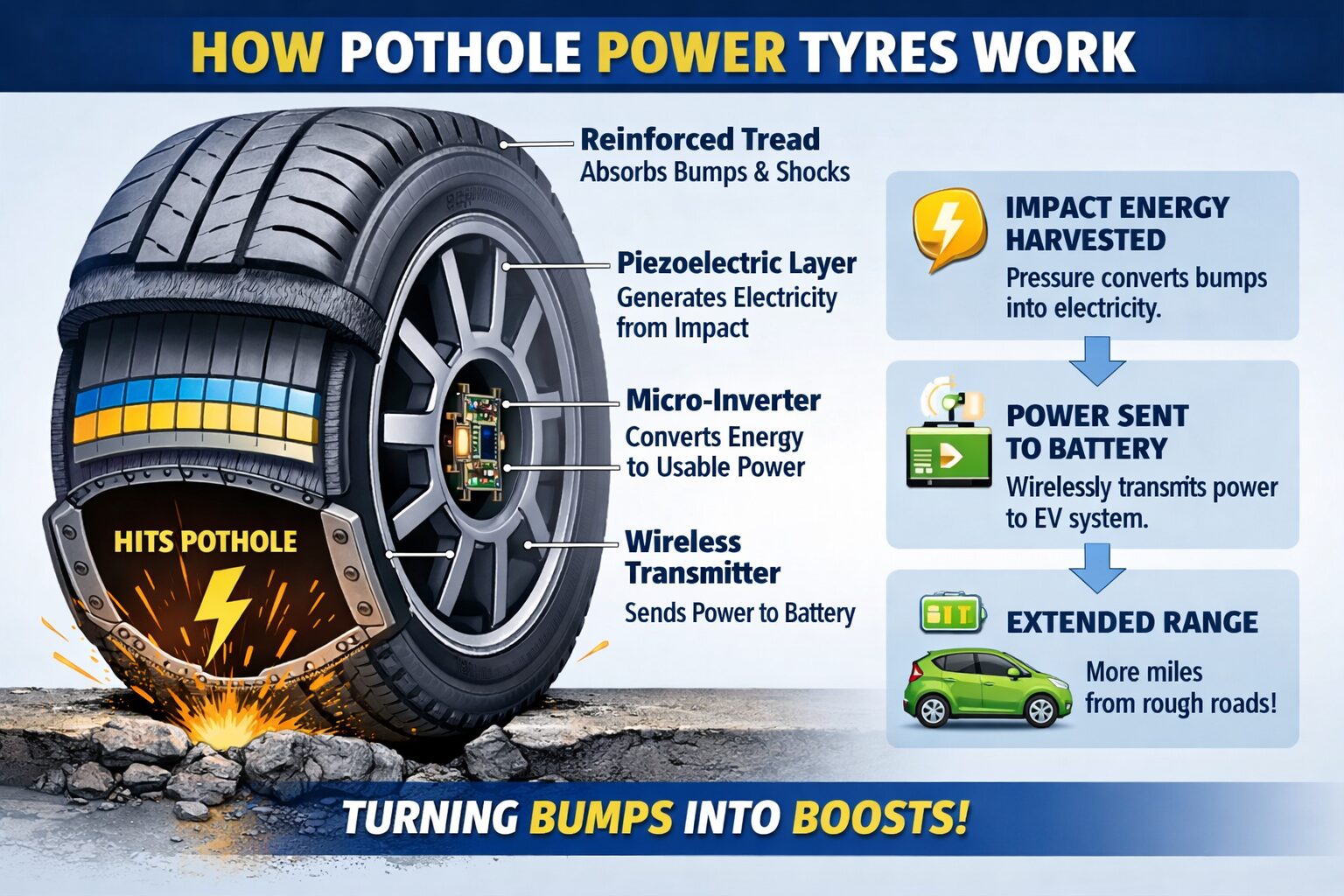
At the heart of the system, he explained, is a network of piezoelectric materials embedded within the tyre’s structure. When compressed — say, by the sharp edge of a neglected stretch of tarmac — these materials generate small electrical charges. Multiply that effect across thousands of impacts, and RoadHarvest claims the gains begin to add up. “In countries with smooth roads, the benefits are modest,” said Gulley. “But in the UK, it’s less of a feature and more of a natural resource.”
Real-world testing: the rougher, the better
To prove the concept, the company says it has spent the past year testing KRT prototypes in some of the UK’s most notoriously cratered urban environments, including Birmingham, Leeds and London.
According to RoadHarvest, the results have been “extremely encouraging,” with early data suggesting meaningful energy recovery during everyday driving — particularly on poorly maintained B-roads and in urban areas where repeated surface degradation provides a steady stream of impacts. Winter, the company notes, appears to be especially productive, thanks to what it refers to as “seasonal road texture expansion”.
Internally, engineers have even developed a new metric — the Pothole Performance Index (PPI) — to rate how effectively different routes contribute to energy generation. Unsurprisingly, the worst roads score the highest. PPI scores will be built into satnav maps so routes can be calculated that provide the most power delivery from KRT. Drivers will be able to choose the most KRT-efficient route to their destination.
How KRT works
Each tyre contains multiple layers of energy-harvesting material beneath the tread, paired with a compact inverter housed within the wheel assembly. As the tyre deforms over uneven surfaces, the generated electrical charge is captured and fed wirelessly into the vehicle’s battery system, working alongside conventional regenerative braking.
Gulley admitted the system may introduce what he described as a “more engaged driving feel”, though he insisted it remains fully compatible with modern ride comfort expectations.
Reaction from the wider automotive industry has been unanimously positive. One engineer at a major manufacturer, speaking off the record, said: “UK potholes powering electric cars could be the final nail in the coffin for internal combustion. No car without this technology will be able to compete as UK roads continue to deteriorate. The government policy of never fixing British tarmac could end up being a genius move.”
Coming soon to a pockmarked street near you
RoadHarvest says it is targeting a limited production run as early as next year, with initial deployments likely to focus on commercial fleets — vehicles that spend long hours navigating exactly the kind of roads the technology thrives on. Pricing remains under wraps, though the company hinted at a premium positioning, citing the advanced materials and “infrastructure-agnostic energy capture” involved.
The implications for the UK’s National Highways and local authorities is clear – there will be fewer incentives to fill the holes. Conversely, car buyers will be clamouring even more to go electric so they can take advantage of the amazing innovation from RoadHarvest Technologies. But the reception hasn’t been all positive, particularly from those whose vehicles will not be able to take advantage. As one red-faced diehard petrol car driver said: “It’s just another excuse for the wokerati to get their nonsense Net Zero future. True patriots will need to switch from shouting at roundabouts to fixing roads. Or we’ll all end up Vegan!”
Source link