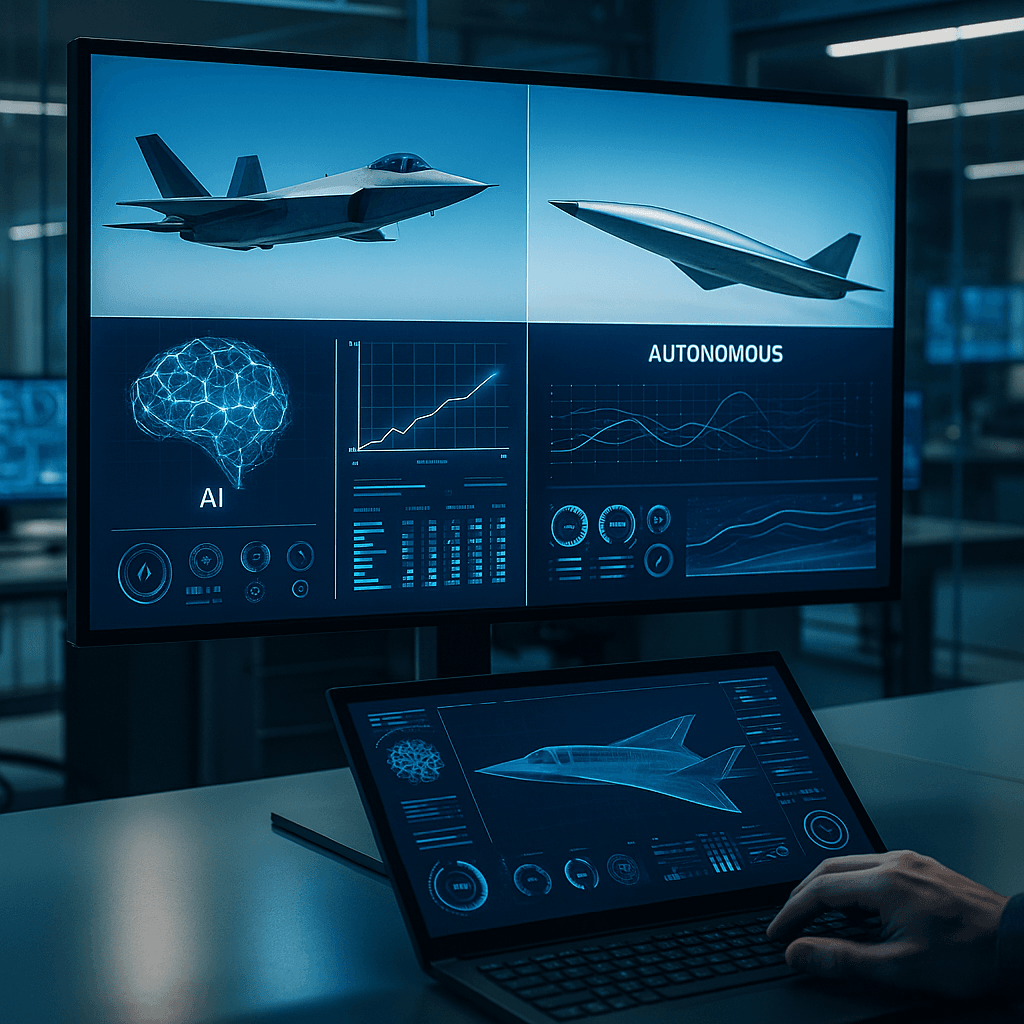
Defense aviation startup Hermeus just closed a $350 million funding round to accelerate development of autonomous hypersonic aircraft, the company announced Tuesday. The Atlanta-based startup is riding momentum from two successful flight demonstrations and plans to push its next test vehicle past the sound barrier. The massive raise signals growing investor appetite for next-generation defense tech as the Pentagon races to counter hypersonic threats from China and Russia.
Hermeus just secured $350 million to turn science fiction into battlefield reality. The defense aviation startup announced the funding round Tuesday, marking one of the largest raises in the emerging hypersonic sector as investors bet big on autonomous aircraft that can fly faster than five times the speed of sound.
The timing isn’t coincidental. Hermeus is coming off back-to-back successful flight demonstrations of its autonomous test vehicles, building credibility in an industry where vaporware often dominates headlines. The company told TechCrunch it’s now preparing for its most ambitious test yet – pushing past supersonic speeds as a stepping stone toward its ultimate hypersonic goal.
Founded in 2018, Hermeus entered a crowded field of startups promising to revolutionize high-speed flight. But while competitors focused on commercial applications like ultra-fast passenger jets, Hermeus zeroed in on military contracts from day one. That strategic choice is paying off as the Department of Defense accelerates hypersonic weapons development to match capabilities China and Russia have already deployed.
The company’s approach blends old and new. Rather than reinventing propulsion from scratch, Hermeus adapted existing turbine-based combined cycle engines – the same basic technology that powered the SR-71 Blackbird. The innovation comes in miniaturization, automation, and AI-driven flight controls that eliminate the need for human pilots in extreme conditions.
Those two recent flight tests validated the company’s core thesis. While Hermeus hasn’t disclosed specifics about altitude or speed achieved, the demonstrations proved their autonomous systems could handle takeoff, navigation, and landing without intervention. For investors, that tangible progress separates Hermeus from paper concepts that have burned through defense budgets for decades.