- ■
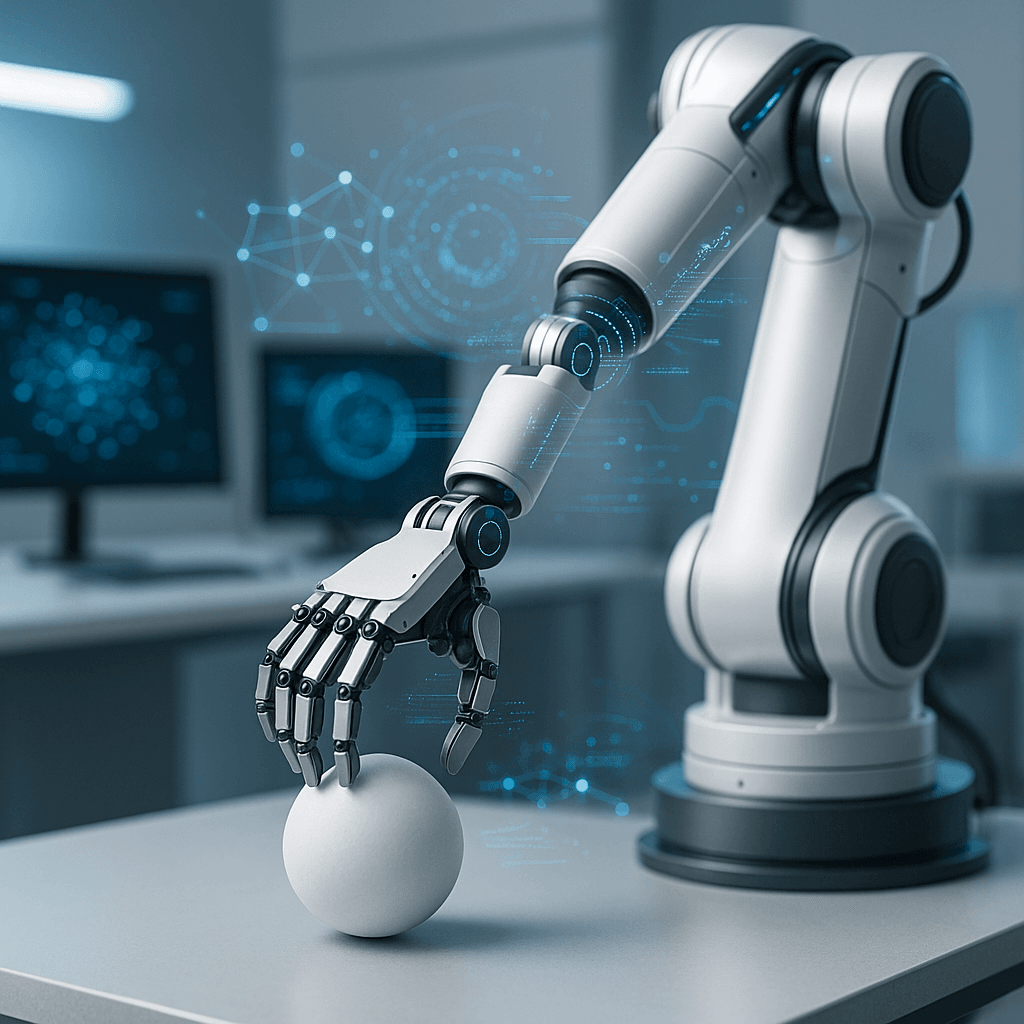
Black Forest Labs announces strategic pivot from AI image generation to physical AI applications, according to Wired
- ■
The 70-person startup has competed successfully against tech giants in generative imaging despite massive resource disadvantages
- ■
Physical AI represents the convergence of computer vision, robotics, and generative models – a market analysts project will exceed $50B by 2030
- ■
The move positions Black Forest Labs to compete directly with OpenAI’s robotics initiatives and Google’s embodied AI research
Black Forest Labs, the 70-person AI startup that’s been quietly outmaneuvering Silicon Valley’s giants in image generation, just announced its most ambitious pivot yet. The company is shifting focus to physical AI – bringing its generative technology into robotics and real-world applications. It’s a bold move that puts the scrappy startup on a collision course with deep-pocketed players like OpenAI, Google, and Tesla in the race to power the next generation of intelligent machines.
Black Forest Labs has never played by the conventional startup playbook. While competitors raised billions and built massive teams, this 70-person outfit carved out a reputation for punching well above its weight in AI image generation. Now, they’re making a move that could redefine their entire trajectory.
The company is pivoting to physical AI – the emerging field that brings generative intelligence into robots, autonomous systems, and real-world environments. It’s a calculated gamble that leverages their core strength in computer vision while opening entirely new revenue streams. According to Wired, the shift represents Black Forest Labs’ answer to a fundamental question facing every AI startup: how do you compete when the giants have infinite resources?
The timing couldn’t be more strategic. Physical AI sits at the intersection of multiple technology waves – advanced computer vision, generative models, and robotics. Where Black Forest Labs previously competed in the crowded image generation space against OpenAI‘s DALL-E, Midjourney, and Stability AI, physical AI remains relatively fragmented. No single player has achieved the kind of dominance that OpenAI commands in text generation.
What makes Black Forest Labs’ move particularly interesting is their technical foundation. AI image generation and physical AI share critical DNA – both require deep understanding of visual data, spatial relationships, and real-time processing. The company’s existing models already excel at understanding how objects interact, how lighting affects scenes, and how to generate realistic physical properties. These capabilities translate directly to robots that need to navigate spaces, manipulate objects, and interact with humans.
The competitive landscape is heating up fast. Tesla continues pushing its Optimus humanoid robot program, while Google DeepMind recently demonstrated robots that can learn tasks through video observation. OpenAI quietly rebuilt its robotics team after shuttering it in 2021, signaling renewed interest in embodied AI. Industry analysts project the physical AI market will surge past $50 billion by 2030, driven by manufacturing automation, logistics, and consumer robotics.
But Black Forest Labs brings something different to the table – the scrappiness and focus that comes from resource constraints. While tech giants experiment with dozens of moonshot projects, smaller teams often move faster and iterate more aggressively. The company’s track record in image generation proves they can compete on technical merit, not just marketing budgets and brand recognition.
The pivot also reflects broader shifts in the AI investment landscape. Generative image models have become increasingly commoditized, with open-source alternatives closing the quality gap. Physical AI, by contrast, requires specialized hardware partnerships, real-world testing infrastructure, and domain expertise that creates natural moats. It’s harder to replicate, which means sustainable competitive advantages for companies that get it right.
Industry insiders suggest Black Forest Labs has been quietly testing physical AI applications for months, working with robotics manufacturers and industrial automation companies. The move from pure software to hardware-software integration represents a significant operational shift, but one that could unlock enterprise contracts worth orders of magnitude more than consumer image generation subscriptions.
The startup’s lean team structure might actually prove advantageous. Physical AI development requires tight coordination between computer vision engineers, robotics specialists, and deployment teams – exactly the kind of cross-functional collaboration that smaller organizations handle better than sprawling corporate divisions. Black Forest Labs can make decisions in days that would take Google or Meta months to approve through their bureaucratic structures.
What remains to be seen is whether Black Forest Labs can secure the capital and partnerships needed to compete in a hardware-adjacent business. Physical AI requires expensive testing facilities, robot prototypes, and industrial partnerships that image generation never demanded. The company will need strategic investors who understand both the technology and the go-to-market complexity.
For the broader AI ecosystem, Black Forest Labs’ pivot signals an important trend – the generative AI stack is maturing, and startups need to find defensible niches. Pure-play image or text generation increasingly belongs to platform companies with massive distribution. The next wave of AI startups will succeed by applying generative technology to specific, high-value problems where domain expertise matters as much as model quality.
Black Forest Labs’ pivot to physical AI represents more than a strategic shift – it’s a referendum on how scrappy startups can compete in an AI landscape increasingly dominated by tech giants. By moving from the commoditized image generation space into the complex, fragmented world of embodied intelligence, they’re betting that technical excellence and focused execution can overcome resource disadvantages. If they succeed, they’ll prove that the AI revolution still has room for David to challenge Goliath. If they stumble, it’ll reinforce the growing narrative that only platform companies with infinite capital can win in frontier AI. Either way, the industry will be watching closely.