In north London, the future possibilities of optometry are being brought to life at the newly-opened Topcon Healthcare Innovation Centre (THINC EMEA).
THINC EMEA is an incubator for technology start-ups focused on oculomics, the centre’s head of digital health solutions and clinical development, Krysten Williams, told OT at this year’s 100% Optical.
THINC, which has now opened its doors to collaborators, is aiming to give start-ups the power to bring technologies focused on the emerging field of oculomics to the commercial healthcare market.
The hub is part of a larger initiative on healthcare funding, which started three years ago in San Diego. London is the home of the second THINC location, focusing on the acceleration of artificial intelligence (AI), specifically in the field of oculomics.
Oculomics, the method of diagnosing systemic health conditions and diseases via imaging, is gaining traction after the term was initially coined at Moorfields Eye Hospital in 2020.
The aim of THINC is to invest in potential technology that is using oculomics in order to “bring the eye to the centre of health,” Williams told OT.
The unique properties of the eye mean that clinicians can look at vascular structure and brain tissue at the same time, allowing them to differentiate “hundreds of holistic systemic diseases in the body,” she explained.
This is what THINC’s London outpost aims to do: accelerate the development of these technologies, investing and providing the infrastructure and clinical and commercial support that can bring products to market.
The model has borne fruit in San Diego, where more than 60 start-ups have received THINC funding over the past 18 months.
A decision was taken to open the London THINC hub because San Diego was very focused on the needs of the US, and there was a need to start focusing on the specific needs of Europe, Williams told OT.
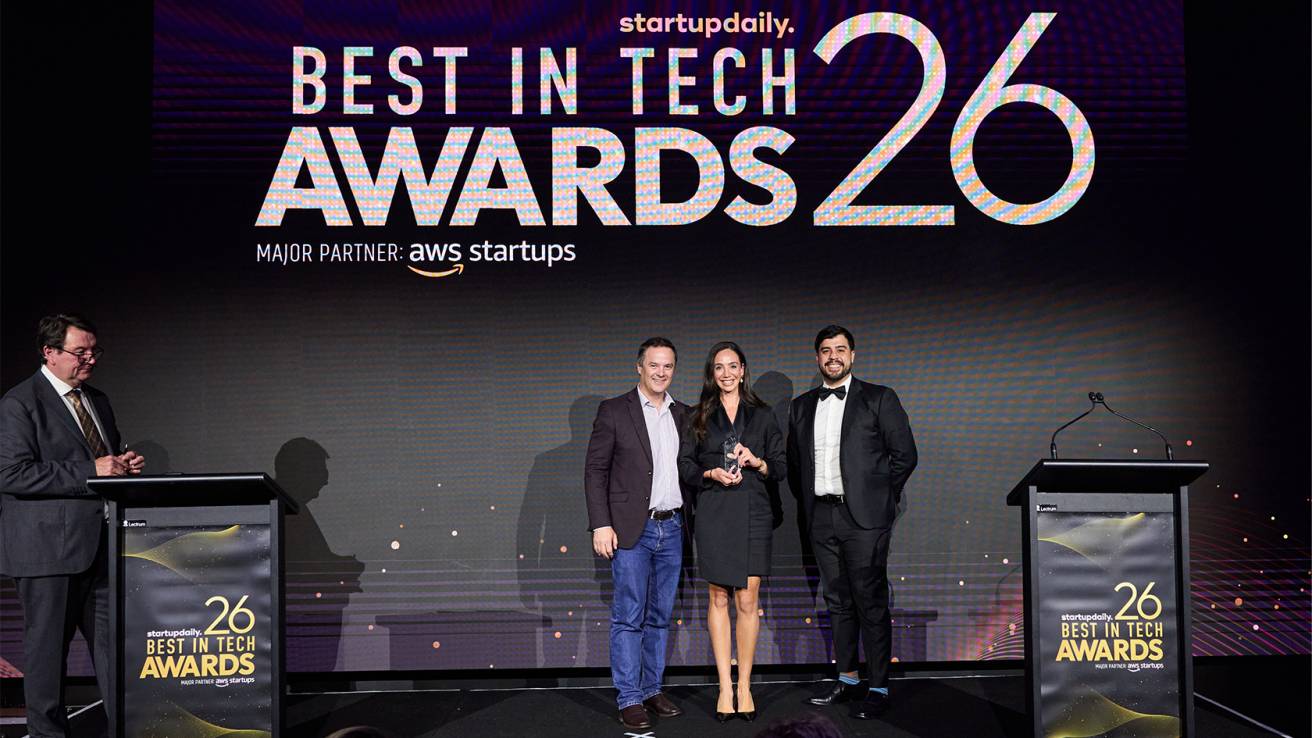
The centre, in Camden, was officially opened with an evening celebration on Thursday 16 April.
“We are looking for start-ups that want investment, and then we put them through our venture capital group process to determine whether or not their mission and their vision [aligns with ours], which is to deliver healthcare from the eye,” Williams shared with OT.
Existing projects include a start-up making an algorithm for age-related macular degeneration and geographical atrophy, a referral platform for diabetic retinopathies, and an AI algorithm that assess biological age by cardiovascular risk perceptions and kidney conversion, she explained.
Williams told OT that THINC’s most recent acquisition, launched at 100% Optical, is from Toku Eyes, and is their first AI algorithm focusing on oculomics.
Williams explained that the technology “is based on a fundus image and is a simple eye scan, non-invasive. It gives a cardiovascular risk score, and then the patient receives a report of their own and a QR code, and they go online, and they can get information about what they should do, how they can improve their lifestyle, and what they should do in regards to outcomes.”
In explaining how the THINC model works more broadly, Williams said: “These startup companies live within the innovation centre, and we accelerate their development in several ways.
“Topcon is part of the commercialisation economy. We have the quality management system; we know the regulatory companies. We can do research. We can provide the distribution channels. We can do clinical trials.”
She added: “All of these things that are hard for start-ups to do, because they are focused on developing their products, we can help. We provide all those services.”
Collaborations for the future
THINC had its own stand at 100% Optical 2026, with the aim of fostering relationships with potential partners for the future.
The long-term aim is to work with optometric researchers and industry bodies and bring all stakeholders who are involved in patient care, including those outside of eye care, together to create “connected care,” Williams said.
The 100% Optical stand provided an opportunity to show delegates “what is coming in the future,” she added.
Williams told OT: “We’re looking for collaborators, because we can’t do this alone. In order to bring oculomics to the market, we need to change the way healthcare is delivered.”
THINC must work with a wide variety of organisations in order to bring products to market, navigate regulatory frameworks, lobby the Government and ultimately make tests available to people, including on the NHS, she said, adding that THINC wants to “change the way healthcare is delivered.”
Ultimately, “we need to be able to provide more insight into diseases like diabetic retinopathy and AMD,” Williams believes.
She noted that oculomics can help with this, but there is a need to find the right workflow using technology, before regulations and referral pathways are considered and worked on.
This presents an opportunity for optometry, Williams told OT – but that work needs to be done to ensure that eye care practitioners’ input is valued.
If optometrists are “the gatekeepers of the eye” and are able to bring the eye to the centre of healthcare, money needs to be secured for their services, she said.
Start-ups must partner with professional industry bodies in order to guarantee this, she emphasised.
Scalable businesses and patient value
OT was interested in finding out key things that those working at THINC would like optometrists, and by extension start-up entrepreneurs, to know about the centre’s offering.
For start-ups, THINC’s ask is straightforward: “They want to know how many patients, and how you can scale your business,” Williams confirmed.
She added: “We want to make sure we develop a clinical space that is needed in order to make oculomics successful in the long term. We are a long-term partner.”
As part of a global organisation that has a “huge resource pool,” THINC can invest in areas that start-ups might not have the resources to think about as they develop their products – for example sustainability, Williams said.
The same is true for regulatory pathways, she said: “A start-up may be developing an algorithm for a pharmaceutical company to do a clinical trial, but they haven’t thought about how: what is the regulatory pathway to get that product to market? How long is it going to take? What do they need to do in order to bring it to market?
“And so, that’s what we do. That’s the bread and butter. It’s those types of services that we offer to start-ups that make it attractive to work [with us].”
One such start-up, the first to work with THINC in London, is Cascader – the AI medtech company that announced a partnership with Specsavers at 100% Optical 2026.
When it comes to optometrists, Williams wants to emphasise that THINC’s offering is all about accelerating the technologies that could become available to them in the coming years.
She also noted that optometrists are in a strong position to be at the forefront of these developments.
In her career, which has included roles at Zeiss Vision, Hoya and Seiko, she has seen “optometrists who are brave enough to be early adopters of technology [who] have driven the technological change, not only in optometry, but in oculomics,” Williams said.
She explained: “They drive change into the NHS, because they bring it to the patient, the patient pays for it themselves, and they then change the standard of care.”
She added: “Optometrists can become the gatekeepers of the eye. The great thing about optometry is that it’s all about pattern recognition. They [optometrists] understand the patterns that they see in the images, and they’re uniquely skilled.”
AI is able to differentiate disease “with a simple eye scan,” Williams noted.
She added: “As optometrists use AI, they will become better and better at what they do. They will be able to [further] differentiate.
“AI provides a huge opportunity for optometrists to grab with both hands, if the AI technology gets into primary care.”
Williams also explained that THINC is focused on collecting the clinical data to back up the work that it is accelerating.
“We’re collecting data in order to be able to make that data available to researchers, so that we can validate the algorithms, so that they become more robust, and we have the clinical evidence to back it up,” she said.
THINC is currently recruiting optometrists who are willing to consent their patients to be part of a national database of images that can be used for the development of AI models, Williams explained.
A data hub – the Institute of Digital Health – has also been created, allowing researchers to access data sets that they can use in their work.
Williams summed up the purpose of THINC succinctly to OT.
“I get up in the morning and I think, ‘what am I going to do today?’ Whether that is making a partnership with another organisation that can help to drive things, or whether it is finding a research optometrist, whether it is running a clinical trial to build clinical evidence, or helping a start-up to go faster so that they can bring their product to market – that is what THINC does,” she said.