




Also in the letter:
■ Another exit at Cars24
■ Instant help apps face worker crunch
■ MeitY ups stake in AI labelling
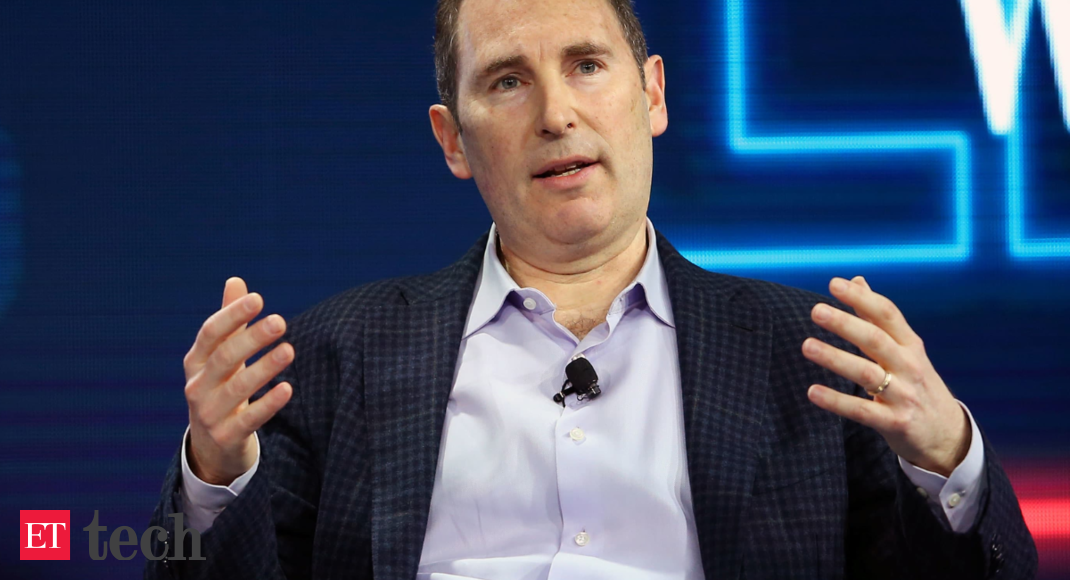
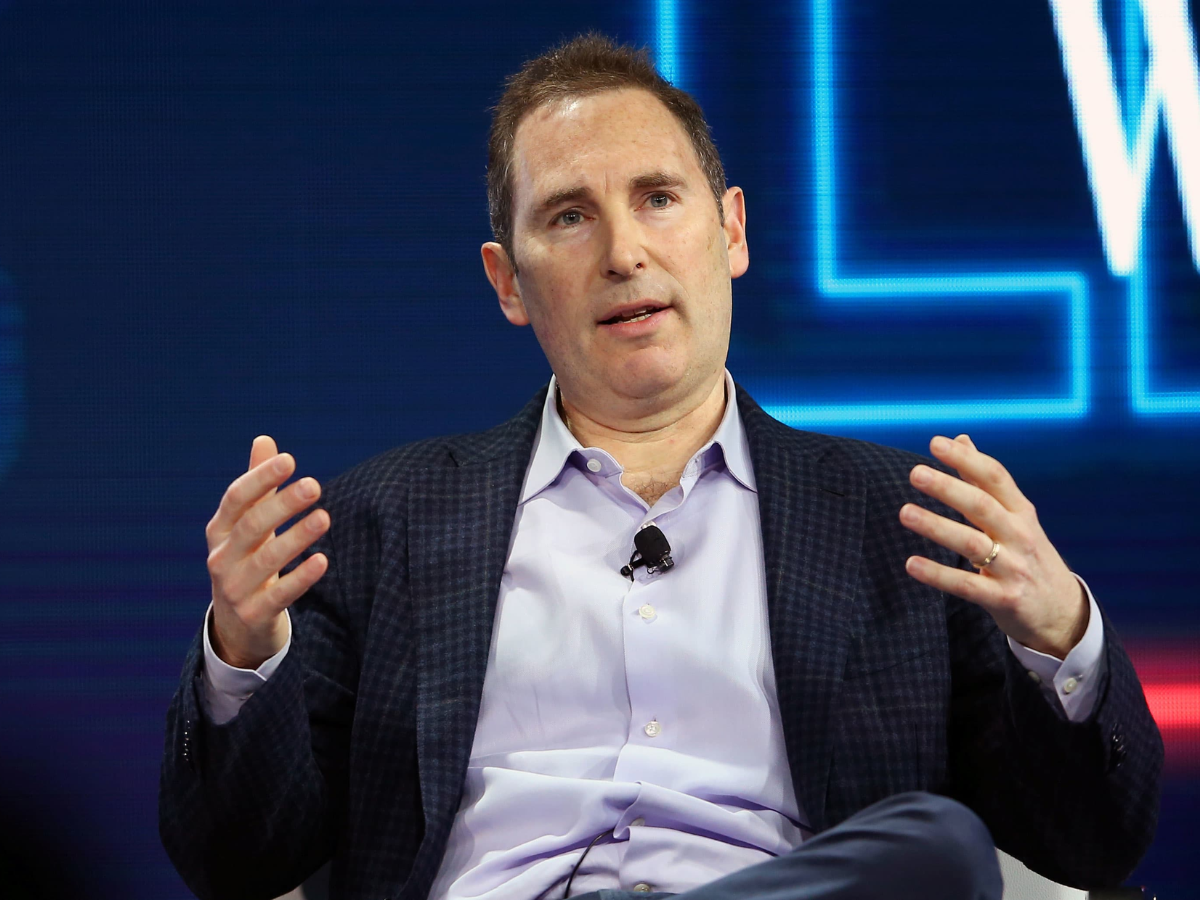
Amazon Now orders growing 25% month on month: CEO Andy Jassy in Q1 earnings call
Amazon India’s quick commerce service, Amazon Now, is growing 25% month-on-month, CEO Andy Jassy told analysts on the Q1 earnings call on Wednesday, underlining strong traction in the rapid delivery category.
Verbatim: “Prime members (are) tripling their shopping frequency once they start using it. The service is now available to tens of millions of customers across nine countries, with more to come as well,” Jassy said.
Competitive heat: In India, Amazon Now, with around 300 dark stores, has expanded to Delhi-NCR, Mumbai, and Bengaluru. The ecommerce giant is taking on entrenched rivals such as Eternal’s Blinkit, Swiggy Instamart and Zepto, which currently dominate the space. Flipkart, meanwhile, is pushing ahead with its own quick commerce rollout.
Amazon said it plans to extend Now to 100 cities, backed by over 1,000 dark stores, or micro-warehouses. It has also committed a fresh Rs 2,800-crore investment to bolster its India operations.
Financials: Amazon reported first-quarter operating income of $23.9 billion and net sales of $181.5 billion, with Amazon Web Services (AWS) beating expectations.
ETtech explainer: What does Blinkit’s growth moderation mean for rivals?
Market leader Blinkit expects its growth to moderate as the business scales, even as revenue continues to rise quickly and profitability improves.
Eternal CEO Albinder Dhindsa said Blinkit’s net order value (NOV) grew at a 104% CAGR from FY23 to FY26. He still expects more than 60% CAGR over the next three years.
What this means: A slower growth rate at Blinkit does not automatically imply a loss of market share. “Blinkit’s growth moderation is because they want to focus on profitability. Despite forecasting a growth rate of 60%, they’re won’t be losing market share,” said Karan Taurani, EVP, Elara Securities.
Inside Big Tech’s March quarter earnings: Here’s all you need to know
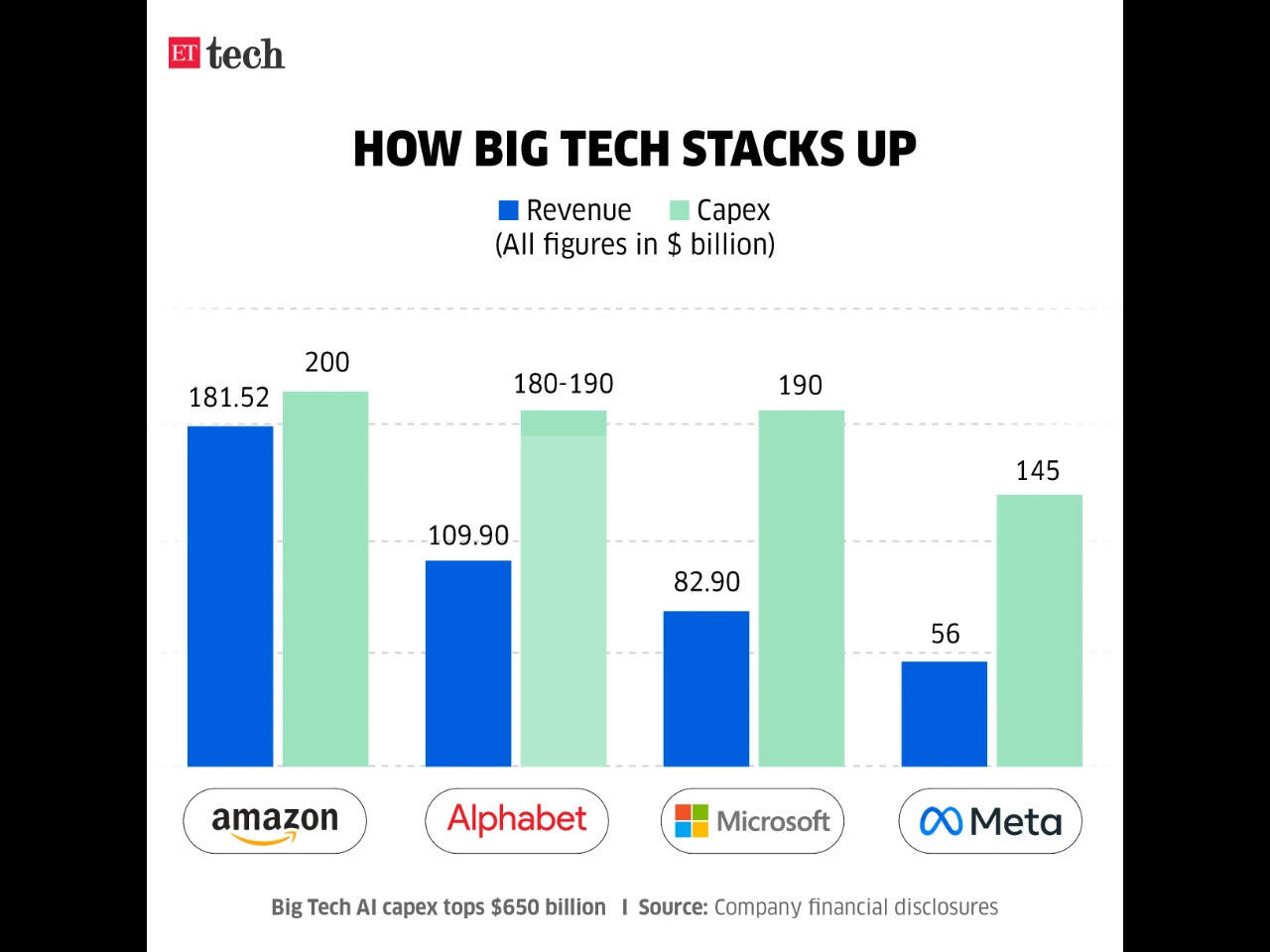
Alphabet, Amazon, Meta, and Microsoft all posted strong quarterly numbers on Wednesday, with each beating Wall Street forecasts on the back of surging demand for AI and cloud services.
Breaking it down: Even with solid results, market reaction was mixed. Alphabet rose about 6% in after-hours trade, while Meta fell more than 6%. Amazon and Microsoft also edged lower. Together, the four are on course to spend an estimated $650 billion on AI infrastructure this year.
Alphabet:
- Total revenue rose 22% to $109.9 billion in the first quarter.
- Capital spending in the quarter more than doubled year-on-year, to $35.67 billion. Overall, Alphabet spent $91.45 billion in capex in 2025.
- The company raised this year’s capex forecast to a range of $180 billion and $190 billion, up by $5 billion from last quarter’s guidance.
Meta:
- The Facebook and Instagram parent reported first-quarter revenue of $56.31 billion, up 33%.
- Net income jumped 61% to $26.77 billion.
- Meta now expects 2026 capital expenditure of $125 billion to $145 billion, higher than its previous projection of $115 billion to $135 billion.
Microsoft:
- Revenue rose 18% year-on-year to $82.9 billion; Azure cloud revenue grew 40%.
- Net income increased 23% to $31.8 billion.
- Microsoft said annual capex will reach about $190 billion.
- Its AI business has crossed an annual revenue run rate of $37 billion, up 123%.
Cars24 cofounder Mehul Agrawal steps down from operating role
Cars24 cofounder Mehul Agrawal is stepping away from his operating role after more than a decade, marking another founder-level exit at the IPO-bound used-car marketplace.
Behind the exit: In a LinkedIn post, Agrawal said the move caps “4000 relentless days of blood, sweat and heart.” He will continue to serve on the company’s board.
Agrawal co-founded Cars24 in 2015 with Vikram Chopra, Ruchit Agarwal and Gajendra Jangid, helping turn it into a tech-first marketplace for pre-owned vehicles.
Churn on: His exit follows Jangid’s decision to step down as chief marketing officer. The company has seen a series of leadership changes ahead of a potential listing. Himanshu Ratnoo, CEO of the India used-cars business, also resigned in March.
Financials: Cars24 reported an adjusted net revenue of Rs 651 crore for the April-September period, up 18% year-on-year, according to its H1 FY26 performance update.
Instant domestic help apps face worker unavailability amid rapid scaling, high competition
Instant domestic help platforms such as Urban Company’s Instahelp, Snabbit and Pronto are seeing a sharp drop in availability as workers travel to their hometowns.
Users in Delhi-NCR, Mumbai and Bengaluru say 15-minute booking slots have virtually disappeared.
What’s the news: Snabbit has termed it a seasonal blip. Pronto says it is already operating at full supply capacity and that local shortages are due to high demand.
“When food delivery was being built, there were times when it was difficult to have enough delivery riders. But over time, through various mechanisms, the platforms have evolved, and now that’s not an issue,” Snabbit founder Aayush Agarwal told us.
Why supply has tightened: The shortage is linked to seasonal migration tied to state elections in Tamil Nadu, West Bengal, and Kerala, as well as the harvest season in agrarian states.
Because the category is built around instant availability, even short-term disruption has an outsized impact on users.
Demand is still rising: Interest in instant domestic help remains strong. A Morgan Stanley report pegged the category at about 10 million monthly users in March.
Continuous AI labelling norms to raise compliance, costs: Experts
The Ministry of Electronics and Information Technology (MeitY) has proposed fresh tweaks to AI-content labelling rules that would require synthetic-content disclosures to remain visible for the full duration of the content.
The shift from labels that are merely “prominent” to ones that are continuous is expected to raise the compliance bar and increase costs, according to experts.
What changes: The new draft may require platforms and creators to permanently reserve part of the screen for labels. This could be especially challenging for short-form video and may push up production costs. Experts also expect more prescriptive norms on font size, contrast and placement.
Expert take: Paritosh Desai, chief product officer at IDfy, said the move could strengthen transparency, but it will be hard to implement at scale. “As content gets edited, reshared, and recombined, ensuring labels remain accurate and persistent will require robust detection and consistent standards across platforms,” Desai said.
Source link