Lucid Motors posted a staggering $1 billion net loss for the first quarter of 2026, adding fresh pressure to the luxury EV startup as it struggles to scale production and maintain investor confidence. The disappointing results sent the company’s stock down another 5%, extending a steep decline that has erased roughly 75% of its market value over the past year.
The automaker also withdrew its full-year 2026 production guidance, signaling growing uncertainty surrounding demand and manufacturing output. Lucid executives said updated guidance will not be provided until the end of the second quarter as the company reassesses production targets and customer deliveries.
Although Lucid increased revenue compared to the same period last year, the company still fell far short of Wall Street expectations. Analysts had projected substantially stronger quarterly revenue figures, making the latest miss one of Lucid’s weakest financial performances in years.
The results underscore the difficult reality facing many EV startups: building technologically advanced electric vehicles is only part of the challenge. Sustaining production, controlling costs, and generating consistent consumer demand remain far more difficult hurdles.
Deliveries Lag Behind Production
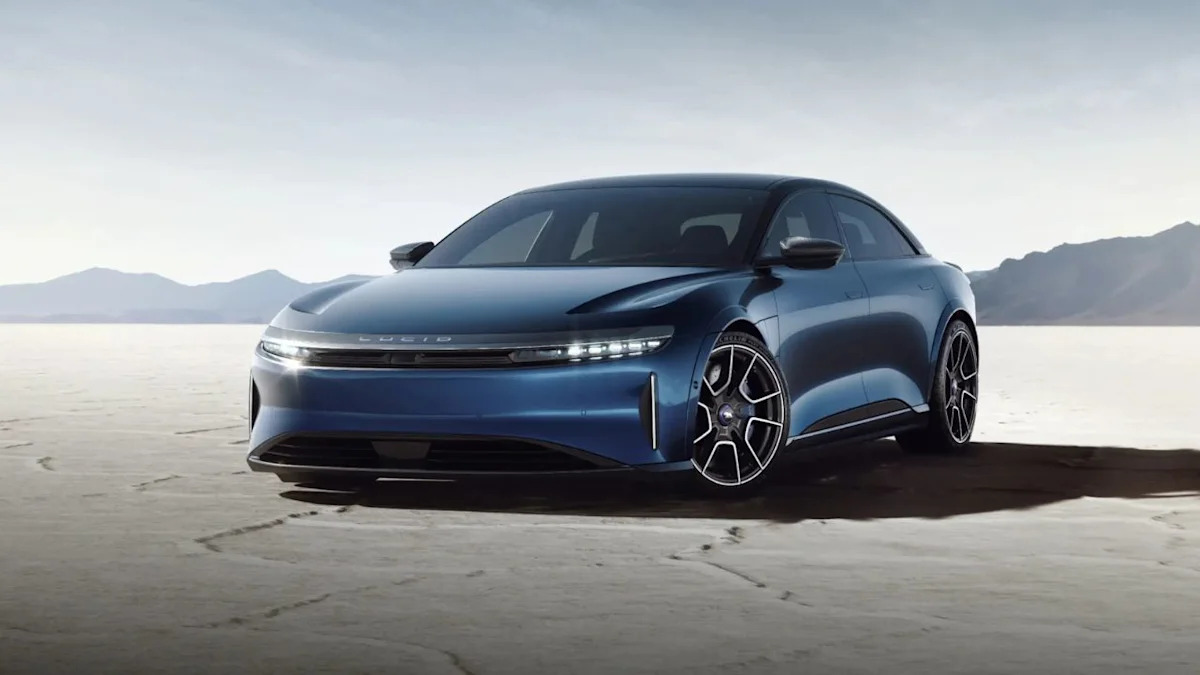
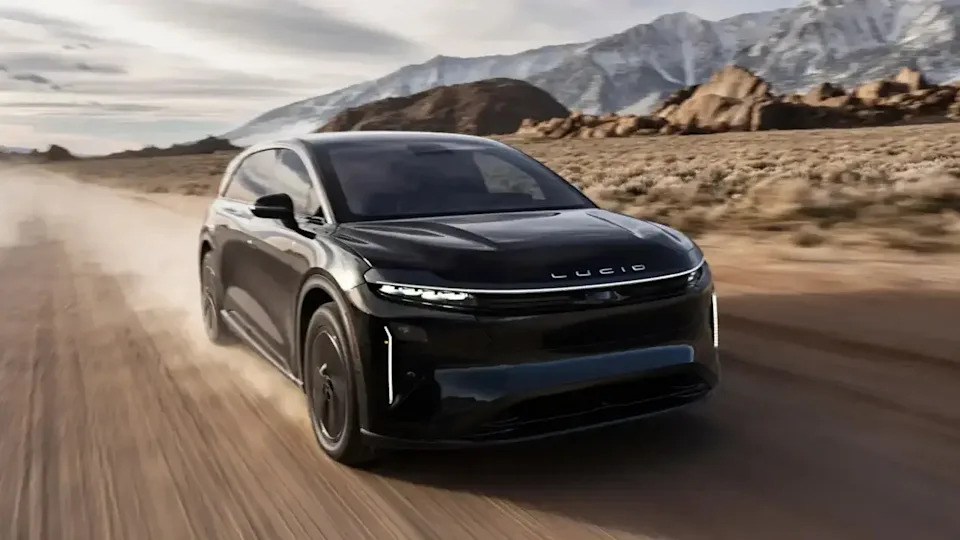
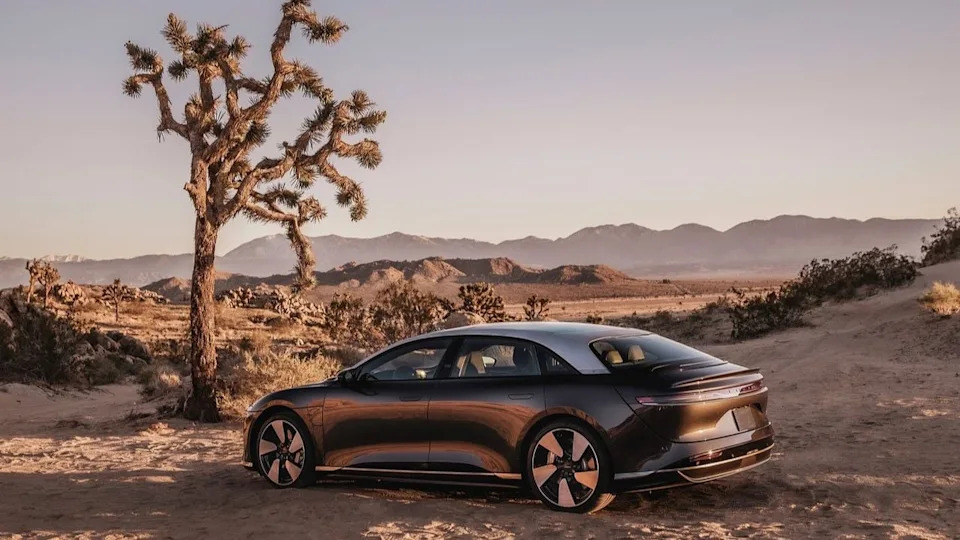
According to Auto News, Lucid reported producing approximately 5,500 vehicles during the first quarter of 2026. However, deliveries reached only 3,093 units across the Air luxury sedan and the newer Gravity SUV crossover.
That delivery figure remained largely flat compared to the same period a year earlier, despite the company’s efforts to expand production capacity and broaden its lineup.
Gravity deliveries were reportedly impacted by a rear-seat defect that triggered a recall during February. Lucid stated that deliveries improved again in March but did not disclose specific numbers tied to the rebound.
The mismatch between production and deliveries highlights one of the company’s ongoing challenges. Manufacturing vehicles without corresponding sales can increase inventory costs and place additional strain on cash flow at a time when Lucid is already burning through significant capital.
Revenue Climbs But Misses Expectations
Image Credit: Lucid Motors.
Despite the sharp quarterly loss, Lucid’s revenue still increased roughly 20% year-over-year to $282 million. Even so, the figure came in well below analyst projections, which reportedly approached $440 million.
The revenue shortfall further rattled investors already concerned about slowing EV demand and intensifying competition across the luxury electric vehicle segment.
Lucid executives said the company is adjusting production levels to better align with anticipated customer demand. The move suggests management is prioritizing inventory control and operational efficiency over aggressive output growth in the short term.
Like several other EV startups, Lucid now finds itself navigating a market that looks very different from the optimistic environment that fueled early investor enthusiasm only a few years ago.
Saudi Funding Continues Supporting Lucid
One major advantage Lucid still possesses is its financial backing from Saudi Arabia’s Public Investment Fund, which remains the company’s majority owner and largest financial supporter.
That backing has provided Lucid with access to billions in funding that many competing EV startups simply do not have. The Saudi fund has repeatedly injected capital into the automaker as losses mounted during its expansion phase.
Lucid continues investing heavily in future production growth, including plans for additional manufacturing operations in Saudi Arabia. The company is also developing its upcoming midsize vehicle platform, reportedly expected to underpin more affordable products aimed at significantly higher sales volumes.
Executives remain committed to increasing annual production to between 25,000 and 27,000 vehicles by 2027, though reaching that target will require a major acceleration in both manufacturing and consumer demand.
EV Startups Face Increasing Pressure
Image Credit: Lucid Motors.
Lucid’s latest earnings report reflects current pressures affecting the EV startup landscape. Rising interest rates, slowing EV demand growth, aggressive price cuts from Tesla, and mounting competition from established automakers have created an increasingly difficult environment.
Luxury EV buyers now have more choices than ever before, ranging from Mercedes-Benz and BMW electric models to Porsche, Rivian, and Tesla offerings, not to mention all the Chinese brands knocking at the gates. That competition has forced newer brands like Lucid to fight harder for market share while maintaining expensive research and manufacturing operations.
At the same time, investors have become far less willing to tolerate massive quarterly losses without clear paths toward profitability. Many EV startups that once commanded enormous valuations during the market boom of 2020 and 2021 are now under pressure to prove they can survive long-term.
Lucid still earns praise for producing some of the most technologically advanced EVs currently on sale, particularly in areas like driving range and efficiency. The company’s challenge now is turning engineering credibility into sustainable business performance before investor patience runs out.
Source link